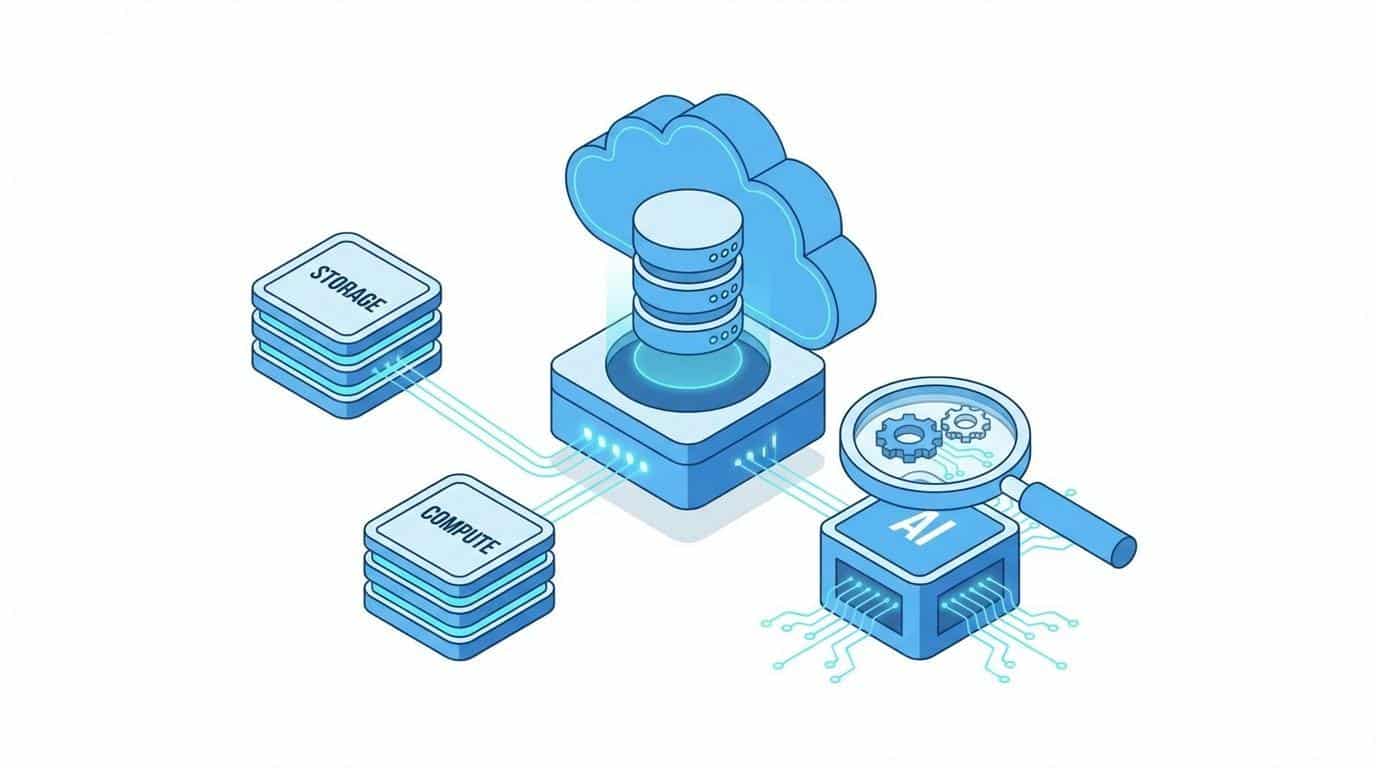
Cloud Data Warehouse Implementation: Service Options & Partner Selection Guide

12 minutes to read
Get free consultation


In today’s data-driven landscape, a cloud data warehouse is no longer a luxury; it’s the engine of modern business intelligence. A recent study found that data-driven organizations are 23 times more likely to acquire customers, six times as likely to retain those customers, and 19 times as likely to be profitable as a result. Yet, implementing a cloud data warehouse is a significant undertaking, fraught with potential pitfalls like budget overruns, implementation delays, and the ever-present skills gap.

This guide provides a clear framework for VPs of Data and IT Directors to navigate the implementation process, from choosing the right service model to selecting the perfect partner. At Stellans, we work with you to unlock your data’s potential, and this guide is the first step in that journey.


Why Your Implementation Strategy Matters: Avoiding the Common Pitfalls

A successful cloud data warehouse implementation can be a game-changer, but a failed one can be a costly setback. Understanding the common pitfalls is the first step toward avoiding them.

The consequences of a failed or suboptimal implementation are not just technical; they’re business-critical. A poorly designed data warehouse can lead to inaccurate reporting, slow query performance, and a lack of trust in the data, ultimately undermining the very purpose of the investment.

Choosing Your Service Model: DIY, Hybrid, or Full-Service

Once you’ve decided to implement a cloud data warehouse, the next critical decision is how you’ll do it. There are three primary service models to consider, each with its own pros and cons.

Service Model Who It’s For Pros Cons
DIY (Do-It-Yourself) Companies with deep in-house expertise and a large, skilled data team. Maximum control, potentially lower vendor cost. High risk, requires a large, skilled team, slow time-to-market.
Full-Service (Managed) Most mid-market companies and businesses focus on their core competencies. Access to expertise, faster implementation, and accountability. Higher upfront investment requires finding the right partner.
Hybrid Companies with some in-house talent who need to augment their team. Knowledge transfer is cost-effective. Requires strong project management and clear delineation of responsibilities.

The DIY Approach: Full Control, Full Responsibility

The DIY approach gives you complete control over your implementation, but it also means you bear all the responsibility. This model is best suited for companies with a mature data practice and a deep bench of in-house experts.

The Full-Service (Managed) Approach: Your End-to-End Partner

For most mid-market companies, a full-service or managed approach is the most effective way to implement a cloud data warehouse. In this model, you partner with a specialized firm that handles the entire implementation, from strategy and design to development and deployment. This approach provides access to a dedicated team of experts, accelerates time-to-value, and ensures accountability throughout the project.

The Hybrid Model: Collaborative Implementation

The hybrid model offers a middle ground between the DIY and full-service approaches. In this model, your in-house team works alongside a team of external experts to implement the data warehouse. This can be a cost-effective way to augment your team’s skills and ensure knowledge transfer, but it requires strong project management and a clear division of responsibilities to be successful.

The Partner Evaluation Framework: A 7-Point Checklist for Selecting Your Cloud DW Implementation Partner

Choosing the right implementation partner is the single most important factor in the success of your project. To help you make the right choice, we’ve developed a 7-point evaluation framework based on hundreds of successful data projects.

1. Technical Expertise & Platform Proficiency

The cloud data landscape is constantly evolving, so it’s critical to partner with a firm that has deep technical expertise and a commitment to staying current.

2. Proven Methodology & Project Management

A successful implementation requires a clear methodology and strong project management.

3. Industry-Specific Experience

Every industry has its own unique data challenges and opportunities. Partnering with a firm that has experience in your industry can be a significant advantage.

4. A Focus on Data Governance and Security

Data governance and security are not afterthoughts; they should be integral to the implementation process from day one.

5. A Strategy for Post-Implementation Success

The go-live is just the beginning. A true partner will have a strategy for your long-term success.

6. Cultural Fit and a Collaborative Mindset

A successful partnership is about more than just technical skills. It’s about a shared vision and a collaborative spirit.

7. A Clear and Transparent Pricing Model

The pricing model should be clear, transparent, and aligned with your budget and business objectives.

What to Expect: A Typical Cloud Data Warehouse Implementation Timeline

A typical cloud data warehouse implementation can take between 15 to 16 weeks, depending on the complexity of the project. Here’s a phased timeline to help you manage expectations:

Phase 1: Discovery & Strategy (Weeks 1-2)

Phase 2: Design & Architecture (Weeks 3-4)

Phase 3: ETL/ELT Development & Data Integration (Weeks 5-10)

Phase 4: BI Integration & User Acceptance Testing (Weeks 11-14)

Phase 5: Deployment, Training & Go-Live (Weeks 15-16)

Conclusion: Your Next Steps to a Successful Implementation

A successful cloud data warehouse implementation hinges on choosing the right service model and, most importantly, the right partner. By using a structured evaluation framework, you can mitigate risks like cost overruns and delays and ensure you partner with a firm that is truly invested in your success.

Ready to build a data foundation that drives growth? Our experts are here to help. Schedule a free consultation to discuss your project and see how our Data Engineering Services can accelerate your journey to actionable insights.

Frequently Asked Questions

How long does it take to implement a data warehouse?

A typical cloud data warehouse implementation can take between 15 and 16 weeks, depending on the project’s complexity. The process includes phases for discovery, design, development, testing, and deployment.

What are the benefits of migrating my data warehouse to the cloud?

Migrating to a cloud data warehouse offers numerous benefits, including enhanced scalability to handle growing data volumes, improved performance with real-time analytics capabilities, cost optimization through pay-as-you-go pricing models, and robust security and compliance features.

How do you choose a data warehouse implementation partner?

When choosing a partner, evaluate their technical expertise on platforms like Snowflake, Redshift, and BigQuery, their project management methodology, industry-specific experience, approach to data governance, and post-implementation support model. A cultural fit and transparent pricing are also crucial.

References

Article By:

https://stellans.io/wp-content/uploads/2026/01/Vitaly_Lilich.jpg
Vitaly Lilich

Co-founder, CEO

Related Posts

    Get a Free Data Audit

    * You can attach up to 3 files, each up to 3MB, in doc, docx, pdf, ppt, or pptx format.