Enterprise Data Management Solutions: A Strategic Guide to Vendor Selection & Implementation

19 minutes to read
Get free consultation


In the modern enterprise, data is the engine of innovation. Yet for many organizations with revenues exceeding $500 million, this engine is sputtering. Data is trapped in disconnected silos, legacy systems create integration nightmares, and the sheer volume of information overwhelms outdated processes. Enterprise Data Management (EDM) promises a solution: a unified strategy to govern, manage, and leverage data as a core business asset.

But selecting and implementing an EDM solution is a high-stakes decision that can define your company’s competitive posture for the next decade. Choosing the wrong platform can lead to exorbitant costs, crippling vendor lock-in, and a failed implementation that sets your data strategy back years. A strategic approach is not just recommended; it’s essential for survival and growth.

This guide moves beyond biased sales pitches to provide a vendor-neutral framework for Chief Data Officers and Enterprise Architects. We will empower you to select the right solution, navigate the complexities of implementation, and, most importantly, drive real business value from your data. Our goal is to help you build a well-oiled data machine that turns information into your most powerful asset.

The Foundation: Building Your Vendor Evaluation Framework

The market for EDM solutions is crowded and noisy. Most articles you’ll find are thinly veiled advertisements designed to promote a specific product. To make a sound decision, you need to cut through the marketing jargon and build a decision framework that is tailored to your unique business context and designed to mitigate risk.

This framework is not just a checklist; it’s a strategic tool. It forces you to define what success looks like before you ever see a product demo. It ensures that your technical requirements are directly tied to business outcomes and provides an objective lens through which to evaluate potential partners. Here’s how to build one.

Step 1: Define Your Business and Technical Requirements

Before you can evaluate vendors, you must first define your needs. This process starts with translating high-level business goals into specific technical capabilities. A failure to connect your technology requirements to tangible business outcomes is the number one reason why EDM projects fail to deliver ROI.

Map your strategic objectives to the specific EDM functionalities required to achieve them. For instance:

By starting with the “why,” you ensure your evaluation is focused on what truly matters. Your core checklist of features to consider should include: Data Governance, MDM, Data Quality, Metadata Management, and Data Cataloging.

Step 2: Score and Compare EDM Vendors Objectively

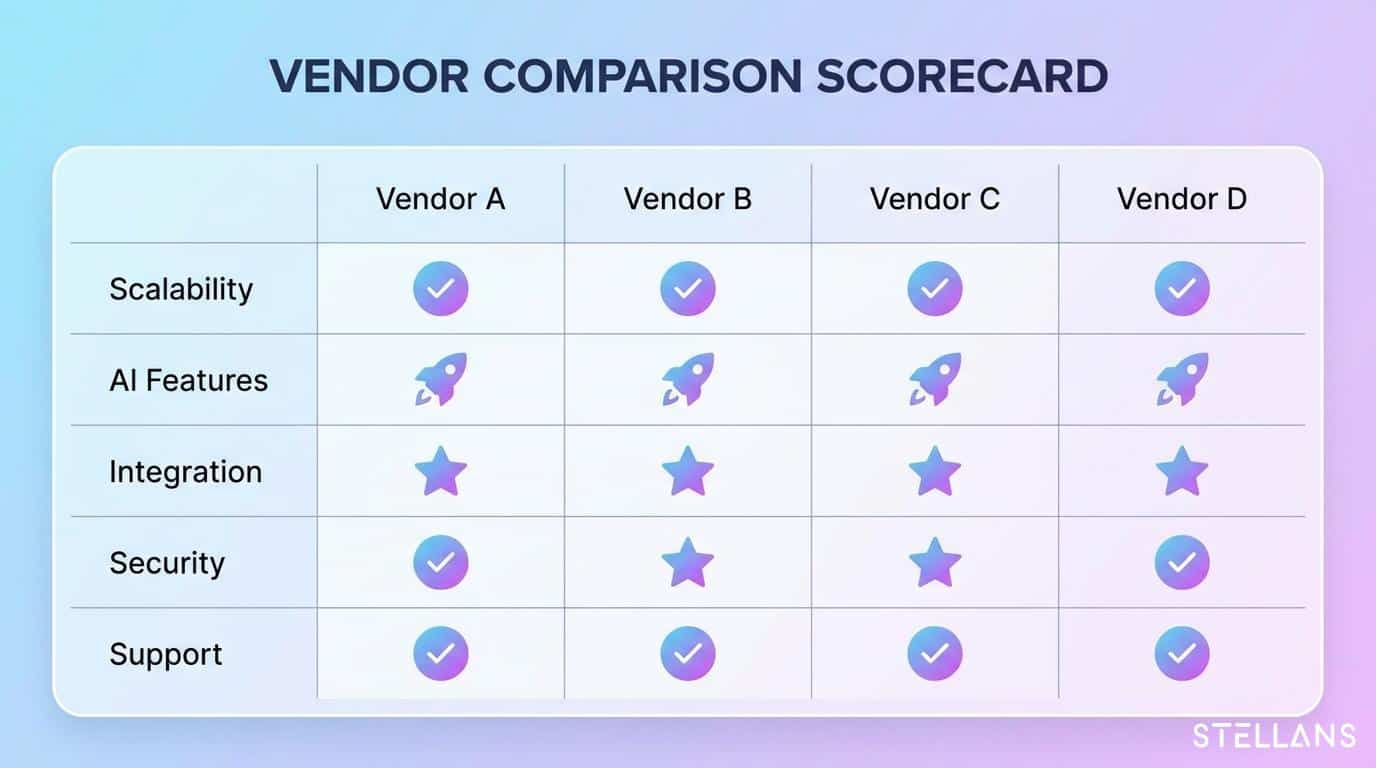
With your requirements defined, you can now build a vendor scorecard to compare potential solutions. This tool forces a structured, data-driven comparison and minimizes the influence of a flashy sales presentation.

Your scorecard should weigh criteria based on your specific priorities. For a company in a highly regulated industry, governance and security might be weighted most heavily. For a fast-growing digital native, scalability and integration may be paramount.

Here is a sample scorecard comparing a few major players in the EDM space. Note that ratings are illustrative; you should populate this with your own research from analyst reports, peer reviews, and proof-of-concept results.

Step 3: Analyze Total Cost of Ownership (TCO) Beyond the License Fee

The sticker price of an EDM platform is just the tip of the iceberg. A true TCO analysis must account for all the associated costs that you will incur over five years. Neglecting these “hidden” costs can blow your budget and jeopardize the entire project.

Be sure to factor in:

A comprehensive TCO analysis provides a realistic picture of the long-term financial commitment and is critical for securing executive buy-in.
Navigating the Gauntlet: Key Implementation Complexity Factors

Even the highest-rated EDM platform will fail if the implementation is managed poorly. The technical realities of a large enterprise environment present a gauntlet of challenges that can derail a project. Acknowledging and planning for these complexities from day one is the key to a successful deployment.

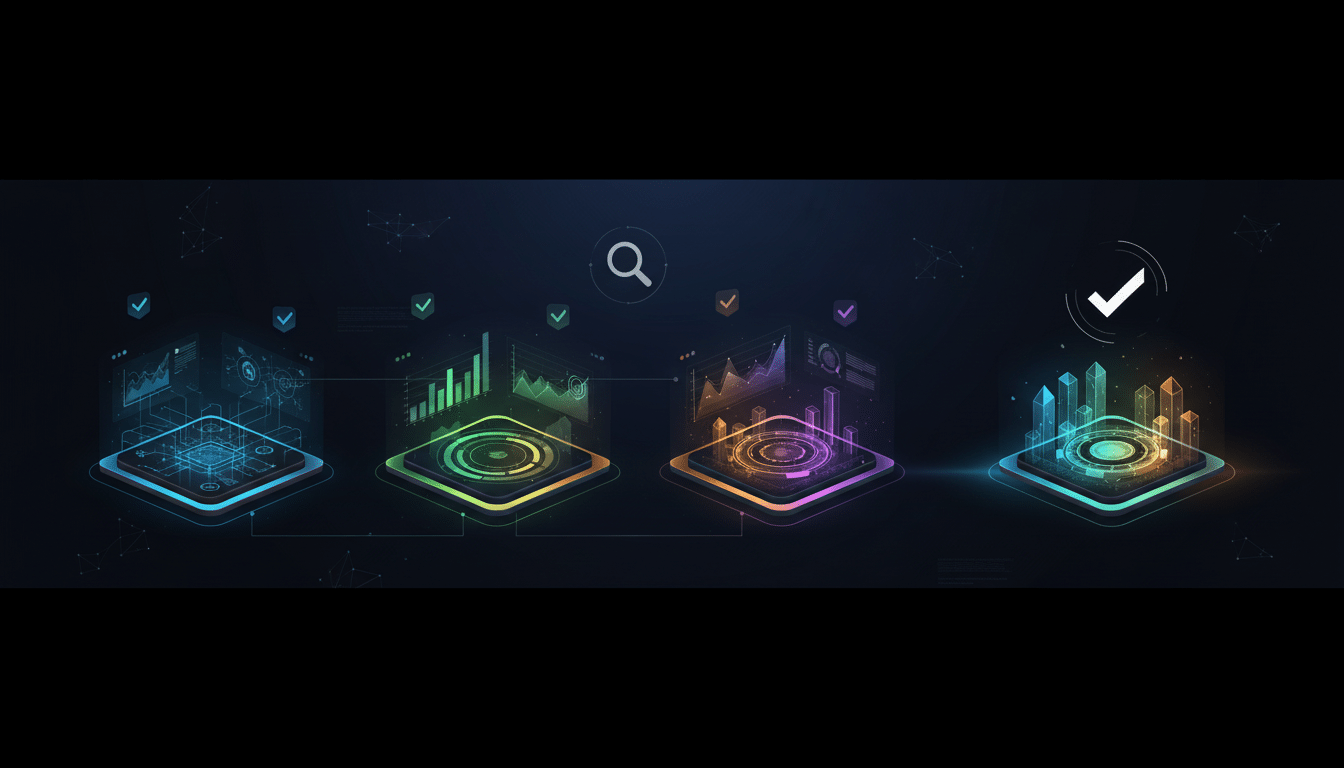
This can be visualized as a three-phase flowchart:

Taming the Beast: Integrating with Existing Systems & Data Silos

For any large enterprise, the biggest implementation hurdle is integrating the new EDM solution with a complex web of existing systems. This includes everything from decades-old mainframe applications to modern SaaS platforms.

Bridging Worlds: Hybrid Cloud and On-Premises Considerations

Few large enterprises operate exclusively in the cloud or on-premises. The reality for most is a hybrid environment, and your EDM solution must be able to bridge these worlds seamlessly. A platform that excels in a pure-cloud environment may struggle when asked to govern data residing in an on-premises data center.

Key challenges include:

Paying Down Debt: Addressing Technical Debt and Support Complexity

Introducing a modern EDM platform into an environment burdened by years of technical debt is like trying to install a high-performance engine in a car with a rusted frame. Before you begin implementation, you must conduct an honest assessment of your current infrastructure.

Can your network handle the increased traffic? Are your existing databases and data warehouses optimized for performance? Is your IT team equipped to support a new, complex platform? Ignoring these questions can lead to performance bottlenecks, system instability, and a frustrated support team. Often, an EDM implementation project must be paired with a parallel effort to modernize underlying infrastructure and pay down technical debt.

The Human Element: Mastering Change Management and Adoption

Many leaders make the mistake of viewing an EDM implementation as a purely technical project. In reality, it is a profound cultural shift that redefines how your organization values and interacts with data. The technology can be perfect, but if your people don’t embrace it, the project will fail. This is why a formal change management plan is not a “nice-to-have”; it is a critical success factor.

Assembling Your Champions: Stakeholder Engagement and Training

Successful change starts with a coalition of the willing. You must identify and empower “data champions” from across the business. This cross-functional team should include representatives from IT, finance, marketing, operations, and any other key department that creates or consumes data.

These champions serve several vital roles:

Training cannot be one-size-fits-all. A business analyst needs to learn how to use the data catalog to find insights, while a data steward needs to understand the intricacies of the governance workflow. Design a role-based training program that is relevant, practical, and continuous.

From Mandate to Movement: Driving User Adoption and Self-Service

You cannot mandate a cultural shift. The goal is to create a movement where employees are not forced to use the new system but want to use it because it makes their jobs easier and more impactful.

Building for the Future: Embracing DataOps for Continuous Improvement

An EDM implementation is not a one-time project with a defined end date. It is the beginning of a continuous journey of improvement. This is where the principles of DataOps come into play. Borrowing from the DevOps movement in software development, DataOps applies agile methodologies to the entire data lifecycle.

It creates a culture of collaboration between data engineers, data scientists, and business users. It emphasizes automation, monitoring, and rapid iteration. By adopting a DataOps mindset, you can ensure that your data management processes are continuously refined and improved, allowing your organization to adapt quickly to new challenges and opportunities. As some industry analysts note, this agility is becoming a key differentiator.

Future-Proofing Your Strategy: Avoiding Vendor Lock-In

One of the greatest fears for any CDO is committing to a multi-million dollar platform only to find themselves trapped. Vendor lock-in occurs when the cost and complexity of switching to a different platform become so prohibitively high that you are stuck with your initial choice, even if it no longer meets your needs. This dependency stifles innovation and gives the vendor immense leverage during contract renewals.

The Power of Neutrality: Strategic Vendor-Agnostic Partnerships

This is where working with a vendor-neutral service partner can be invaluable. A partner like Stellans is not trying to sell you a specific software license. Our success is measured by your success. We work with you as an extension of your team, providing an objective, experienced perspective throughout the selection, negotiation, and implementation process. This partnership ensures that your decisions are driven by your strategic goals, not a vendor’s sales quota.

Designing for Flexibility: Open Standards and Composable Architectures

The most effective way to avoid vendor lock-in at a technical level is to prioritize platforms that embrace open standards and composable architectures. A composable architecture allows you to assemble a “best-of-breed” data stack, picking and choosing components from different vendors that best fit your needs, rather than being forced into a single vendor’s monolithic suite.

Look for solutions that:

This approach, combined with following established implementation frameworks like those outlined in NIST’s security planning guides, provides the architectural flexibility to adapt and evolve your data strategy as technology and business needs change.

Conclusion: Your Data, Your Strategy

Selecting and implementing an enterprise data management solution is a monumental task. As we’ve seen, it requires a balanced strategy that gives equal weight to the platform (evaluation), the process (implementation), and the people (change management).

One 2024 market analysis highlights(https://www.greshamtech.com/blog/top-enterprise-data-management-software) The proliferation of tools, but technology alone is not the answer. A successful EDM strategy is built on a clear understanding of your business goals, a rigorous and objective evaluation process, a realistic plan for navigating technical complexity, and a deep commitment to fostering a data-driven culture.

By getting this right, you transform data from a source of complexity and risk into your most valuable strategic asset. You break down the silos that hinder collaboration, you empower your teams with the insights they need to make smarter decisions, and you build an agile, future-proof foundation for innovation and growth.

Feeling overwhelmed? Selecting and implementing an EDM solution is a monumental task. Our Data Strategy Services experts can guide you through every step of the process with a vendor-neutral, results-driven approach. Contact us to build your data strategy.

Frequently Asked Questions

What is a data-driven vendor selection framework? A data-driven vendor selection framework is a structured methodology used to evaluate and choose an EDM solution based on objective criteria rather than marketing claims. It involves defining specific business and technical requirements, creating a weighted scorecard to score vendors on capabilities like scalability and integration, and conducting a thorough Total Cost of Ownership (TCO) analysis that includes all hidden costs, ensuring the final decision is aligned with measurable business goals.

How do you manage vendor lock-in risks with EDM solutions? Managing vendor lock-in risk involves a two-pronged approach. Strategically, partnering with a vendor-neutral consultant ensures decisions are based on your needs, not a sales quota. Technically, you should prioritize solutions built on open standards and composable architectures. This allows for greater interoperability and makes it easier to replace or augment components from different vendors in the future, providing long-term flexibility.

What are the key change management requirements for EDM implementations? The key change management requirements for an EDM implementation focus on the “people” side of the equation. This includes securing executive sponsorship, assembling a cross-functional team of “data champions” to drive adoption, developing a role-based training program, and fostering a culture of self-service. The goal is to move from a top-down mandate to a grassroots movement where users embrace the new platform because it empowers them.

References

Article By:

https://stellans.io/wp-content/uploads/2026/01/1565080602204-1.jpeg
Zhenya Matus

Fractional CDO

Related Posts

    Get a Free Data Audit

    * You can attach up to 3 files, each up to 3MB, in doc, docx, pdf, ppt, or pptx format.