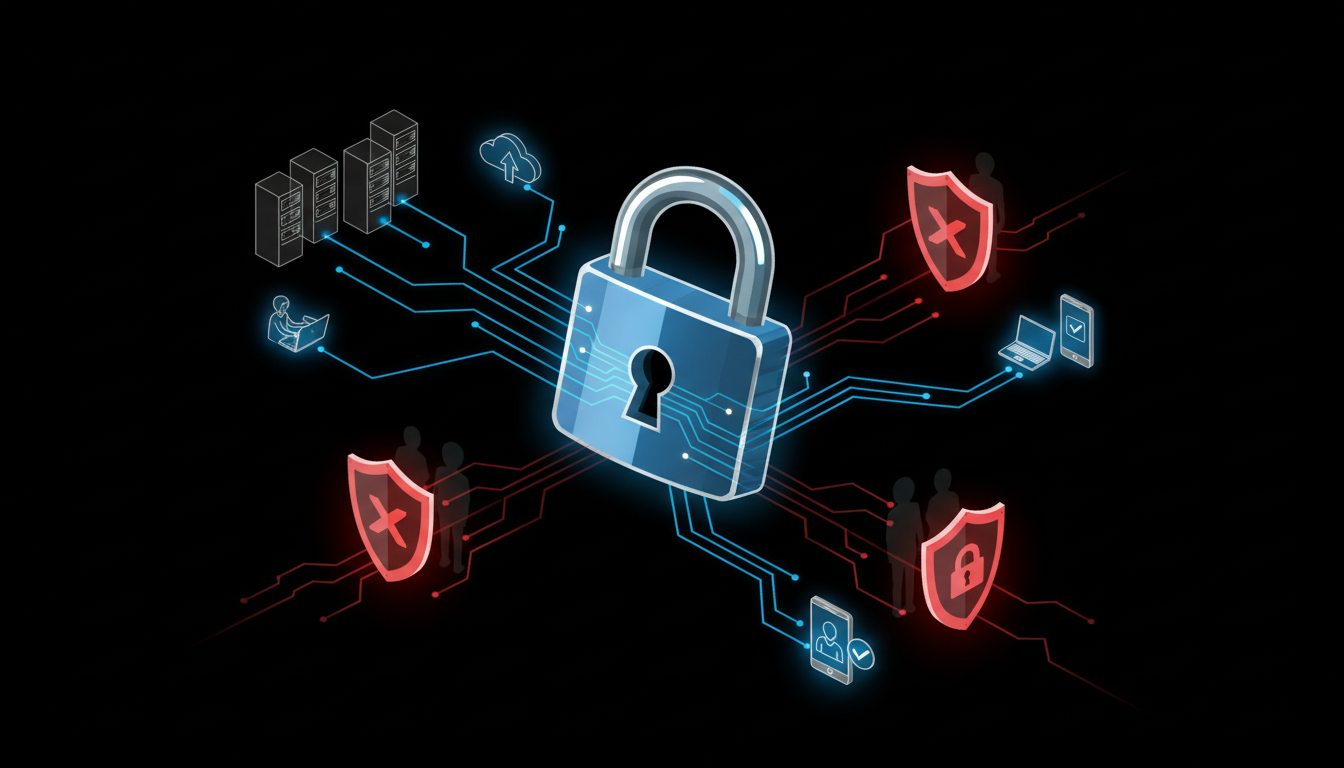
A comprehensive data security strategy is not about choosing one of these tools; it is about weaving them together into a cohesive fabric.
1. Identity and Access Management (IAM)
What it is: Identity and Access Management (IAM) is the gatekeeper of your digital resources. It ensures that the right people have the right access to the right resources at the right time.
Business Context: IAM stops the most common attack vector: compromised credentials. By implementing granular controls, you ensure that a marketing intern cannot accidentally access financial payroll data.
- Role-Based Access Control (RBAC): Assigns permissions based on job function rather than individual requests.
- Multi-Factor Authentication (MFA): Adds a critical layer of verification.
At Stellans, we emphasize strict Data Access Control to minimize the “blast radius” of any potential insider threat.
2. Data Encryption
What it is: Encryption is the process of scrambling data into an unreadable format using mathematical algorithms. This data can only be unlocked with a specific decryption key.
Business Context: Think of encryption as the ultimate fail-safe. It secures data in two states:
- At Rest: Protecting files stored on servers or laptops.
- In Transit: Protecting data moving between your browser and the cloud. Even if a cybercriminal manages to steal your database, encryption ensures that the data remains useless gibberish to them without the keys.
3. Dynamic Data Masking
What it is: Dynamic Masking obscures sensitive data in real-time based on the user’s privilege level. Unlike encryption, which hides the whole file, masking might show the last four digits of a credit card number to a support agent while hiding the rest.
Business Context: This is critical for non-production environments. Developers and data analysts often need to work with realistic datasets to build applications or run reports. Dynamic masking allows them to do their jobs without ever being exposed to actual Personally Identifiable Information (PII) like Social Security numbers or full customer addresses.
4. Data Loss Prevention (DLP)
What it is: DLP solutions detect and prevent potential data breaches by monitoring, detecting, and blocking sensitive data while in use, in motion, and at rest.
Business Context: DLP serves as your internal traffic cop. It prevents data exfiltration, whether malicious or accidental. For example, if an employee tries to upload a file containing 100 customer credit card numbers to a personal Google Drive or email it outside the organization, the DLP system will flag the action and block the transmission immediately.
5. Audit and Monitoring
What it is: This involves the continuous logging of user activities and data access patterns. It creates a digital paper trail that answers the questions: Who access this? When? and What did they do?
Business Context: Audit and Monitoring are indispensable for forensics and compliance. In the event of an anomaly, you need the ability to trace the steps back to the source. Furthermore, for frameworks like HIPAA and ISO 27001, proving that you monitor access logs is a mandatory requirement for certification.
6. Cloud Security Posture Management (CSPM)
What it is: CSPM tools automate the identification and remediation of risks across cloud infrastructures (like AWS, Azure, Google Cloud).
Business Context: Cloud environments are dynamic and complex. A single misconfiguration, like leaving an Amazon S3 storage bucket “public,” can expose millions of records. Posture Management continuously scans your cloud environment to ensure it adheres to security best practices and compliance standards, effectively plugging the “leaky buckets” in your infrastructure.
7. Backup and Recovery
What it is: This is the process of creating secure copies of data that can be restored in case of loss, corruption, or deletion.
Business Context: Backup and recovery is your insurance policy against ransomware. If an attacker encrypts your live data and demands a ransom, having a clean, isolated backup allows you to restore operations without paying the fee. It ensures business continuity even in the face of catastrophic failure.