Snowflake vs Redshift 2026: Cloud Data Warehouse Comparison

12 minutes to read
Get free consultation


Modern data warehousing remains a critical crossroads for IT strategy in 2026. The choice you make today directly dictates your business agility, the workload burden placed on your engineering team, and your long-term budget. Choosing a cloud data warehouse now requires evaluating comprehensive factors beyond SQL capabilities or basic storage limits. The decision between Snowflake and Amazon Redshift represents a fundamental operating model choice for your organization.

We work with you to unlock data potential, and we see firsthand how this choice impacts enterprise growth. Snowflake vs Redshift serves as a profound operating decision about cost, scale, governance, and long-term flexibility, rather than just a simple product comparison. Your selection will empower your team to streamline your data pipeline into a well-oiled machine and reduce administrative overhead. By viewing this choice through the lens of a technical translator and implementer, we want to help you evaluate how separate compute and storage paradigms impact engineering workflows, analyze real-world administrative efficiencies, and guide you toward a solution that achieves measurable business outcomes.

Why Cloud Data Warehouse Comparison Matters Today

The foundational demands placed on technology infrastructure have shifted dramatically. Modern business intelligence demands sophisticated solutions beyond simple nightly batch ingestion. We are operating in an era defined by Lakehouse convergence, real-time analytics, and aggressive AI integrations.

Your data infrastructure must process massive datasets while seamlessly integrating with predictive modeling tools and automated applications. Modern data architecture also requires robust multi-cloud capabilities. Organizations increasingly prefer platform independence over deep vendor lock-in. You need a data platform that allows your team to leverage best-in-class tools across different cloud ecosystems without redesigning your entire architecture.

When conducting a cloud data warehouse comparison, you must look beyond synthetic benchmarks. The true measure of an effective platform is how it performs under unpredictable loads, how easily it fits into your existing security apparatus, and how much engineering effort is required to maintain it. Our goal is to ensure your technology serves your business strategy, providing agility and growth while avoiding technical debt.

Architecture Comparison: The Foundation of Performance

Architecture defines operational limits. The structural differences between Snowflake and Redshift dictate how easily you can scale your resources and how much time your team spends managing backend infrastructure.

Snowflake Architecture Overview

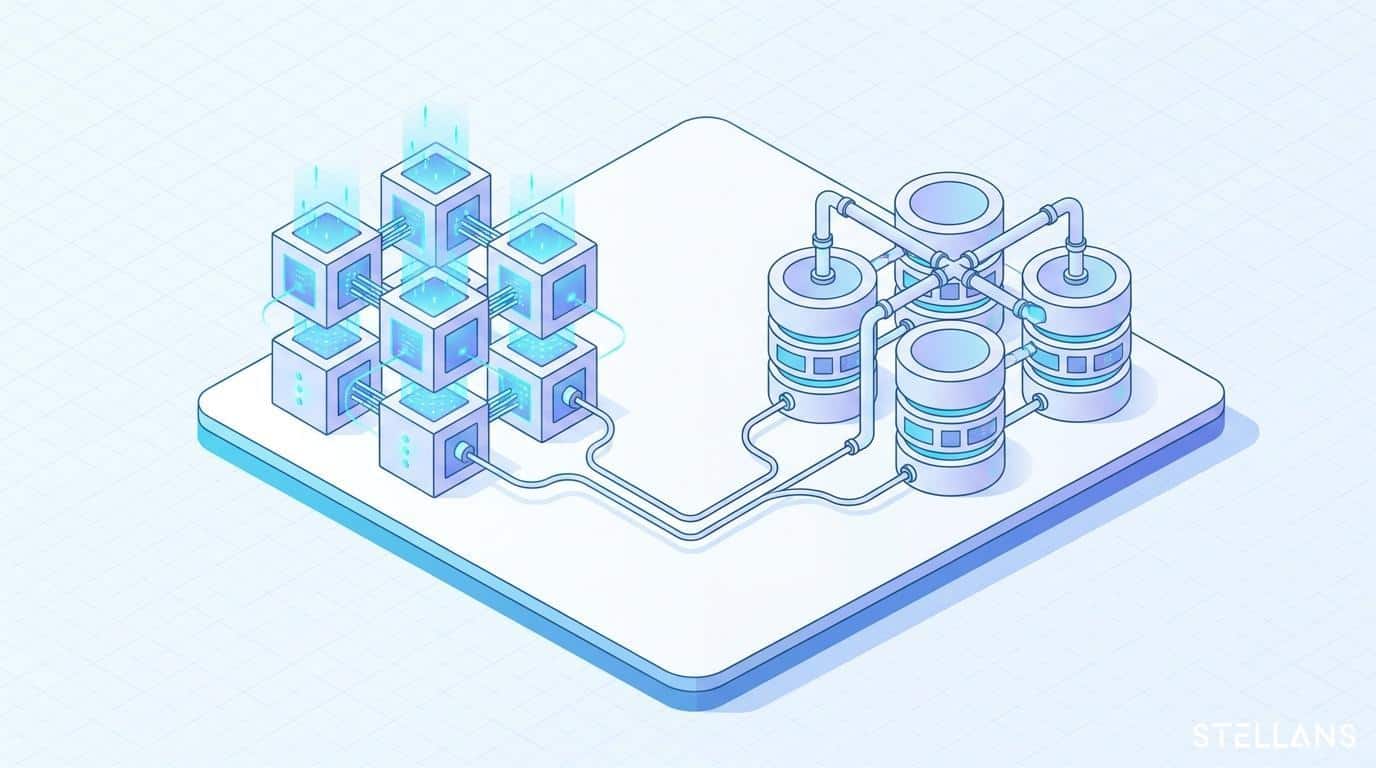
Snowflake utilizes a unique three-layer layout built specifically for the cloud. This architecture inherently separates compute operations from physical storage. The lowest layer manages raw data storage, organizing it into optimized, compressed micro-partitions. The middle layer consists of virtual warehouses that process query tasks. Finally, the cloud services layer sits on top, managing metadata, authentication, and infrastructure security.

Because Snowflake’s separation of compute and storage is absolute, multiple distinct virtual warehouses can query the exact same underlying data simultaneously without structural interference. This multi-cluster shared-data design functions like a flexible utility grid. You spin up compute power exactly when and where it is needed, preventing resource bottlenecks during complex operations.

Amazon Redshift Architecture Overview

Amazon Redshift originated from a traditional, tightly coupled database design tailored for Amazon Web Services (AWS) environments. The typical Redshift high-level system architecture revolves around a central cluster. A leader node coordinates incoming queries, parses them, and distributes the heavy lifting across multiple compute nodes.

Recently, AWS introduced RA3 instances to bridge the architectural gap. These instances introduce managed storage, allowing users to separate compute costs from storage limits to a certain degree. The system fundamentally remains a cluster-based architecture. To execute queries, data must still move from the managed storage layer onto the compute nodes via a fast network cache. Standardizing on this model means you are managing a cluster of nodes that must be consistently tuned to handle your peak requirements.

Implications on Maintenance

The way a platform is built directly influences how much time your team spends maintaining it. Architecture dictates admin overhead. Snowflake abstracts almost all physical tuning. Your team can bypass managing indexes, partitions, or vacuuming tasks. The cloud services layer handles metadata optimization automatically.

Redshift demands a more hands-on approach. Even with auto-tuning features integrated into RA3 instances, a database administrator must still monitor sort keys, distribution styles, and vacuum processes to maintain optimal query speeds. Streamlining infrastructure stability gives your engineers more hours to build new reporting features and optimize incoming AI models.
Scaling Capabilities and Performance in Real Workloads

A data platform must respond gracefully when thirty analysts, an automated integration tool, and a predictive AI model all hit the database at the same moment.

Snowflake Scaling and Concurrency

Snowflake thrives on its elasticity and concurrency. Workload isolation is a core tenet of its design. You can assign a specific virtual warehouse exclusively to your automated data pipeline tool, while assigning a completely different virtual warehouse to your finance team doing complex end-of-month reporting.

Since these virtual warehouses access the same raw storage without sharing compute capacity, both teams enjoy uninterrupted peak performance. Snowflake manages auto-scaling natively. When business intelligence queries spike, the multi-cluster feature automatically provisions additional identical warehouses to distribute the user load. Once the demand subsides, those temporary warehouses shut down. This automatic adjustment prevents scaling issues and removes capacity planning guesswork.

Redshift Performance Tuning

Scaling Amazon Redshift involves different mechanics. Redshift utilizes concurrency scaling features to handle sudden bursts of query activity. When incoming requests exceed the primary cluster’s capacity, Redshift temporarily launches transient clusters to balance the load.

Achieving peak performance during mixed workloads is entirely possible with proper deep technical tuning. Redshift relies on Query Monitoring Rules and Workload Management queues to prioritize critical tasks. Careful setup ensures that a heavy ETL ingestion workload leaves real-time business intelligence dashboards running swiftly. Managing Redshift requires an engineer who deeply understands Amazon Web Services (AWS) infrastructure and has the technical foresight to map out cluster availability before high-traffic events occur.

Pricing Model Differences and Total Cost of Ownership

Pricing structures between these two platforms highlight distinct philosophies regarding cost management. Understanding these pricing model differences is essential for accurately projecting your long-term Total Cost of Ownership.

Snowflake Pricing Details

Snowflake operates on a consumption-based pricing model. Storage is relatively inexpensive, largely mirroring the strict cost of the underlying cloud provider bucket. The primary cost driver is compute availability, measured in credits.

Snowflake utilizes pay-per-second billing. You are charged exclusively for the exact time a virtual warehouse is active. If a compute engine runs an intensive query for forty seconds and then shuts off, you pay for exactly forty seconds. This model is exceptionally efficient for erratic or spike-heavy workloads. It requires strict financial governance to unlock optimal savings. If an analyst accidentally leaves a large virtual warehouse running over the weekend, credit consumption can spike unexpectedly. Your technical leaders must implement automated suspension monitors and resource quotas to optimize compute costs.

Redshift Pricing Details

Redshift is originally built around instance-based pricing. Because you are provisioning hardware nodes, you pay for those nodes by the hour as long as the cluster is active, regardless of user activity. This model provides highly predictable cluster pricing for your finance department.

Redshift becomes incredibly cost-effective when your organization sustains a consistent, heavy baseline of data activity 24/7. AWS offers significant discounts if you commit to Reserved Instances for one to three years. This makes budgeting straightforward for legacy AWS-native shops. Provisioning the exact cluster size needed to support your maximum anticipated peak load ensures readiness, though it involves paying for resources during off-peak hours.

Hidden Costs

When conducting a Total Cost of Ownership analysis, you must examine all financial components. First, consider data egress. Both platforms sit on cloud infrastructure, but cross-region data transfers can impact monthly bills. Second, calculate the cost of provisioning resources. With Redshift, provisioning massive instances to satisfy one hourly peak per day requires dedicating additional capital. Finally, the most significant operational cost lies in engineering hours. Organizations utilizing separate compute layers often optimize capacity utilization and save engineering time. The hourly investment of a senior data engineer spending fifteen hours a week tuning Redshift distributions could instead be allocated to building revenue-generating AI features. We always tell clients to measure the true resource cost, beyond just the vendor invoice.

Security, Compliance, and Vendor Lock-in

Security and compliance are non-negotiable foundations for modern enterprises. Furthermore, securing your data must be balanced alongside managing future vendor dependencies.

Multi-Cloud vs. Tightly Coupled AWS

Vendor lock-in sits at the center of many infrastructure debates. IT Decision Makers prefer maintaining flexibility to ensure continuous financial and technical leverage.

Snowflake champions multi-cloud capabilities. You can deploy Snowflake natively on AWS, Google Cloud, or Microsoft Azure. The user interface, SQL syntax, and security protocols remain identical regardless of the underlying cloud shell. If your company decides to transition from AWS to Azure in three years, Snowflake allows you to migrate your underlying database structure cleanly across cloud boundaries. This mitigates infrastructure lock-in and provides serious negotiation leverage during contract renewals.

Redshift is an essential pillar of Amazon’s ecosystem. It offers incredibly deep, seamless integration with other AWS services like S3, AWS Glue, and SageMaker. For organizations already fully committed to a single-cloud AWS strategy, this tight coupling acts as a massive operational benefit. This tightly woven integration implies your central data repository is deeply tethered to Amazon’s proprietary infrastructure, requiring extra planning for a future shift to multi-cloud setups.

Governance

Both platforms deliver enterprise-grade security structures. You will find robust tools for localized data encryption, rest and in-transit operations, and strict compliance certifications for HIPAA and SOC2.

Governance requirements hinge on precise access control. Snowflake offers dynamic data masking natively. This allows administrators to hide personally identifiable information like social security numbers from analysts elegantly, avoiding the need to write complex side-views. Redshift provides robust column-level security and seamlessly integrates with AWS Identity and Access Management (IAM), centralizing all permission parameters securely under your existing AWS framework.

Reducing Admin Overhead: Operational Realities

The reality of your operating model becomes evident on day one of production. Admin efficiency acts as a powerful catalyst for your team’s velocity.

Our engineers observe that platforms requiring continuous physical tuning demand specific resource allocation in DataOps implementations. Managing manual vacuum processes, redefining keys for new analytics use cases, and monitoring query queues relies heavily on the capacity of an agile team. Snowflake shifts these responsibilities away from your engineers. It acts more like a fully managed service, letting DataOps teams focus entirely on code deployment, testing, and business logic. Redshift gives you tighter control over physical hardware parameters, which appeals to highly specialized deployment teams, and it thrives when dedicated database administration hours are devoted to maintaining optimal speeds.

Decision Matrix: Which Warehouse Fits Your Organization?

We recommend making your final decision based on your team’s skill set, your workload variability, and your current cloud commitments.

Feature Snowflake Amazon Redshift
Scalability Automated, instantly elastic Manual/Tuned via RA3 and Concurrency Scaling
Pricing Model Compute-based, Pay-per-second Instance-based, highly predictable, Reserved options
Admin Overhead Minimal (Zero-tuning design) High (Requires dedicated DB tuning & management)
Multi-Cloud Support Yes (AWS, GCP, Azure) No (AWS exclusive)

Choose Snowflake when:

Choose Redshift when:

How Stellans Modernizes Your Data Infrastructure

Technology decisions matter most when they connect directly to business value. Picking the right tool is a vital first step. You still need an end-to-end strategy to set up robust ingestion layers, ensure strict data governance, and migrate legacy logic smoothly while supporting current business operations.

We partner closely with ambitious clients to design scalable systems that fuel innovation. Whether you choose to leverage the seamless integrations of Redshift or the absolute operational elasticity of Snowflake, Stellans helps map out exactly how that infrastructure transforms your operations. Clients actively report significantly faster insights post-implementation because we design data pipelines optimized for outcome delivery.

If your team is seeking guidance on expanding legacy storage solutions or conquering complex cloud migrations, explore our Data Engineering services. We work with you to analyze your financial landscape, benchmark your workload phenotypes, and implement a future-proof ecosystem that serves your specific business goals.

Conclusion and Next Steps

The decision between Snowflake and Amazon Redshift sets the technical trajectory for your organization through 2026. Prioritizing automated scaling and multi-cloud freedom points strongly toward Snowflake. Alternatively, heavily capitalizing on deeply integrated AWS ecosystems and fixed enterprise billing limits points toward Amazon Redshift. Both platforms bring powerful capabilities to the table, and one will inevitably align much better with your specific engineering culture and financial goals.

Ensure that strategic vision and specialized business requirements drive this critical structural decision. If you are ready to evaluate your workloads through a clear, business-driven lens, reach out to us at Stellans for custom digital transformation consulting. Together, we will build a scalable infrastructure roadmap tailored entirely to your growth.

Frequently Asked Questions

Which is better, Redshift or Snowflake? The ideal platform depends entirely on your existing operating model. Snowflake is vastly superior for teams seeking zero-maintenance operations, highly elastic auto-scaling, and multi-cloud flexibility. Amazon Redshift stands out for organizations firmly entrenched in the AWS ecosystem seeking flat, predictable pricing for continuous continuous heavy workloads.

Is Snowflake more scalable than Redshift? Yes, regarding operational ease and instant elasticity. Snowflake uses complete compute and storage separation, allowing you to spin up isolated virtual warehouses dynamically to meet concurrent user demands effortlessly, without impacting main cluster performance or requiring complex manual queue management.

Why migrate from Redshift to Snowflake? Organizations primarily migrate to achieve streamlined operations with minimal administrative overhead and enhanced vendor flexibility. Migrating allows teams to adopt pay-per-second billing for erratic workloads, safely share live data across different cloud platforms, and reallocate database administration hours toward building core AI and analytics applications.

References:

Article By:

https://stellans.io/wp-content/uploads/2026/01/Vitaly_Lilich.jpg
Vitaly Lilich

Co-founder

Related Posts

    Get a Free Data Audit

    * You can attach up to 3 files, each up to 3MB, in doc, docx, pdf, ppt, or pptx format.