Data Lakehouse vs Data Warehouse in 2026: Stack Design Guide

14 minutes to read
Get free consultation


The software landscape of 2026 demands unparalleled agility. We are witnessing an explosion of generative artificial intelligence and a rapid evolution of cloud platforms. Engineering leaders and data architects constantly face a pressing question about how to optimize their traditional data warehouses for the future.

The data warehouse continues to thrive by harmonizing beautifully with the data lakehouse paradigm.

Decades ago, data warehouses revolutionized how executives consumed tabular information. Then, data lakes emerged to store massive, unstructured data volumes cheaply. Today, modern architectures seamlessly combine these two distinct environments. Organizations can now embrace both strict reliability and massive scalability simultaneously.

In this complete guide, we will unpack the modern realities of data stack design. We will define the lakehouse architecture and outline the distinct advantages of both systems. We will also explore top vendor platforms and share how we design resilient hybrid setups for our enterprise clients. Ultimately, our objective is to help you cut through vendor hype and build a stack that delivers immediate business value.

What is a Data Lakehouse? Definition and Architecture

A data lakehouse operates as a well-oiled data machine. It provides a modern architectural blueprint that combines the vast, cost-effective storage capabilities of a data lake with the strict data management and governance features of a data warehouse.

Historically, companies maintained distinct silos by moving structured data into premium warehouses for reporting and storing unstructured files in unmanaged lakes for data science. The lakehouse elegantly unites these paths. It allows organizations to query raw files residing in highly affordable cloud object storage while enjoying full enterprise-grade governance.

Core Components and Layers

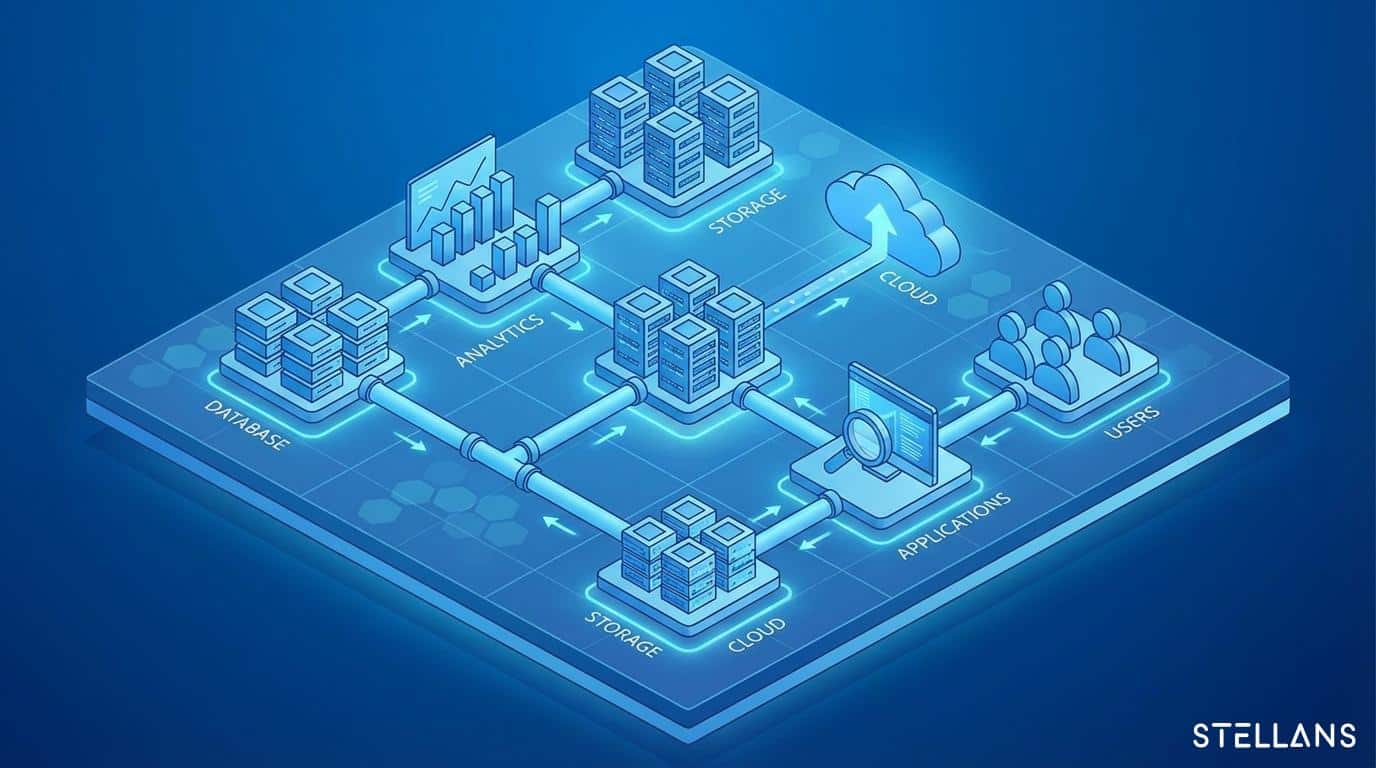
To understand the lakehouse, we must look at its technical layers. The foundational layer focuses strictly on efficient data ingestion and long-term retention. Data lands in cost-effective cloud object storage as quickly as it is generated.

Crucially, this storage leverages open-source file formats. Formats like Apache Parquet, Delta Lake, and Apache Iceberg are essential here. They compress large volumes of data while retaining rich metadata properties. Above the storage layer sits the unified metadata catalog. This layer indexes all incoming assets and brings structural order to diverse folders of files.

Finally, the consumption endpoints connect directly to this governed storage. Users can plug in standard business intelligence software or advanced machine learning frameworks to consume the exact same underlying datasets natively.

How it Differs from Data Lakes and Warehouses

The defining feature of a lakehouse is its ability to run ACID transactions directly on data lakes. ACID stands for Atomicity, Consistency, Isolation, and Durability. These traits guarantee incredible structural integrity, a feature previously exclusive to rigid relational databases.

Modern data lakehouses preserve data integrity during concurrent read and write operations, overcoming traditional file corruption challenges. The system safely protects your information by automatically rolling back the transaction if a pipeline experiences an interruption. This innovation securely bridges the gap between massive data lakes and robust warehouses.

Addressing Data Architecture Pain Points in 2026

When we partner with organizations navigating this transition, our primary focus revolves around maximizing agility. Modern architectures actively accelerate business growth by freeing information from previously isolated platforms.

Consolidated modern architectures optimize cloud billing and strengthen corporate compliance capabilities by eliminating redundant pipelines. Engineering teams save massive amounts of time by interacting with central storage locations instead of constantly migrating records.

Structured vs Unstructured Data Management

Handling diverse data types requires modern lakehouse solutions, as traditional warehouses intentionally focus on structured precision. Modern platforms gracefully process audio files, application logs, and video streams, beautifully complementing the traditional rows and columns of strict databases. Warehouses excel at a schema-on-write approach, which empowers data engineers to firmly format information before loading it for guaranteed executive reporting.

Lakehouses operate with remarkable agility by leveraging a schema-on-read approach natively built for unstructured assets fueling AI models. Data engineers smoothly load raw information into the lakehouse, allowing data scientists to selectively apply structural schemas when they query the data later. This flexibility provides an incredible advantage for deep learning and natural language processing.

Data Stack Design and Governance with Stellans

We routinely see clients report accelerated business outcomes once their stack is properly tuned. We guide digital transformation by auditing existing infrastructure and highlighting opportunities for streamlined efficiency.

Our unified design approach creates fully integrated, connected environments. We build scalable pipelines that turn data into actionable insights securely. We prioritize a single source of truth across your network. By decoupling storage from compute, we empower engineering teams to scale processing power independently. This creates a hyper-efficient data stack meticulously tailored to your exact business requirements.

Data Lakehouse vs Data Warehouse: Pros and Cons

Choosing between varying architectures requires a clear understanding of practical benefits. We evaluate technologies based strictly on client outcomes and workload requirements.

Advantages and Practical Considerations of Data Warehouses

Data warehouses remain incredibly powerful for specific analytical tasks. Their maturity makes them an absolute staple for large-scale enterprise reporting.

Pros:

Considerations:

Advantages and Practical Considerations of Data Lakehouses

Lakehouses represent the brilliant future of multi-modal data processing. They excel in environments characterized by rapid experimentation and massive volume scaling.

Pros:

Considerations:

Use Cases for Data Lakehouse and Data Warehouse

Technology architecture is ultimately a service-layer decision. We frame technical explanations purely around positive business impact. Matching the right tool to the specific user workload guarantees high enterprise ROI.

When to Choose a Data Warehouse

Enterprises gain tremendous advantages by relying on a data warehouse approach when actively managing tabular business history. Financial departments rely heavily on sub-second latency for flawless end-of-year reconciliations. Human resources require strict structural reporting to maintain perfect alignment.

A warehouse truly shines when a company supports hundreds of distinct users accessing established BI dashboards simultaneously. The rigid structure safely guarantees perfect metric calculations every time. For descriptive analytics looking at historical trends, the data warehouse remains the undisputed champion.

When to Choose a Data Lakehouse

Organizations heavily invested in advanced algorithms unlock massive potential through a data lakehouse. Use cases involving real-time log analytics, continuous incremental streaming, and predictive modeling all thrive beautifully here.

Generative AI models require massive troves of context to accurately function. A lakehouse naturally ingests these varied datasets with complete ease. When enterprises prioritize feeding raw signals into complex algorithms, the lakehouse format limits friction significantly and accelerates deployment.

Hybrid Architectures and Modern Approaches

By 2026, the industry standard fully embraces highly adaptive hybrid environments. We successfully deploy predictive AI models into production by smoothly layering advanced lakehouse capabilities beneath the existing solid warehouse infrastructure.

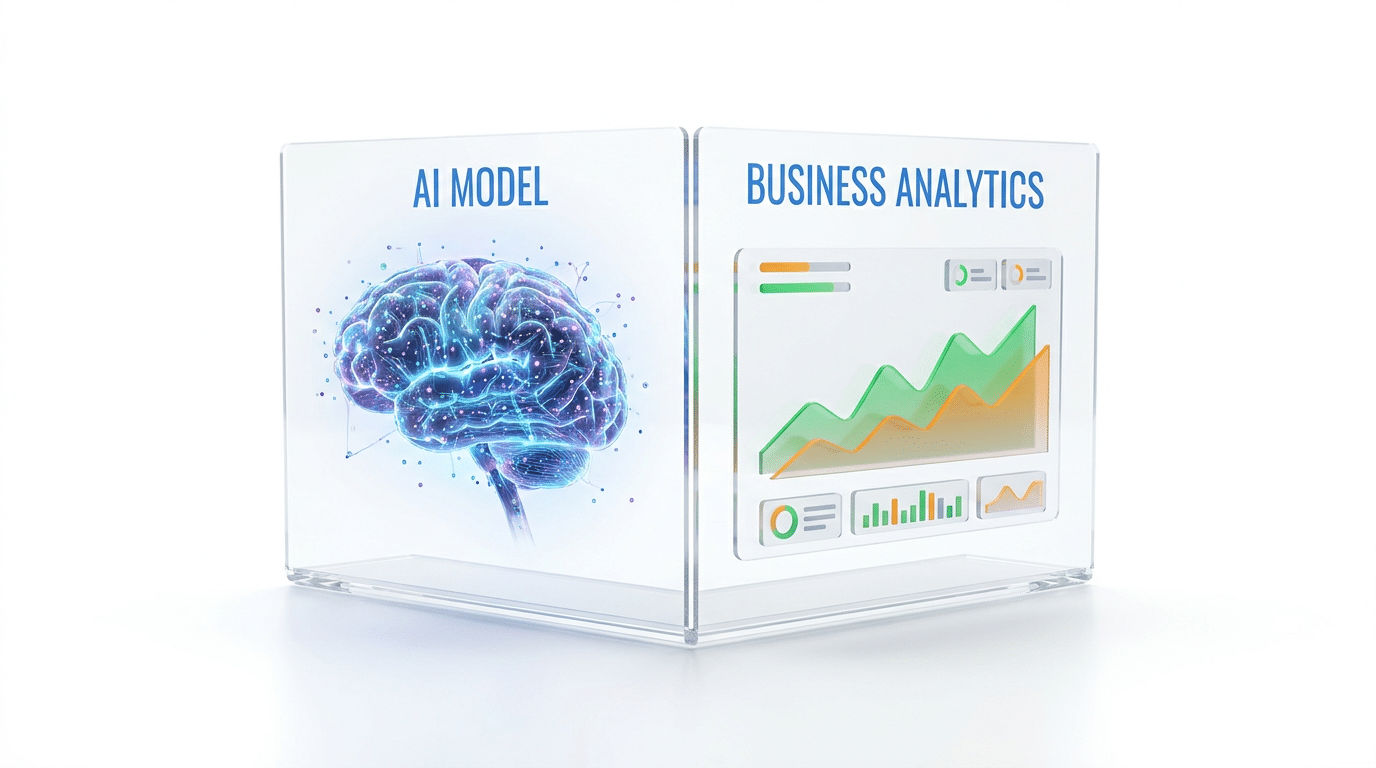
In a modern architecture, everything resides productively in unified open-storage layers. You spin up specialized warehouse compute clusters exclusively for handling high-concurrency SQL BI requests. Simultaneously, you deploy dedicated lakehouse compute engines to run intensive machine learning processes. Both operations interact beautifully with the same central storage bucket. This eliminates the need to copy assets across business units.

Databricks vs Snowflake: Vendor Perspectives

The market benefits heavily from the outstanding innovation of competing tech giants. Both Databricks and Snowflake offer exceptional, market-leading capabilities. They brilliantly approach the hybrid challenge from entirely different functional backgrounds.

Databricks as a Lakehouse-First Platform

Databricks powerfully pioneered the modern lakehouse concept. The platform builds upon a proud open-source tradition, originating from the esteemed creators of Apache Spark.

This platform champions a highly effective data-science-first approach. It actively promotes accessible open data formats like Delta Lake. Databricks allows brilliant engineers to connect disparate storage environments and perform highly complex algorithm training. For teams filled with Python developers and machine learning specialists, Databricks provides a phenomenally flexible environment. It easily accommodates raw unstructured feeds for immediate experimentation.

Snowflake as a Warehouse-First Platform

Snowflake completely revolutionized cloud analytics through its outstanding cloud-native data warehouse architecture. Its defining achievement is providing lightning-fast, zero-maintenance SQL environments for ultimate business intelligence usability.

Recently, Snowflake confidently expanded its capabilities into the highly demanding lakehouse space. Through added features like Snowpark, users can now efficiently process semi-structured and unstructured assets using Python and Java safely. Snowflake uniquely focuses on providing a heavily managed, secure experience. It abstracts away storage complexity and prioritizes BI-centric teams needing immense concurrent query speeds.

How Stellans Enables Hybrid Architecture Design

Competitors often frame this market firmly as a binary software choice, but we see a highly collaborative future. Warehouses and lakehouses natively co-exist to provide the ultimate business results.

Our consulting focus provides strictly vendor-neutral guidance. We guide clients above standard platform debates to confidently construct a resilient, combined stack. Sometimes a Snowflake SQL engine beautifully reading external Iceberg tables is the optimal route. Other times, a pure Databricks workflow yields the absolute fastest cost-to-performance ratio. We map out your existing workloads, test tool performance objectively, and actively engineer the fastest route to measurable value.
Legal and Regulatory Considerations for Data Architectures

A unified data machine introduces new responsibilities regarding governance. Merging vast pools of corporate intelligence creates an environment deserving of absolute meticulous planning and strict internal compliance.

Data Privacy and Compliance Challenges

Securing data lakes properly before connecting them to public artificial intelligence models protects organizations from massive vulnerabilities. Frameworks like the GDPR and CCPA provide excellent guidelines regarding data minimization and consumer privacy. Organizations protect themselves and build consumer trust by successfully encrypting all personally identifiable information thoroughly.

Data clean rooms have emerged as a vital and highly effective protective capability here. They proactively allow internal groups or external partners to share analytics securely without ever exposing protected raw PII. When architecting unstructured AI solutions, companies ensure total safety by rigorously adhering to federal standards. Leveraging proven resources like the NIST AI Risk Management Framework provides critical security guidelines for securing vast, varied information systems safely.

AI and Data Governance Implications

Feeding deeply verified and legally compliant assets into AI algorithms guarantees the most reliable and valuable business insights possible. Establishing total visibility prevents unverified information from impacting vital corporate decision-making tools.

This reality highlights the incredible value of automated lineage mapping. System engineers successfully map exactly where a raw data point originated and how it was mathematically transformed. Adhering to strict IEEE data architecture standards ensures that your backend remains perfectly compliant and easily transparent. To secure long-term success, successful organizations set strong governance foundations long before enabling advanced AI search parameters.

Conclusion: Maximizing the Value of the Data Warehouse

The data warehouse remains incredibly crucial, solidifying its role as a specialized powerhouse within the modern data stack. It now serves brilliantly as a dedicated processing engine for extreme-concurrency business intelligence within a much broader, unified architecture.

The lakehouse framework provides incredible flexibility for specialized AI operations and highly efficient raw storage capabilities. When seamlessly integrated, both concepts create an unstoppable data machine. The true key to success lies in expertly matching the exact compute paradigm to your specific, high-priority business workload.

As enterprises increasingly rely on advanced analytics and modern AI, optimizing your data foundation provides an immense competitive advantage. Enterprises thrive best by establishing streamlined pipelines and fully adaptable, vendor-neutral architectures.

If your organization is navigating these highly beneficial infrastructural upgrades, we are ready to assist. We build scalable systems, resilient applications, and modern infrastructure that fuel immediate growth and future-proof enterprise innovation. Reach out directly to speak with our engineering consultants and gracefully schedule an architectural deep-dive today.

FAQs

What is the primary difference between a data lakehouse and a data warehouse? A data warehouse expertly manages highly structured relational data using a rigid schema-on-write process, making it wonderfully ideal for business intelligence. A data lakehouse unifies flexible data lake storage with strict warehouse governance, allowing users to safely process unstructured, semi-structured, and structured data in massive volumes for advanced AI operations.

Do we need to replace our data warehouse with a lakehouse? No. Most modern enterprises utilize a highly beneficial hybrid architecture. You maintain your robust warehouse capabilities for high-concurrency executive SQL reporting while easily adopting lakehouse computing standards for raw unstructured machine learning tasks. Both brilliant systems can securely point to a single central source of truth.

How do open storage formats improve modern data architecture? Open formats like Apache Iceberg and Delta Lake intelligently introduce ACID transaction guarantees directly to raw cloud storage. This ensures high structural reliability and gracefully prevents data corruption during simultaneous read and write processes. Open formats also significantly promote vendor neutrality.

Is a data lakehouse more secure than a data lake? Yes. Modern lakehouses successfully resolve the ungoverned nature of older data lakes. A lakehouse wonderfully integrates robust centralized metadata catalogs and strict granular role-based access control. This functionality provides brilliant auditing capabilities and compliance tracking normally only found in heavy relational databases.

Article By:

https://stellans.io/wp-content/uploads/2026/01/leadership-1-1.png
David Ashirov

Co-founder, CTO

Related Posts

    Get a Free Data Audit

    * You can attach up to 3 files, each up to 3MB, in doc, docx, pdf, ppt, or pptx format.