DWaaS (Data Warehousing as a Service): Is It Right For You?

11 minutes to read
Get free consultation


Fast-growing businesses have a remarkable opportunity to easily clarify their performance metrics. Scaling companies naturally adopt specialized software to drive this success. Marketing teams use HubSpot, sales teams rely on Salesforce, and finance teams build robust Excel models. Unifying your organization begins when business leaders connect these independent systems so they seamlessly talk to each other.

Fulfilling leadership requests for unified reports on customer acquisition costs can become a smooth and automated process. Streamlining data extraction and spreadsheet management frees your team to focus on strategic analysis. Upgrading this workflow eliminates data silos, resolves reporting challenges, and fundamentally accelerates true business scaling.

Modern growth requires modern infrastructure. Moving your data operations to the cloud is the most effective way to unify your business intelligence. We built Stellans to guide enterprises and small businesses alike through this exact digital transformation. In this guide, we will explore “data warehousing as a service” to help you understand the benefits of upgrading your reporting capabilities to unlock accurate, real-time analytics.


What is Data Warehousing as a Service (DWaaS)?

Before investing in new technology, establishing a clear definition of what you are buying ensures a successful implementation. Data Warehousing as a Service is a cloud-based delivery model where a third-party provider manages the configuration, maintenance, and infrastructure of a data warehouse. This platform acts as the central storage repository for all your business data.

A Plain-English Explanation

Building a traditional data warehouse is much like purchasing an empty plot of land to build a custom house. Customizing your foundation, plumbing, and electricity gives you control over ongoing maintenance. In the software world, this involves investing in physical servers, hiring an IT team to configure them, and managing your own security patches.

Renting a DWaaS platform is like moving into a fully furnished, luxury apartment building. The building manager handles the plumbing, security, and structural maintenance. Upgrading to a bigger apartment is as simple as updating your lease. The cloud provider handles all the hardware, software upgrades, and network security behind the scenes. This frees up your internal team to focus entirely on analyzing data and driving business growth.

Utilizing a managed cloud data warehouse allows you to inherit immense security benefits. Leading DWaaS providers configure their backend architecture to meet rigorous global compliance frameworks. Trusting these providers means your infrastructure inherently aligns with the guidelines globally accepted by the National Institute of Standards and Technology. You gain enterprise-grade reliability while empowering your existing teams rather than hiring an entire internal cybersecurity division.

Managed DWaaS vs. Self-Hosted Data Warehouse: A Comparison of Costs and Benefits

Choosing between a managed cloud environment and a self-hosted platform represents a critical architectural decision. We always help clients evaluate both paths to clearly identify the actual total cost of ownership.

Understanding the Costs of Self-Hosted Systems

Structuring a self-hosted data warehouse requires a direct investment in upfront capital expenditure. Procuring rack servers, networking equipment, and physical storage drives prepares you to begin processing your data. We guide IT managers to accurately forecast the ongoing maintenance required for this approach. Anticipating hardware lifecycles and warranty renewals keeps your system healthy. Your team takes full ownership of daily backups, operating system updates to protect against vulnerabilities, and physical space management in your server room.

Scaling a self-hosted system rewards careful planning. Accommodating a doubled data volume during a busy holiday season involves a strategic expansion process. Predicting these needs allows you to order new hardware in advance and smoothly install new drives on your own schedule.

Cloud Data Warehouse Benefits

Managed DWaaS shifts your financial model from capital expenditures into predictable operational expenditures. Cloud platforms utilize pay-as-you-go pricing architectures. You simply pay for the exact computing power and storage space you use on any given day.

Elastic scalability presents another massive advantage. If your marketing campaign goes viral and traffic spikes, the DWaaS platform automatically scales its compute resources to handle the load. Once traffic normalizes, the platform scales back down, saving you money automatically.

Feature Category Self-Hosted Data Warehouse Managed DWaaS (Cloud)
Upfront Costs Capital expenditure required (servers, networking gear) Zero upfront equipment costs (pay-as-you-go subscription)
Maintenance Ownership Internal team manages hardware, backups, and patching Provider manages all backend infrastructure
Time to Deployment Planned timeline (Procurement, physical setup, manual software configuration) Days or Hours (Instant cloud provisioning)
Scalability Strategic (Requires planning hardware purchases and manual installation) Elastic (Auto-scales compute and storage instantly)

7 Signs Your Business is Ready for a Data Warehouse

Proactive small business owners act quickly to modernize their data operations. We work with you to unlock your data potential and protect your revenue from unexpected interruptions. To help you evaluate your internal maturity, we compiled a checklist of clear growth indicators showing you are thoroughly prepared to upgrade your current setup.

Overcoming Data Silos and Reporting Challenges

Review the following operational opportunities. If you see room for improvement in more than two of these areas, a cloud data warehouse transition will deliver immediate benefits.

✅ 1. You want to automate manual spreadsheet exports. Shifting away from manual CSV exports allows your analysts to focus on strategy and ensures higher data accuracy.

✅ 2. You seek a single source of truth for your departments. Aligning your sales and marketing dashboards ensures everyone works from the exact same accurate numbers, building complete trust in your data.

✅ 3. You are ready to connect cross-operational data. Integrating your CRM, inventory management, and financial software allows you to seamlessly track the entire customer journey from an initial ad click to final product delivery.

✅ 4. You want business intelligence tools that scale with your growth. Upgrading your infrastructure ensures your dashboards load complex weekly reports instantly, easily handling your expanding transaction volume.

✅ 5. You desire faster, real-time analytics. Accessing fresh data daily empowers you to optimize ad spend in real time, ultimately maximizing your operational budget.

✅ 6. You want enterprise resilience with a lean team. Moving to the cloud helps you automatically meet cybersecurity standards recommended by the U.S. Small Business Administration, securing your business efficiently while optimizing your reliance on a massive internal IT department.

✅ 7. You plan to leverage AI with perfectly organized data. Centralizing your information in a warehouse gives generative AI the clean, structured data sets it needs to function effectively and drive innovation.

We consistently guide clients through these exact transition points. Viewing our past data engineering projects allows you to see firsthand how transforming chaotic spreadsheet workflows into automated pipelines directly accelerates revenue.

Leading Providers: Snowflake, BigQuery, Redshift, and Azure Synapse

The market features four major DWaaS providers. Google Cloud offers BigQuery, Amazon Web Services provides Redshift, and Microsoft controls Azure Synapse. Each of these solutions natively integrates perfectly if you already use their respective cloud ecosystems. One platform consistently stands out as a highly versatile option for growing organizations.

Evaluating “Snowflake for Small Business” and Other Platforms

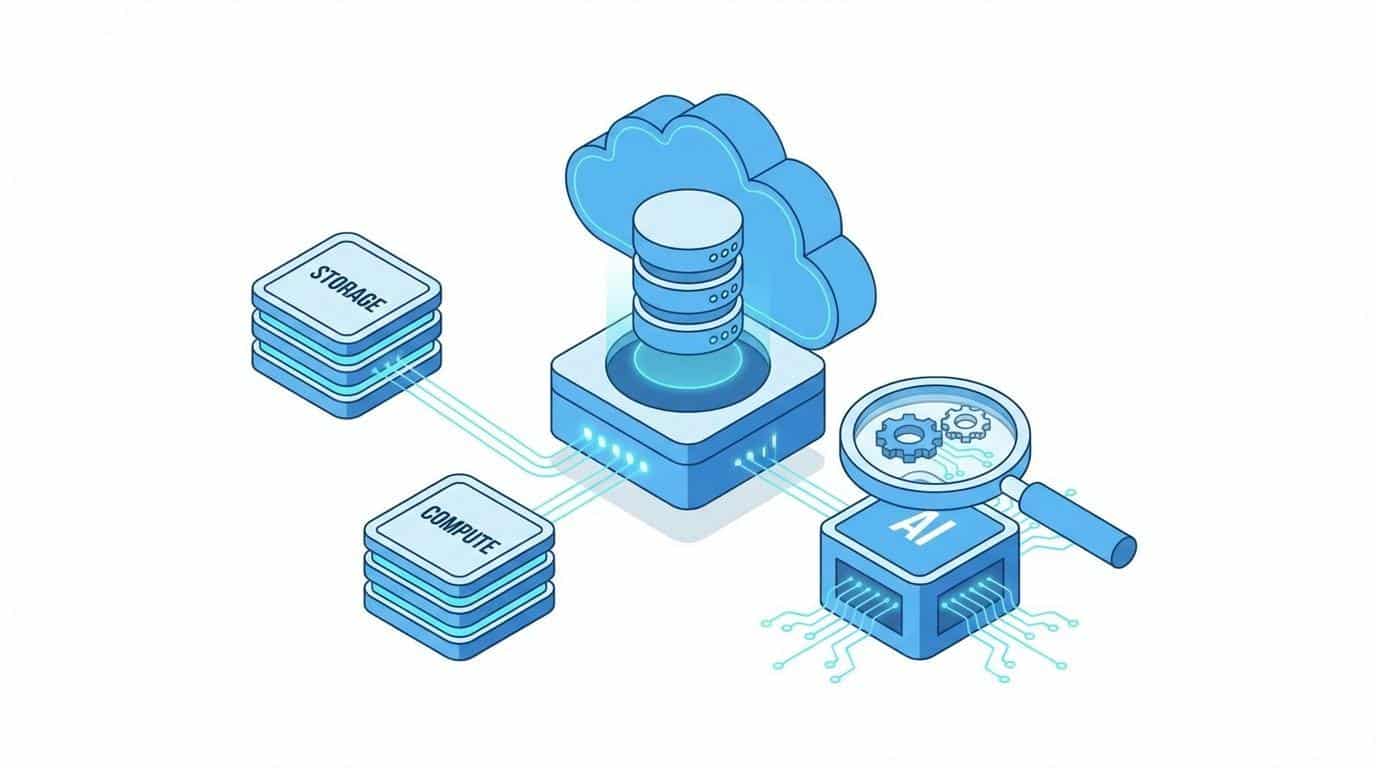
Snowflake has revolutionized the DWaaS industry by brilliantly separating storage operations from computing operations. In previous systems, increasing processing power to run a heavy query required acquiring more storage space simultaneously. Snowflake optimized this paradigm.

Using Snowflake for small business operations makes incredible financial sense. Keeping your data stored in their system involves a highly accessible rate. You exclusively pay compute costs for the exact seconds your team is actively running queries and generating reports. Sitting seamlessly on top of AWS, Azure, or Google Cloud, Snowflake offers incredible flexibility. It requires virtually zero database administration, which perfectly suits companies looking to optimize their internal engineering resources.

The Missing Link: Why Buying DWaaS Requires Data Engineering

Maximizing the value of your software subscription requires a strategic execution plan. Enhancing your Snowflake or BigQuery investment with structured processes guarantees you will solve your reporting challenges effectively. A cloud platform acts as a highly capable engine that delivers the best results when paired with expert data engineering to build the tracks.

Building the Pipeline

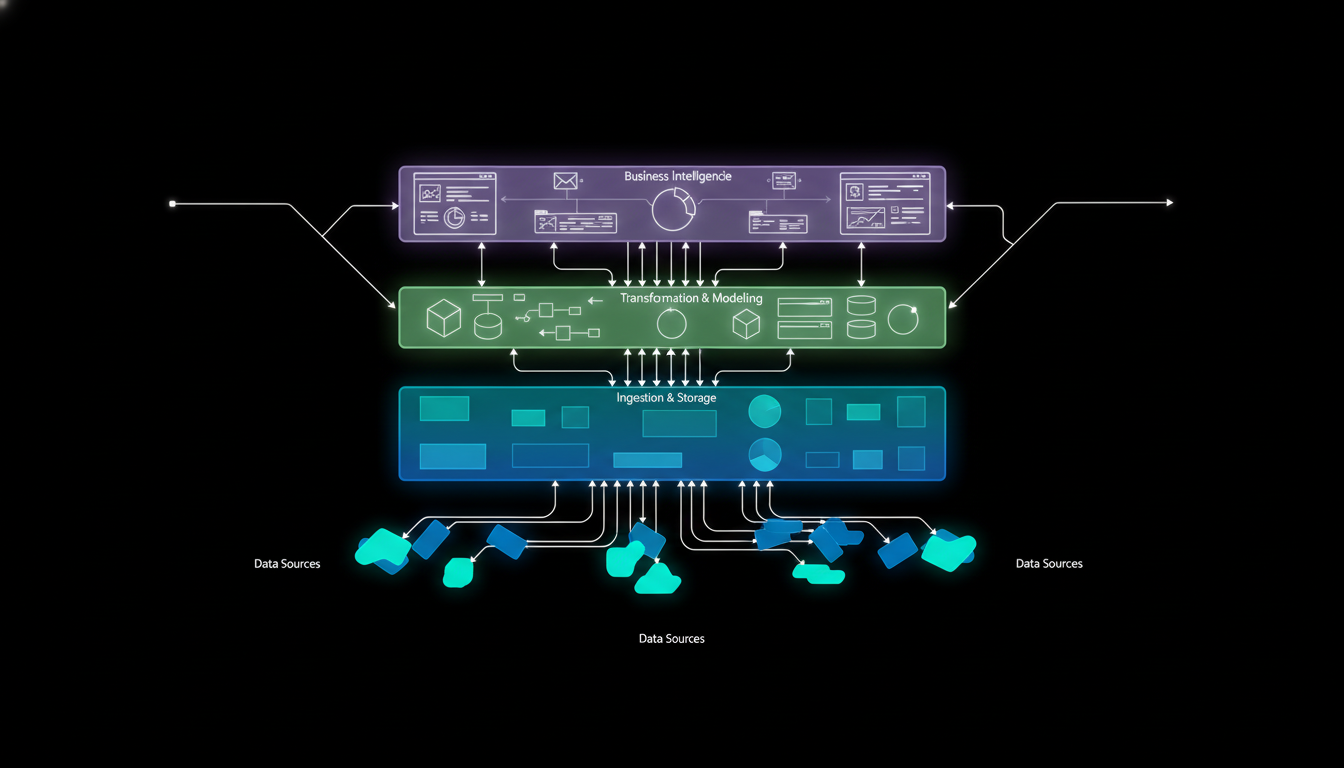
Crafting a robust data strategy ensures that piping data into a new warehouse creates a highly valuable business asset. Integrating an automated system allows you to seamlessly extract data from your marketing channels, load it into the warehouse, and transform it into standardized business metrics. We implement specialized ELT pipelines to guarantee highly accurate reporting. Utilizing tools like Fivetran for automated extraction and dbt for rigorous data transformation helps our clients report up to forty percent faster insights post-implementation.

We act as an empowering partner to ensure your DWaaS investment generates a powerful return. Designing the schema, setting up governance alerts, and mapping your business logic requires deep technical precision. We invite you to explore our data engineering services at https://stellans.io/services/ to see exactly how we build scalable systems.

2026 Trends: Real-Time Analytics and Lakehouse Architectures

The cloud data warehousing ecosystem evolves continuously and offers exciting opportunities for modern businesses. To remain competitive, business owners benefit greatly from looking ahead. Over the next few years, the boundary between unstructured data lakes and structured data warehouses will merge seamlessly. The “data lakehouse” architecture is rapidly becoming the standard. This approach allows businesses to store flexible unstructured data alongside clean structured data.

The demand for real-time analytics is encouraging DWaaS providers to continuously optimize their streaming capabilities. Fast-growing brands are seeking minute-by-minute visibility into supply chain logistics and marketing campaign performance. Investing in modern cloud platforms today ensures your infrastructure is completely ready to ingest streaming data tomorrow.

Frequently Asked Questions

What is Data Warehousing as a Service (DWaaS)?

DWaaS is a managed cloud solution where a database vendor configures, manages, and secures your centralized data repository. Your internal team gains time to focus entirely on analytics by handing hardware maintenance, network provisioning, and software patching over to the provider.

Is Snowflake suitable for small businesses?

Absolutely. Because Snowflake separates compute costs from storage costs, small businesses efficiently pay for exactly what they use. You get an enterprise-grade platform that is highly cost-effective and perfectly adaptable for growing teams.

What are the primary cloud data warehouse benefits?

The main benefits include elastic scalability, optimized operational expenditures, high automated security, real-time insight generation, and the complete elimination of operational data silos.

Why is data engineering important for DWaaS?

A data warehouse delivers profound value when the information inside it is clean and accessible. Data engineering seamlessly builds the automated pipelines that extract raw information from your business tools, clean it, and load it into the warehouse so your dashboards display highly accurate metrics.

Conclusion and Next Steps

Upgrading from disconnected spreadsheets to a managed DWaaS platform will effectively accelerate your growth. Transitioning to this modern solution solves reporting challenges effortlessly by giving every department in your company a single source of truth. Pairing your new software with a reliable technical strategy allows you to swiftly construct the pipelines, model the metrics, and protect the entire system.

Our goal is your growth. We turn fragmented platforms into well-oiled data machines. If your team is ready to see the whole picture, reach out to Stellans today to discover how our engineering team can build a modern data foundation tailored perfectly to your business goals.

References:

Article By:

https://stellans.io/wp-content/uploads/2026/01/1565080602204-1.jpeg
Zhenya Matus

Fractional Chief Data Officer (CDO)

Related Posts

    Get a Free Data Audit

    * You can attach up to 3 files, each up to 3MB, in doc, docx, pdf, ppt, or pptx format.