The Best Marketing Analytics Tools for Data-Driven Teams

13 minutes to read
Get free consultation

The Best Marketing Analytics Tools for Data-Driven Teams

The marketing technology landscape continues to expand rapidly. By 2026, the number of available MarTech solutions will have surged well past the 14,000 mark. For marketing leaders, this abundance presents a paradox: we have more tools than ever, yet clear visibility into performance remains elusive.

Software availability is rarely the problem. The core issue is usually a lack of cohesion. Data sits in silos. Google Ads speaks one language, your CRM speaks another, and your backend product data lives in a completely different universe. You end up with “tool fatigue,” where you pay for ten subscriptions but rely on two, forcing your team to manually stitch together spreadsheets to answer basic ROI questions.

Stellans views marketing analytics differently. We see it as engineering a “truth machine” rather than simply buying a single software license.

This guide acts as an architectural blueprint rather than just a list of features. We will categorize the best marketing analytics tools available today. More importantly, we will explain how they fit together to create a reliable, scalable Modern Marketing Data Stack.


What Makes a "Great" Marketing Analytics Tool?

Before we open the toolbox, we must define the criteria for selection. When we audit stacks for our clients, we look beyond flashy dashboards. We look for durability. A great tool in 2026 must adhere to four core principles.

1. Integration Capabilities

Tools operate best when connected. If a platform tries to keep your data held hostage within its own ecosystem, it is a liability. The best tools have open APIs and native connectors. They accept data easily and, crucially, let you export it to a data warehouse without friction. If it does not play nice with the rest of your stack, it does not belong in your stack.

2. Data Accuracy and Privacy

With the deprecation of third-party cookies and the tightening grip of regulations like GDPR and CCPA, accuracy has become the new battleground. We prioritize tools that have adapted to server-side tracking and consent mode protocols. Compliance is a signal of data integrity, not just a legal box to check.

3. Usability vs. Power Balance

Your stack should ideally accommodate both ease of use and depth of analysis. You need deep-dive capabilities for your data analysts (SQL access, raw data) and intuitive visualization for the C-suite. The “best” tool allows your team to self-serve insights without constantly interrupting the data engineering team.

4. AI and Predictive Features

The standard has shifted to predictive analytics (what will happen) rather than just descriptive analytics (what happened). We look for tools that leverage AI not just to generate copy, but to detect anomalies in ad spend, forecast revenue trends, and model conversion probabilities in real-time.

The 5 Pillars of a Modern Marketing Stack

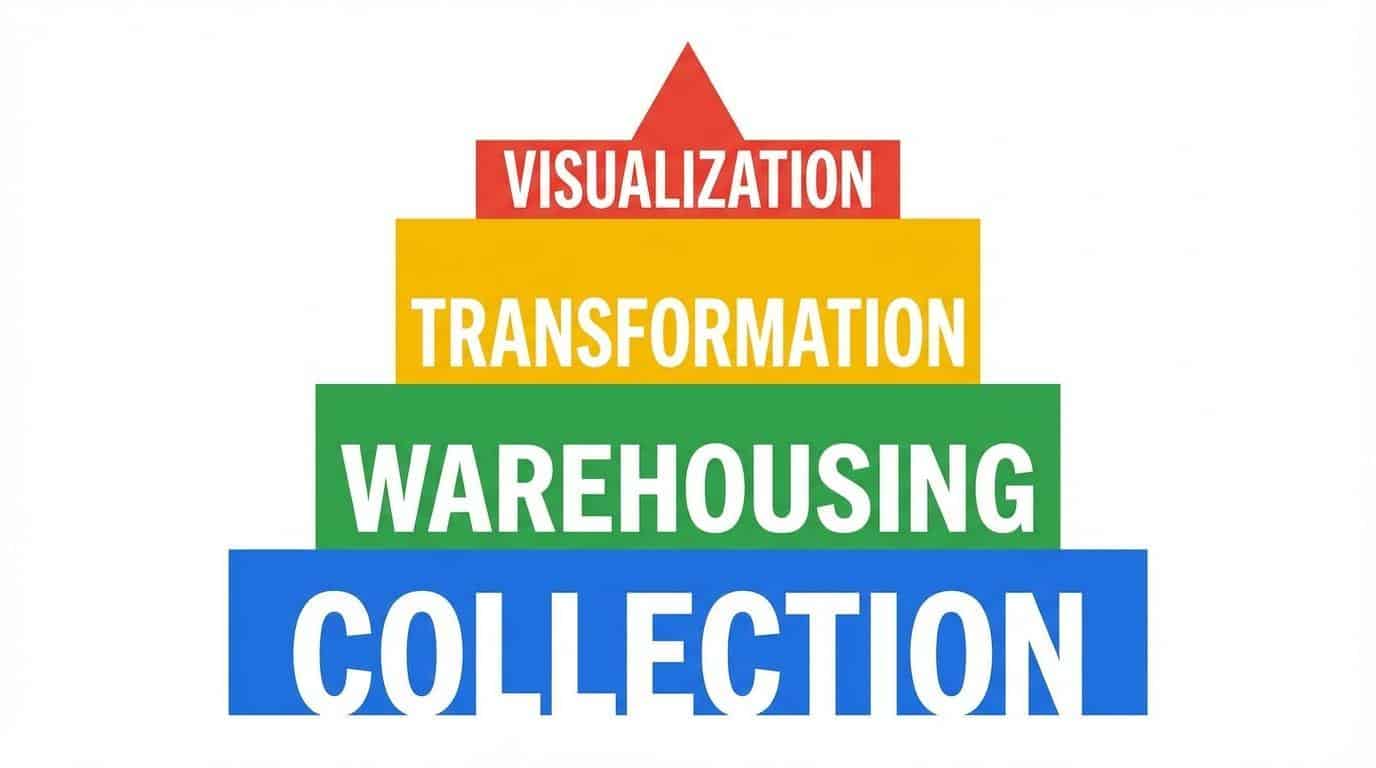
Building a cohesive system requires thinking in layers. We categorize the essential tools into five pillars that form the data lifecycle.

  1. Web & Product Analytics: The foundation. Tracking user behavior on your site and app.
  2. Data Integration & ETL: The pipes. Moving data from sources to storage.
  3. Attribution & Performance: The credit assignment. Determining what marketing actually worked.
  4. Business Intelligence (BI) & Visualization: The dashboard. Making data readable.
  5. Customer Data Platforms (CDP): The single view. Unifying user profiles.

Best Web & Product Analytics Tools

This is where data collection begins. These tools answer the “what” and “how” of user interaction.

Google Analytics 4 (GA4)

GA4 remains the ubiquitous standard for web analytics. Despite a rocky rollout years ago, it has matured into a powerful event-based model.

Adobe Analytics

Adobe Analytics is the heavyweight champion for enterprise organizations with complex data requirements.

Matomo

Matomo has surged as the ethical alternative to Google as data privacy becomes paramount.

Heap / Mixpanel

These tools focus on the user journey after the signup, bridging the gap between marketing and product.

Stellans Insight: We often see clients struggle with data sampling in GA4. Once you hit a certain traffic threshold, your reports become estimates rather than facts. This is usually the trigger point where we recommend implementing a data warehouse solution to export raw data for accurate analysis.

Top Data Integration & ETL Tools

You cannot analyze data if you cannot move it. ETL (Extract, Transform, Load) tools are the unsung heroes of the marketing stack. They automate the boring work of downloading CSVs and uploading them to your dashboard.

Supermetrics

Supermetrics serves as a great entry point to marketing automation. It is widely used because it connects directly to the tools marketers already know: Google Sheets and Looker Studio.

Fivetran

Fivetran is the gold standard for modern data engineering. It focuses purely on moving data from Point A (e.g., Facebook Ads) to Point B (e.g., Snowflake) reliably.

Funnel.io

Funnel sits between Supermetrics and Fivetran. It is unique because it allows you to map and transform data before it leaves the tool.

Improvado

Improvado offers a done-for-you approach to ETL designed specifically for marketing data.

Marketing Attribution & Performance Software

The age-old question: “Which ad drove the sale?” These tools use advanced modeling to solve tracking variations across platforms.

Northbeam

Northbeam is a favorite among Direct-to-Consumer (DTC) brands as it uses machine learning to stitch together the customer journey.

Dreamdata

B2B customer journeys are long and involve multiple stakeholders. Dreamdata is built to track account-based marketing (ABM) efforts.

SegmentStream

SegmentStream takes a different approach called “Conversion Modelling.” Instead of relying on cookies to track a user, it uses AI to predict the value of a user based on their behavior, assigning value even when cookies are blocked.

Stellans Insight: Attribution is a model, not a perfect truth. We advise our analytics services clients to use these tools to identify trends and incremental lift, rather than obsessing over matching the numbers perfectly to the backend down to the cent.

Business Intelligence (BI) & Visualization

Once the data is collected and modeled, it needs to be understood.

Tableau

Tableau is the legacy giant of visual analytics. It handles massive datasets and creates stunning, complex visualizations.

Looker (Google Cloud)

Distinct from Looker Studio, Looker is an enterprise BI platform that utilizes a semantic modeling layer (LookML).

Power BI

Power BI is the logical choice if your organization runs on Microsoft.

Looker Studio (formerly Data Studio)

The people’s champion. It is free, accessible, and connects easily to Google products.

Customer Data Platforms (CDPs)

The CDP is the brain that remembers who your customer is across every touchpoint.

Segment

Segment is the market leader for a reason. It acts as the infrastructure layer, collecting data once and sending it to every other tool in your stack.

Tealium

Tealium is often preferred by enterprise organizations with strict compliance needs (healthcare, finance).

Bloomreach

Bloomreach combines CDP capabilities with marketing automation and onsite personalization, specifically for commerce.

Comparison: Pricing & Feature Overview

To help you visualize how these tools stack up, we have broken down a selection of the most popular options based on their primary use case and barrier to entry.

Tool Category Best For Pricing Model Learning Curve
GA4 Web Analytics General Traffic Free / Enterprise High
Mixpanel Product Analytics SaaS / PLG Freemium / MTU Medium
Fivetran ETL Warehousing Consumption (Rows) Low
Supermetrics Connector Reporting Per Connector/User Low
Tableau BI Deep Analysis Per User High
Looker Studio BI Basic Reporting Free Low
Segment CDP Infrastructure MTU Medium

How to Build Your Marketing Analytics Stack (Step-by-Step)

Buying tools is the easy part. The real challenge lies in making them work together. We recommend a four-step conceptual approach to building your stack.

Step 1: Audit and Define

Audit your current data reality before signing a contract. Are your UTM parameters consistent? Is your data layer collecting the right events? Bad data in a good tool simply equals expensive bad data. You must define your “Source of Truth” for every metric.

Step 2: Centralize (ETL to Warehouse)

Use a data engineering solution like Fivetran to pipe raw data into a centralized data warehouse (like Snowflake or BigQuery). Stop relying on the native reporting within Facebook Ads or LinkedIn. They are graded on their own homework. This gives you ownership of your history and the ability to join data across sources.

Step 3: Visualize

Connect your BI tool once the data is central. This is where you build the dashboards that stakeholders will actually look at. Keep it simple. A dashboard with 50 widgets is a dashboard no one reads.

Step 4: Analyze and Iterate

The real work begins with your stack live. Use your attribution tools to test hypotheses. Move budget based on insights. This is an iterative process, not a one-time project.

Future Trends: AI and the End of Cookies

The landscape is shifting beneath our feet. The Google Privacy Sandbox initiative signals the final death knell for third-party cookies. In this new reality, first-party data is gold.

Tools that rely heavily on cross-site tracking are losing efficacy. The winners of 2026 are platforms that help you leverage the data you own (Zero and First-party data) and use AI to model the gaps. We are seeing a massive rise in “Synthetic Users” and predictive modeling, where AI fills in the blank spots left by privacy regulations on platforms like GDPR.eu.

Conclusion

There is no “perfect” tool. There is only one tool that fits your current maturity and your future goals. The best marketing analytics stack is one that scales with you—starting simple, but architected to handle complexity as you grow.

Do not build your stack alone. The cost of technical debt is far higher than the cost of getting it right the first time. If you are ready to stop guessing and start engineering your growth, contact Stellans. We are here to audit your current setup and architect a scalable data future.

Contact us today to discuss your marketing data needs.

Frequently Asked Questions

Article By:

https://stellans.io/wp-content/uploads/2026/01/leadership-2.jpg
Anton Malyshev

Co-founder

Related Posts

    Get a Free Data Audit

    * You can attach up to 3 files, each up to 3MB, in doc, docx, pdf, ppt, or pptx format.