Fine-Tuning a Corporate AI Image Generator with LoRA

19 minutes to read
Get free consultation

Fine-Tuning a Corporate AI Image Generator with Low-Rank Adaptation

Owning a perfectly aligned AI image generator gives modern enterprises a massive competitive edge. Marketing teams need thousands of personalized assets for dynamic campaigns. Building custom models ensures consistent style renders, unlike generic tools. Visual consistency strengthens brand identity and builds customer trust.

Historically, companies tried to solve this problem with full model fine-tuning. Full fine-tuning adjusts billions of parameters inside a foundational model. This approach requires massive computational power. It leads to incredibly high hardware training costs. Agile corporate campaigns require faster and more cost-effective solutions than full fine-tuning.

We work with you to unlock data potential and overcome these bottlenecks. We help standardise image-generation pipelines using enterprise data discipline. The solution lies in parameter-efficient techniques. You can update a targeted fraction of a model to achieve perfect stylistic alignment.

This guide acts as your practical enterprise engineering roadmap. We explain how to utilise Low-Rank Adaptation models to lower hardware costs. We cover the complete steps for curating and captioning consistent datasets. We detail the specific compute and hyperparameter variables needed for success. We also outline strict techniques for protecting brand asset files during training. Our goal: your operational success. Let us explore how to build a highly secure, cost-effective AI generation pipeline.

Understanding Low-Rank Adaptation (LoRA) for AI Image Generation

Enterprise teams require a solid understanding of model architecture to optimize performance. You need to know how an AI image generator processes information. Foundational models like Stable Diffusion contain billions of weights. These weights dictate how the model interprets text prompts and generates pixels. Preserving graphics processing unit (GPU) memory is crucial, as changing all weights demands immense computing power.

The Basics of LoRA and Parameter Efficiency

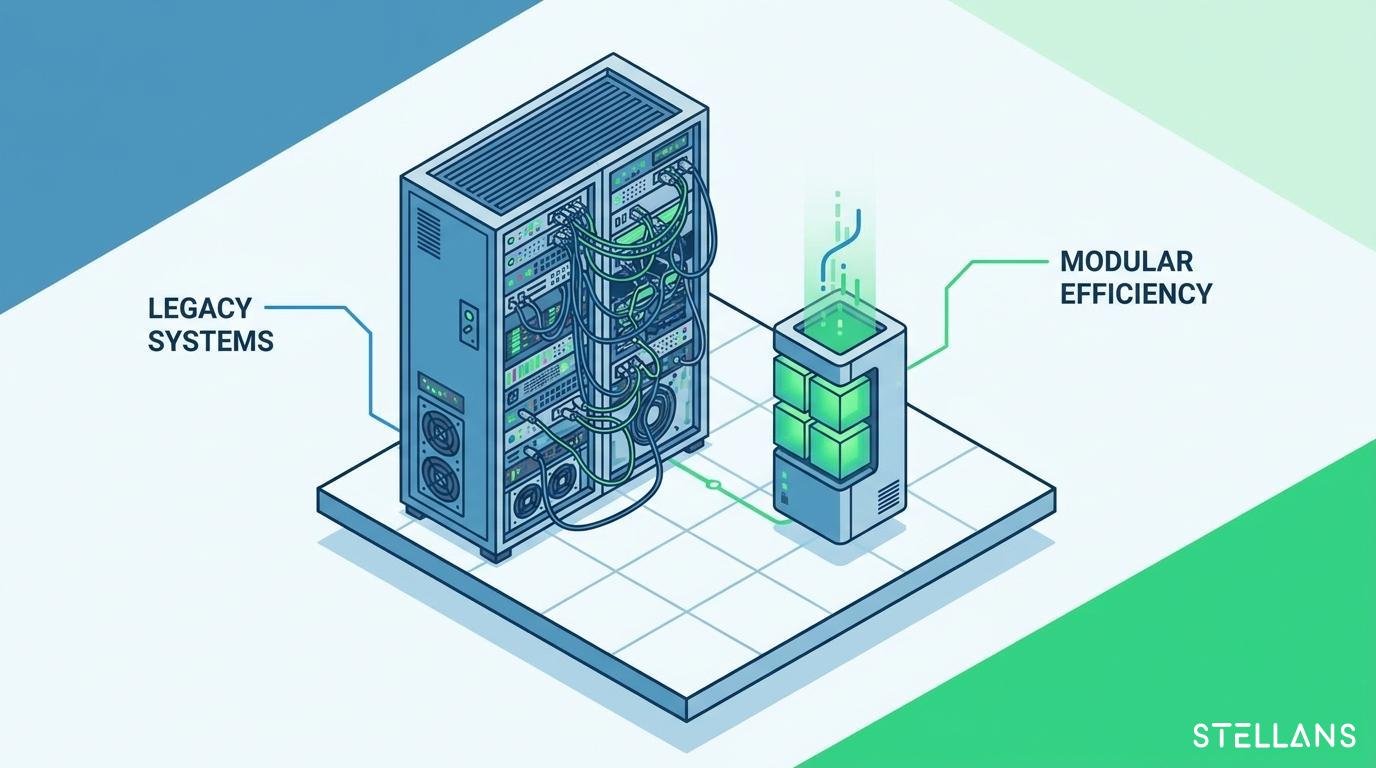
Low-Rank Adaptation (LoRA) offers a brilliant mathematical shortcut. LoRA freezes the pre-trained model weights. It injects trainable rank decomposition matrices into the architecture. You only train a small subset of parameters instead of full model weights.

Think of the data pipeline as a highway. Full fine-tuning rebuilds the entire highway infrastructure. LoRA simply adds a dedicated express lane for your specific brand assets. This express lane operates on top of the existing infrastructure.

The original research on Low-Rank Adaptation of Large Language Models proves this efficiency. The paper demonstrates how LoRA reduces trainable parameters by up to 10,000 times. It also reduces GPU memory requirements by three times. You maintain the baseline knowledge of the foundational model. The model still knows what a “laptop” or a “smiling person” looks like. The LoRA simply teaches it how to draw your specific laptop model or your brand’s unique photography style.

When to Choose LoRA vs. Full Fine-Tuning or Prompt Engineering

Machine Learning Engineers face a common dilemma: choosing the right customization method. Prompt engineering is the easiest approach. You simply write highly detailed text prompts. However, prompt engineering often fails to enforce strict brand consistency. Advanced fine-tuning methods accurately recreate proprietary product designs and specific corporate color palettes, which prompt engineering often struggles to achieve.

Full fine-tuning sits at the opposite end of the spectrum. It offers total control but demands enormous resources. LoRA prevents “catastrophic forgetting,” keeping the base knowledge intact. The model learns your brand style while remembering how to generate realistic backgrounds.

LoRA occupies the strategic sweet spot. LoRA is the optimal choice for efficient model parameter adjustments. It provides high fidelity without the exorbitant costs.

Decision matrix for enterprise teams:

LoRA files are also highly portable. A typical LoRA file size ranges from 50 to 200 megabytes. You can swap LoRA models in and out of your base generator seamlessly. This portability empowers corporate asset designers to switch between different campaign styles instantly.

Building and Captioning Brand Asset Training Datasets

Your AI image generator is only as good as its training data. A well-curated dataset produces clean and highly usable outputs. Preparing brand asset training datasets requires rigorous data engineering discipline. We help organizations clean and structure their data pipelines for optimal machine learning ingestion.

Selecting High-Quality Training Images

Curation is the most critical step in the fine-tuning process. You must select images that perfectly represent your corporate identity. The dataset should contain between 30 and 150 high-resolution images. Providing enough images captures the style adequately. Keeping the dataset size balanced ensures flexibility and avoids overfitting.

Follow these specific guidelines for curation:

Dataset Hygiene and Overcoming Improper Raw Image Cropping

Data hygiene separates amateur experiments from enterprise-grade deployments. Proper raw image cropping ensures success in AI training. Foundational models expect data in specific aspect ratios. Providing the model with correctly shaped images prevents forced resizing. Accurate sizing maintains proper proportions and enhances the model’s spatial understanding.

We resolve this by implementing automated preprocessing pipelines. You must standardise aspect ratios before training begins.

First, implement aspect ratio bucketing. Group your images into predefined resolution buckets. Common buckets include 1024×1024 (square), 1152×896 (landscape), and 896×1152 (portrait).

Second, utilize smart cropping algorithms. Standard center-cropping often cuts off essential product features. Use saliency-aware or face-aware cropping tools. These tools detect the primary subject and crop around it intelligently.

Third, eliminate near-duplicates. Redundant images bias the model toward a specific angle or lighting condition. Use image hashing algorithms to detect and remove visual duplicates from your training pool.

Consistent Captioning for Brand Vocabulary and Style

The model learns the relationship between pixels and text through captions. Accurate captioning leads to strong prompt adherence. You must structure captions to separate product identity from visual style.

Use clean, concise captions instead of overly descriptive ones. Focus on clear, comma-separated tags. If you are training a style LoRA, the captions should describe the subjects in the images. The model will associate the un-captioned visual elements with your trigger word.

For example, assume your brand style features highly saturated, neon-lit photography. Your trigger word is “StellansNeonStyle.”

If you caption an image as: “A woman holding a laptop, glowing neon lights, saturated colors, StellansNeonStyle.” The model will associate the trigger word only with the woman and laptop. It already knows what “neon lights” are.

Instead, caption it as: “A woman holding a laptop, StellansNeonStyle.” The model will learn that the neon lighting and high saturation are the defining characteristics of your trigger word.

{
  "image_filename": "brand_asset_042.jpg",
  "captions": [
    "corporate office worker",
    "using a modern laptop",
    "StellansBrandStyle"
  ],
  "metadata": {
    "resolution": "1024x1024",
    "campaign_tag": "Q3_B2B_Launch"
  }
}

This strict JSON structure ensures clean data ingestion. We strongly recommend building custom scripts to format your dataset metadata uniformly.

Fine-Tuning LoRA Models with Optimal Hyperparameters

Machine Learning Engineers must carefully tune model hyperparameters. These settings dictate how the neural network learns from your dataset. Optimal settings preserve textures and efficiently use computational resources. We provide specific compute and hyperparameter variables to ensure enterprise-grade reliability.

Rank Dimension (r) and Learning Rate Choices

The rank dimension (often denoted as r) determines the capacity of your LoRA model. A higher rank allows the model to learn more complex details. However, a higher rank also increases file size and compute costs.

The alpha parameter (network alpha) scales the weights of the LoRA. A common best practice: set alpha to exactly half of your chosen rank dimension. If r=32, set alpha to 16. This stabilizes the training process.

Learning rates dictate how quickly the model updates its parameters. AI image generators typically consist of two main components: the UNet (processes visuals) and the Text Encoder (processes prompts). You must assign different learning rates to each.

Always use the AdamW optimizer with weight decay. AdamW prevents the weights from growing too large and destabilizing the model outputs.

Training Epochs, Batch Size, and Overfitting Avoidance

An epoch represents one complete pass through your entire training dataset. Setting the right number of training epochs is a delicate balancing act. The right amount of epochs ensures the model learns your brand style smoothly. A balanced number of epochs allows the model to generate new, creative compositions without overfitting.

For a dataset of 50 images, aim for 100 to 150 epochs. You should configure your training script to save a checkpoint every 10 epochs. This allows engineers to test different stages of the training process and select the optimal version.

Batch size determines how many images the model processes simultaneously. Batch size is strictly limited by your available GPU memory.

Higher batch sizes stabilize the learning gradients. If your VRAM restricts you to a batch size of 1, utilize gradient accumulation steps. Set gradient accumulation to 4. The model will process four individual images sequentially before updating its weights. This simulates a batch size of 4 without exceeding your memory limits.

Hyperparameter Recommended Range Impact on Quality Impact on GPU Cost
Rank (r) 16 to 32 Captures complex brand geometry. Moderate VRAM increase.
Network Alpha 8 to 16 (Half of r) Stabilizes weight updates. No compute impact.
UNet LR 1e-4 to 5e-4 Determines visual style fidelity. Minimal compute impact.
Batch Size 2 to 4 Smoothes learning gradients. High VRAM requirement.

Compute Efficiency and Cost Reduction

These hyperparameter choices deliver tangible business impact. Utilizing efficient model parameter adjustments solves the crisis of high hardware training costs.

A full model fine-tune on an enterprise dataset often requires multiple A100 GPUs running for several days. This process can cost thousands of dollars per run in cloud computing fees. Cost-effective training provides financial scalability for teams launching dozens of campaigns annually.

By implementing LoRA with optimized batch sizes and rank dimensions, training time drops drastically. You can train a highly accurate LoRA on a single A10G GPU in under three hours. This reduces cloud computing expenses by over 80%.

Furthermore, parameter efficiency accelerates the iterative testing cycle. Designers can evaluate model checkpoints on the same day. If the style needs adjustments, the team can tweak the dataset and retrain overnight. We engineer enterprise data pipelines to automate these training workflows seamlessly. This level of agility is impossible with full model fine-tuning.
Protecting Brand Assets and Ensuring Governance

Corporate data is a highly valuable asset. When you fine-tune an AI image generator, you feed it proprietary product designs and pre-release campaign visuals. You must implement rigorous security protocols. We help manage risks and set strong governance foundations for technology.

Secure Asset Storage and Role-Based Access Control

Techniques for protecting brand asset files start at the storage layer. Always store training datasets in a secure, encrypted asset vault rather than on local developer machines or public cloud buckets. Raw images must reside in a secure, encrypted asset vault.

Implement strict Role-Based Access Control (RBAC). Only designated dataset curators and lead machine learning engineers should have read access to the raw files. The training environment should exist within a logically isolated Virtual Private Cloud (VPC).

When a training run initiates, the script should pull the encrypted assets directly from the vault into the isolated GPU instance. Once the LoRA compiles, the script must systematically wipe the raw assets from the temporary training block. This prevents residual data leakage.

Checkpoint Versioning and Audit Logs

Governance requires total observability into the training lifecycle. You must maintain comprehensive audit logs for every generated checkpoint.

Use model registry tools to track dataset lineage. Every LoRA file should contain embedded metadata detailing its origin. The registry must log exactly which version of the dataset was used. It must log the specific hyperparameters applied. It must also log the identity of the engineer who initiated the training run.

Tag every LoRA checkpoint by its specific corporate campaign. If a LoRA is trained for the “Q4 Cloud Infrastructure” campaign, label it accordingly. This versioning prevents asset designers from accidentally using outdated branding guidelines. If marketing updates the corporate logo, engineers can instantly deprecate the old LoRA models across the entire organization.

Compliance, Privacy, and Policy Considerations

AI generation introduces unique compliance challenges. Enterprise models must adhere to strict corporate security policies.

First, consider employee intellectual property and privacy. Always obtain explicit, documented consent before using photographs of real employees in your training datasets. Generating synthetic variations of actual staff members carries severe biometric and privacy risks. Always utilize licensed professional models or purely product-focused imagery.

Second, ensure trademark safety in the model’s outputs. Post-generation policy checks help ensure trademark safety, as even well-trained generators can sometimes include unexpected elements like a competitor’s logo. Implement post-generation policy checks. Use computer vision filters to scan outputs for unauthorized trademarks or inappropriate content before assets move to the final campaign folder.

By prioritizing governance, you transform an experimental AI tool into a compliant, enterprise-grade production asset.

Operationalizing Campaigns with Recommender Engines

Training a secure, highly accurate LoRA model is only the first phase. The true business value emerges during deployment. You must seamlessly connect the generation pipeline to your downstream marketing operations. This is where static generation becomes dynamic personalization.

Integrating AI-Generated Assets with Recommendation Systems

Modern dynamic campaigns require thousands of asset variations. A single banner ad might need fifty stylistic tweaks depending on the viewer’s demographic. Automating the selection of these images greatly improves efficiency over manual processes.

You must integrate your fine-tuned AI image generator with intelligent distribution systems. We recommend leveraging Recommender Engines to automate this process.

The workflow operates seamlessly. Your asset designers use the corporate LoRA to generate a massive library of on-brand visuals. They generate variations in lighting, background context, and subject diversity. All these assets share the exact corporate style mandated by the LoRA parameters.

These generated assets are then ingested into the Recommender Engine. The recommendation system analyzes real-time user behavior. It evaluates historical engagement metrics, geographic locations, and browsing habits. The engine then automatically selects and serves the most compelling image variant to each specific audience segment.

If the data shows that enterprise executives respond better to dark-mode, neon-lit infrastructure visuals, the Recommender Engine deploys those specific LoRA-generated assets. If startup founders respond better to bright, collaborative office visuals, the system pivots accordingly.

Measuring Campaign Consistency and Performance

Connecting model fine-tuning to measurable conversion rates is critical. We design AI solutions tailored to real business needs to ensure your technology investments yield a return.

You must measure the downstream performance of your custom AI assets. Track creative consistency and asset reuse rates. Are your regional marketing teams adopting the LoRA-generated images, or are they still purchasing generic stock photos? High adoption rates indicate a successful fine-tuning process.

Analyze the generation success rate. Calculate how many prompts result in usable, brand-compliant images versus discarded failures. If the failure rate increases, you may need to adjust your hyperparameter configurations and retrain the LoRA.

Most importantly, track the revenue uplift. Compare the click-through rates of generic campaign assets against those dynamically served by the Recommender Engine. Businesses frequently observe massive engagement spikes when perfectly branded, dynamically targeted imagery replaces static banners.

By operationalizing your AI outputs, you close the loop. You move from isolated technical experiments to a standardized, automated revenue engine.

Conclusion

Standardizing brand assets across dynamic campaigns requires precision. Full model fine-tuning drains your budget and wastes hardware resources. Parameter-efficient fine-tuning techniques offer a superior path forward.

By leveraging Low-Rank Adaptation, you update a targeted fraction of the neural network. This method solves the problem of inconsistent style renders while drastically lowering compute costs. Success depends on rigorous execution. You must curate high-resolution datasets and resolve improper raw image cropping. You must carefully configure your rank dimensions and learning rates. Crucially, you must protect your brand asset files using strict governance and access controls.

Technology alone does not guarantee results. The true power of a custom AI image generator lies in its deployment. Integrating these perfectly branded assets with advanced recommendation systems ensures the right visual reaches the right customer every time.

Are you ready to operationalize your custom AI pipelines? We invite you to explore our past enterprise projects to see how data-driven architecture accelerates growth. Let us build your automated future together. Learn more about deploying robust solutions by visiting Stellans today.

Frequently Asked Questions

What is LoRA (Low-Rank Adaptation) in AI image generation? LoRA is a parameter-efficient fine-tuning method. It freezes the base AI image generator and trains only small adapter matrices. This mathematical shortcut significantly lowers hardware training costs while allowing the model to learn highly specific corporate brand styles.

How do you protect brand asset training datasets during fine-tuning? Enterprise pipelines protect brand assets by enforcing strict data hygiene. This includes using Role-Based Access Control (RBAC) on storage vaults and running training scripts within segmented Virtual Private Clouds. Teams must also maintain detailed audit logs for every generated checkpoint to track lineage and engineer accountability.

Why is proper raw image cropping important for AI training? Foundational models expect training images in specific aspect ratios. Providing the model with correctly shaped images prevents forced resizing. Accurate sizing maintains proper proportions and enhances the model’s spatial awareness, leading to clean generated outputs.

How do you deploy AI-generated assets effectively? To maximize ROI, deploy AI-generated assets through Recommender Engines. These engines analyze user behavior and automatically serve the most relevant, LoRA-generated image variant to specific audience segments, significantly boosting campaign conversion rates.

References

  1. Hu, E. J., et al. (2021). LoRA: Low-Rank Adaptation of Large Language Models. arXiv. Read the original research on Low-Rank Adaptation of Large Language Models.
  2. Wikipedia Contributors. Low-Rank Adaptation. Wikipedia, The Free Encyclopedia. Learn more about this parameter-efficient fine-tuning technique.

Article By:

https://stellans.io/wp-content/uploads/2026/01/1565080602204-1.jpeg
Zhenya Matus

Fractional CDO

Related Posts

    Get a Free Data Audit

    * You can attach up to 3 files, each up to 3MB, in doc, docx, pdf, ppt, or pptx format.
    This site is protected by reCAPTCHA and the Google Privacy Policy and Terms of Service apply.