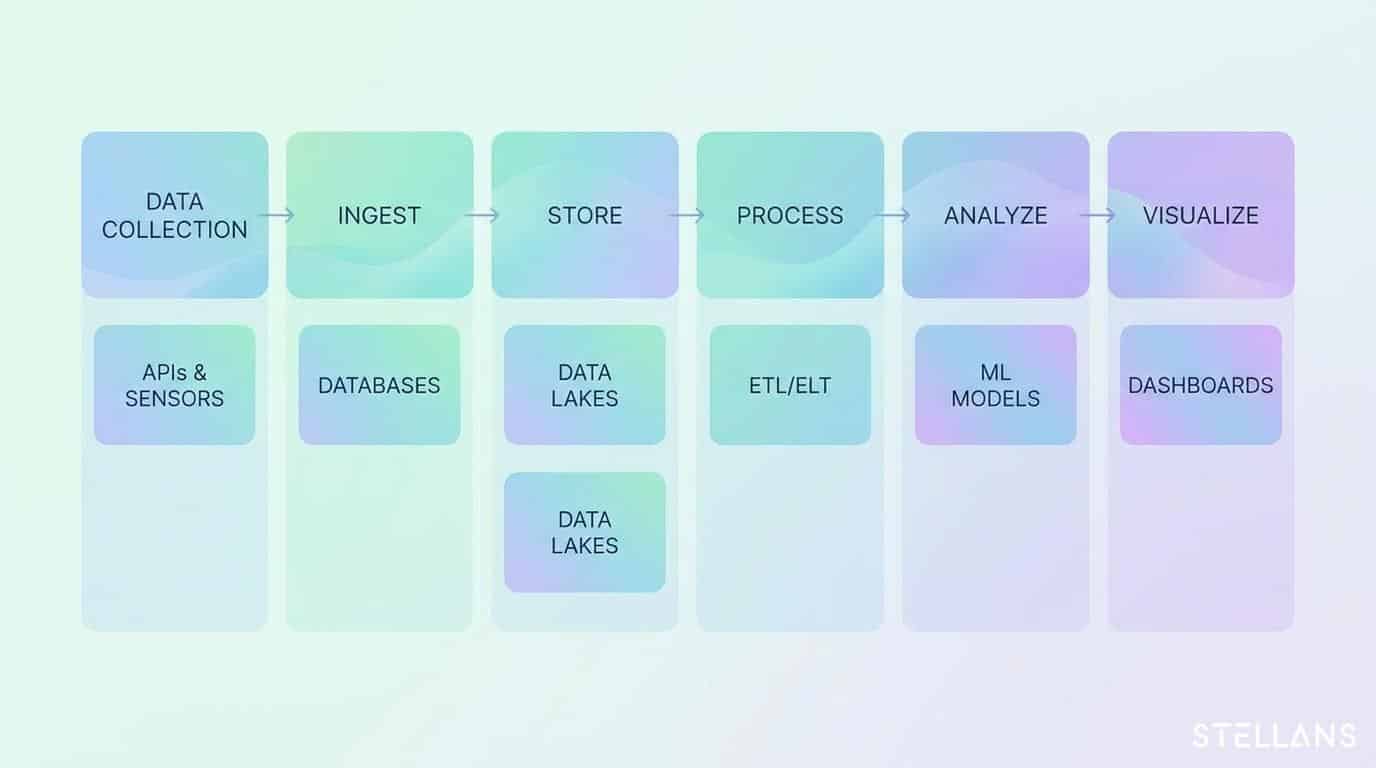
Prioritizing data discovery avoids a common pitfall in modern engineering. Taking the time to understand underlying data structures before building extraction and loading frameworks ensures robust systems. This thoughtful approach creates reliable pipelines and trustworthy dashboards. Conducting exploratory data analysis before ETL design ensures project success.
The Cost of Undocumented Schemas
Documented schemas remove immense friction from data engineering workflows. Extracting data from legacy systems or third-party APIs provides an opportunity to profile and organize messy source data. Establishing clear column definitions, unique primary keys, and matched data types ensures data integrity. Building an ETL pipeline on top of a well-documented foundation guarantees success.
We frequently see teams regain weeks of engineering time by proactively addressing unexpected null values or string truncations. By performing data quality analysis first, you map out these hidden challenges. We help you profile these undocumented schemas directly in the cloud. This proactive approach saves engineering hours and protects your team’s credibility. Clients report 40% faster insights post-implementation when they prioritize schema discovery.
EDA vs. Data Cleaning
Distinguishing exploratory data analysis from data cleaning clarifies the analytics process. These are distinct phases in the data lifecycle. Exploratory analysis is about discovery and documentation. You observe the data to understand its shape, distribution, and flaws. Data cleaning is the subsequent action you take based on those observations.
Think of data discovery tools as diagnostic instruments. You use them to find anomalies and measure data quality. You preserve the original source data during this phase. Instead, you build a comprehensive profile. This profile then dictates the logic required for your data cleaning and ETL transformations. Separating these steps ensures that you design solutions based on evidence rather than assumptions.