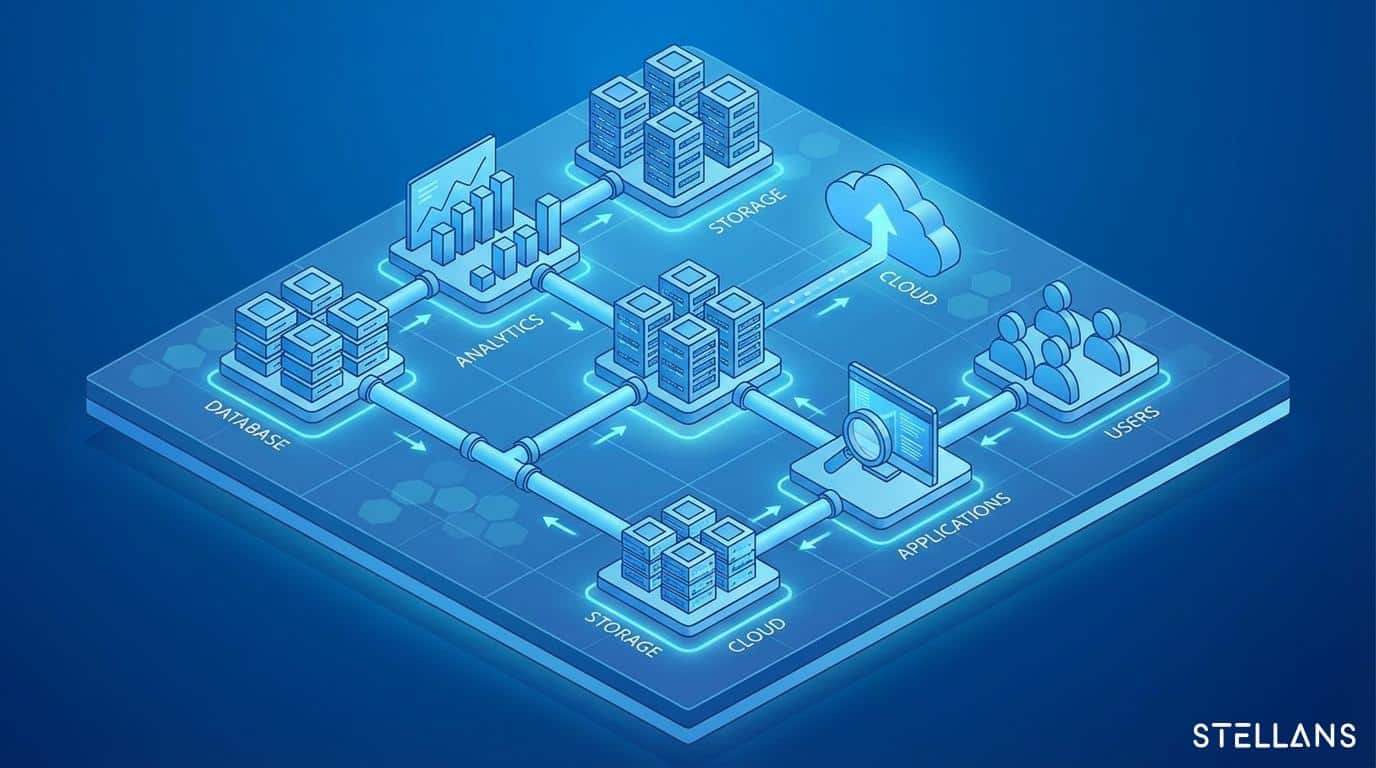
Traditional data governance tools often operate in isolation. Data stewards build business glossaries and map compliance requirements. Meanwhile, security teams monitor network logs and cloud events. This disconnect creates a massive vulnerability in the form of slow incident response. Security analysts waste critical time identifying data owners. They struggle to determine the sensitivity of compromised assets during active threats. We solve this problem by bridging the gap between governance and active defense.
Governance metadata transforms a generic log into a risk-ranked security event. A Security Information and Event Management (SIEM) tool sees a large data export. Governance context allows the SIEM to accurately identify whether the data is public or highly regulated. We work with you to unlock data potential safely. Integrating data governance tools into your Security Operations Center (SOC) provides this vital context. This integration prevents unrecognized data exfiltration.
Our goal is your secure growth. We turn data into actionable insights securely. We position data governance platforms as critical operational security signals. SOC teams can prioritize alerts when they map data classification, ownership, and lineage into cloud SIEMs. They can establish tactical rules and accelerate incident response. We empower your team to build a well-oiled data machine. This approach moves your organization beyond basic compliance checklists. It establishes active, automated defense mechanisms.
Why Data Governance Belongs in the SOC
Integrating security tools removes dangerous blind spots. A standard SIEM monitors volume and frequency. It detects a user downloading five gigabytes of data from a cloud database. The SIEM triggers a low-level alert based on volume alone. Security analysts rely on context to make accurate decisions. Is this a marketing manager downloading a public campaign list? Is it a compromised vendor account exfiltrating sensitive customer records? Providing context accelerates action. Governance data provides the immediate answer.
We eliminate these blind spots through unified intelligence. Governance platforms store metadata about data sensitivity and ownership. They track data lineage and approved usage patterns. Feeding this metadata into the SOC changes the game completely. Analysts stop guessing. They start responding effectively.
Governance Metadata for Risk-Ranked Security Events
Governance metadata ensures SOC teams focus their time on true threats. Accurate alerts reduce the common pain point of fatigue in modern security operations. We streamline incident triage by enriching alerts with precise context. Sensitivity labels classify data as public, internal, or restricted. Regulatory categories flag data subject to GDPR, HIPAA, or PCI DSS.
Retention rules indicate when data should have been archived or deleted. A generic alert becomes a high-priority incident when enriched with this metadata. A five-gigabyte download of restricted, GDPR-regulated data triggers an immediate, automated lockdown. The SOC risk-ranks threats instantly based on actual business impact.
Identity-Centric Security Operations
Modern security requires an identity-focused approach. Modern distributed cloud environments require robust, integrated defenses. We design solutions tailored to real business needs. Identity-centric operations link user behavior to governed data policies.
Governance tools map user departments to approved business purposes. They define baseline behaviors for specific roles. A financial analyst accessing payroll data aligns with governance policies. A marketing intern accessing the same data violates these policies. The SOC receives an alert enriched with identity context. This context highlights the exact policy violation. It aligns perfectly with modern identity-centric zero trust guidelines. We empower your security team to enforce policies dynamically.
SIEM Metadata Integration Architecture
Connecting governance platforms to cloud SIEM aggregators requires a robust architecture. The data pipeline acts as a highway. It transports critical context from governance catalogs directly to security monitoring tools. We build scalable systems that fuel growth and innovation.
The architecture relies on consistent event streaming. Data sources generate raw logs. The governance platform provides the necessary context. An integration layer normalizes this data. The cloud SIEM aggregates the enriched logs for SOC triage.
graph TD
    subgraph Data Sources
        A1[Snowflake] -->|Raw Logs| B(Log Forwarder)
        A2[AWS S3 / Azure] -->|Raw Logs| B
        A3[BI Tools] -->|Raw Logs| B
    end

    subgraph Governance Platform
        C1[Data Catalog] -->|Classification Metadata| D(Context API)
        C2[Access Policies] -->|Ownership Data| D
        C3[Data Lineage] -->|System Relationships| D
    end

    subgraph Normalization & Integration Layer
        B --> E{Enrichment Engine}
        D --> E
        E -->|Identity Mapping| F[Normalized Security Event]
    end

    subgraph Cloud SIEM & SOC
        F --> G[Cloud SIEM Aggregator]
        G --> H[Tactical Alert Rules]
        H -->|High Risk| I[Automated SOAR Playbook]
        H -->|Review| J[SOC Analyst Dashboard]
    end
Normalizing Governance Events for SIEM
Raw logs and governance metadata speak different languages. We translate these complex concepts without diluting expertise. The enrichment engine normalizes governance events for the SIEM. It matches technical identifiers with business metadata.
Normalization relies on a common asset identifier. A database table must have the same name in the SIEM and the governance catalog. We normalize identity across cloud Identity and Access Management (IAM), BI tools, and the SIEM. An email address connects a user’s Snowflake query to their Tableau export. This unified identity model allows the SIEM to track behavior across the entire data lifecycle. It prevents threat actors from hiding in disjointed system logs.
Tactical Alerts for Unusual Table Exports
Governance metadata enables highly specific detection rules. Specific behavioral analytics avoid the noise generated by generic volume thresholds. We implement tactical rules that combine behavioral analytics with data classification. This approach targets active data exfiltration directly.
Our engineers build rules for your exact environment. We guide digital transformation securely. The following logic blocks demonstrate how SOC teams use governance context. These rules trigger real-time alerts when unusual activities occur. They integrate seamlessly with standard SIEM querying languages.
Detecting Sudden Increases in Rows Exported
Threat actors often export large tables after gaining access. Contextual analysis provides a much stronger indicator of risk than volume alone. A data scientist might export millions of rows daily. We use governance metadata to refine this detection.
The rule compares export counts against baseline behavior. It filters specifically for restricted data classifications.
// Pseudocode Logic: High-Volume Export of Restricted Data
SELECT
    EventTime,
    UserName,
    AssetID,
    RowsExported
FROM SIEM_Normalized_Logs
WHERE Action = 'DataExport'
  AND RowsExported > (UserBaseline_P95_Export_Count)
  AND Governance_Classification = 'Restricted'
  AND Governance_Regulatory_Scope IN ('GDPR', 'PCI-DSS')
TRIGGER ALERT: "Critical Exfiltration: Unusual Restricted Data Export"
This rule eliminates false positives from standard analytics workloads. It alerts the SOC only when a user exceeds their normal export volume on highly sensitive tables.
Multiple Sensitive Tables Accessed in Short Intervals
Attackers perform exploratory access across business domains. They map the environment to find valuable data. A single user querying HR, Finance, and Engineering tables within minutes is highly suspicious.
We track access across different governance domains to detect this behavior.
// Pseudocode Logic: Cross-Domain Exploratory Access
SELECT
    UserName,
    COUNT(DISTINCT Governance_Domain) as DomainsAccessed
FROM SIEM_Normalized_Logs
WHERE Action = 'Query'
  AND Governance_Classification IN ('Confidential', 'Restricted')
  AND TimeWindow = '15_Minutes'
GROUP BY UserName
HAVING DomainsAccessed >= 3
TRIGGER ALERT: "Suspicious Behavior: Cross-Domain Sensitive Data Access"
This alert catches compromised accounts scanning the database. It leverages governance domain tagging to identify unnatural query patterns.
Access After Privilege Escalation
Privilege escalation is a critical step in a data breach. An attacker modifies IAM roles and immediately accesses sensitive data. We correlate IAM change events with data access logs.
Governance metadata identifies the sensitivity of the accessed assets.
// Pseudocode Logic: Access Following IAM Modification
SELECT
    A.UserName,
    A.RoleAssigned,
    B.AssetID,
    B.Governance_Classification
FROM SIEM_IAM_Logs A
JOIN SIEM_Normalized_Logs B ON A.UserName = B.UserName
WHERE A.Action = 'RoleEscalation'
  AND B.Action IN ('Query', 'Export')
  AND B.Governance_Classification = 'Restricted'
  AND TimeDifference(A.EventTime, B.EventTime) < '30_Minutes'
TRIGGER ALERT: "High Risk: Restricted Access Post-Privilege Escalation"
This rule highlights immediate exploitation of new privileges. It provides the SOC with a clear timeline of the attack.
Unrecognized BI Workspace Exports
Managed analytics prevent the significant security risks associated with shadow IT. Centralized control prevents users from duplicating sensitive data into uncontrolled Business Intelligence (BI) workspaces. Maintaining strict oversight prevents uncontrolled replication from bypassing standard security controls.
We monitor BI tool activity using governance lineage data.
// Pseudocode Logic: Unapproved BI Export
SELECT
    WorkspaceName,
    UserName,
    SourceAssetID,
    Governance_Approved_Workspaces
FROM SIEM_BI_Logs
WHERE Action = 'DashboardExport'
  AND WorkspaceName NOT IN (Governance_Approved_Workspaces)
  AND Source_Classification = 'Confidential'
TRIGGER ALERT: "Policy Violation: Confidential Data in Unapproved Workspace"
This alert prevents sensitive data from leaking through cached BI reports. It maintains strict governance over data consumption layers.
Unifying Security Policies Across Data Platforms
Consistent policies across hybrid environments eliminate critical vulnerabilities. A database might restrict access perfectly. However, a connected BI tool might allow unauthenticated public links. We help manage risks by unifying policies.
Security controls must follow the data. We establish strong governance foundations across all platforms. A unified policy ensures that security intent translates into technical controls consistently. We use foundational NIST data security frameworks to structure this alignment.
Central Classification Taxonomy
A central taxonomy is the foundation of unified security. We define actionable labels for all data assets. Clear labels streamline security tools and drive automated enforcement.
Our standard taxonomy includes four tiers. Public data requires no access restrictions. Internal data is available to all employees. Confidential data is restricted to specific departments. Restricted data requires strict access controls and continuous monitoring. We apply these labels universally. The same label applies to an AWS S3 bucket, a Snowflake table, and a Looker dashboard. This consistency simplifies SIEM rule creation.
Consistent Controls in BI, Storage, and Transformation
We implement consistent controls across the entire data lifecycle. Each layer of the stack requires specific configurations. We align these configurations with the central classification taxonomy.
BI Tools: We lock down export permissions based on data sensitivity. Confidential dashboards disable PDF and Excel exports automatically. We configure embedded analytics to respect row-level security policies. Cached data must encrypt at rest using enterprise keys.
Storage: We configure storage layers to prevent public access globally. Cloud storage relies heavily on object tagging. We map governance classifications directly to AWS or Azure resource tags. The SIEM monitors these tags to detect unauthorized public-access configurations.
Transformation (ETL/ELT): Data pipelines require monitoring to ensure they do not inadvertently expose sensitive information. We monitor code changes that remove data masking. A transformation tool like dbt ensures error-free reporting. It also provides critical source-to-target lineage. We feed this lineage into the governance platform. The SOC uses this lineage to trace a compromised downstream table back to its secure source.
Implementation Roadmap for Data Governance and SOC Integration
Integrating these systems requires a structured approach. We guide your digital transformation systematically. Integrating data sources systematically leads to secure and successful outcomes. We prioritize high-value assets and clear use cases.
This phased roadmap ensures measurable business value at every step. We work with you to execute this strategy flawlessly.
Phase-by-Phase Security Use Cases and Enrichment Pipelines
We start with your most critical data sources. Defining security use cases first ensures focused engineering efforts.
Assess High-Value Sources: We identify systems housing restricted data. This usually includes primary data warehouses and financial databases. We ensure the governance catalog accurately classifies these specific assets.
Establish the Context API: We build the integration layer connecting the governance catalog to the SIEM. We configure the API to poll for metadata updates daily. This keeps the SIEM enrichment tables accurate without overloading systems.
Deploy Tactical Alerts: We implement the foundational SIEM rules. We start with the high-volume export and privilege escalation rules. We tune these rules against historical data to eliminate false positives.
Expand to BI and Storage: We extend the integration to downstream consumption tools. We map lineage from the warehouse to the BI dashboards. We deploy rules monitoring unapproved workspace exports.
Clients report 40% faster insights post-implementation. They achieve this because security teams no longer block legitimate analytical work to investigate false alarms.
Building Bidirectional Automation Workflows
We move beyond simply sending logs to the SIEM. We empower the SOC with active response capabilities. Bidirectional automation workflows allow security tools to enforce governance policies automatically.
A SIEM detecting a critical exfiltration event triggers a Security Orchestration, Automation, and Response (SOAR) playbook. The SOAR platform reaches back into the cloud IAM system. It suspends the compromised account instantly. It reaches into the data warehouse to quarantine the affected tables. This automated response stops breaches in seconds. It transforms the SOC from a monitoring center into an active defense mechanism.
Incident Response and Success Metrics
Governance integration dramatically improves incident response. Security analysts rely on data lineage during forensic investigations. We provide the tools they need to succeed.
Lineage shows exactly which downstream systems consumed compromised data. Analysts can immediately determine the exact impact radius. They see the exact blast radius right away. This accelerates containment and recovery efforts. It is a core component of our breach prevention strategies cloud approach.
Security Incident Response Playbook
An enriched SIEM requires updated operational procedures. Security teams must know how to leverage governance metadata during a crisis. We help organizations develop a comprehensive security incident response playbook.
The playbook defines exact steps for investigating metadata-enriched alerts. It mandates checking data ownership tags before contacting business units. It outlines the automated quarantine procedures for restricted assets. This structured approach ensures consistent, rapid responses to all threats.
Key Metrics for Detection and Response
We measure success through operational metrics. Integrating governance and security must deliver proven business value. We track specific indicators to validate the investment.
The most critical metric is Mean Time to Detect (MTTD). Governance context reduces MTTD significantly. Analysts triage alerts faster when data sensitivity is immediately visible. We also track the percentage of alerts automatically enriched. Our goal is 100% enrichment for all data access events. Organizations tracking these metrics consistently see a 60% reduction in manual investigation time.
How Stellans Modernizes Data Security and Governance
We design and implement solutions tailored to real business needs. Stellans takes a vendor-neutral, implementation-focused approach to data security. We assess your current architecture, design the integration layer, implement the technical controls, and empower your team.
Our engineers possess deep expertise in Snowflake, AWS, Azure, and leading SIEM platforms. We focus on maximizing the value of your existing technology stack rather than pushing proprietary software solutions. We connect your data architecture, governance policies, and operational security processes seamlessly.
How do data governance tools integrate with a SIEM? Governance tools integrate with a SIEM via APIs or log forwarders. They send classification, ownership, and lineage metadata to an enrichment layer. The SIEM uses this metadata to add business context to raw security event logs.
What is the difference between data governance and data security? Data governance defines policies, data quality, and ownership rules. Data security implements the technical controls to protect that data. Integrating them ensures security teams enforce the exact policies defined by the business.
Can governance tools prevent data breaches? Yes. Governance tools prevent breaches by feeding sensitivity context to security monitoring systems. This allows the SOC to create automated, real-time alerts for unusual access to restricted data, stopping exfiltration attempts early.
so that one of our representatives can contact you and start a discussion.
Loading calendar…
David Ashirov
Co-founder, CTO
30 minutes
Hello,
Thank you for your interest in Stellan’s Data Services. After you fill out this form, one of our team members will get in touch with you at the requested time to discuss your tech initiative.
so that one of our representatives can contact you and start a discussion.
Loading calendar…
Anton Malyshev
Co-founder, COO
30 minutes
Hello,
Thank you for your interest in Stellan’s Data Services. After you fill out this form, one of our team members will get in touch with you at the requested time to discuss your tech initiative.
so that one of our representatives can contact you and start a discussion.
Loading calendar…
Vitaly Lilich
Co-founder, CEO
30 minutes
Hello,
Thank you for your interest in Stellan’s Data Services. After you fill out this form, one of our team members will get in touch with you at the requested time to discuss your tech initiative.