Optimize Snowflake Storage Costs: 7 Quick Wins for Data Stewards

6 minutes to read
Get free consultation


Uncontrolled data growth can silently double your Snowflake bill, with 20-40% of it being pure waste from poorly managed storage. Many organizations try to tackle this with technical fixes like adjusting settings or running cleanup scripts. However, these efforts often fail because they lack one crucial ingredient: clear ownership. Without someone responsible for managing data assets, costs inevitably spiral.

This is where the Data Steward comes in. They are the key players in taming these expenses. This article provides a playbook for empowering them, transforming your data governance program from a cost center into a value driver. At Stellans, our approach to data governance is built on this principle of empowerment.

What is a Data Steward and Why Are They Crucial for Cost Control?

A Data Steward is a person responsible for the management and oversight of an organization’s data assets. Think of them as the on-the-ground guardians of your data. They bridge the gap between technical data management and business context. This is essential for making smart decisions about data retention, quality, and access, all of which directly impact your Snowflake storage costs.

New data governance initiatives often fail because this role isn’t clearly defined. Without a Data Steward, there’s no one to ensure that data is being managed efficiently, leading to uncontrolled costs and a lack of accountability.

7 Quick Wins: Data Steward Responsibilities for Taming Snowflake Costs

Here are seven specific responsibilities for a Data Steward that can lead to quick wins in optimizing your Snowflake storage costs.

1. Master Time Travel and Fail-Safe Settings

Snowflake’s Time Travel feature is a powerful tool for data recovery, but it comes at a cost, adding a 3-10% overhead to your storage. The Data Steward’s role is to define appropriate retention windows based on business needs, not just technical defaults. This ensures that you’re not paying for longer-than-necessary data history.

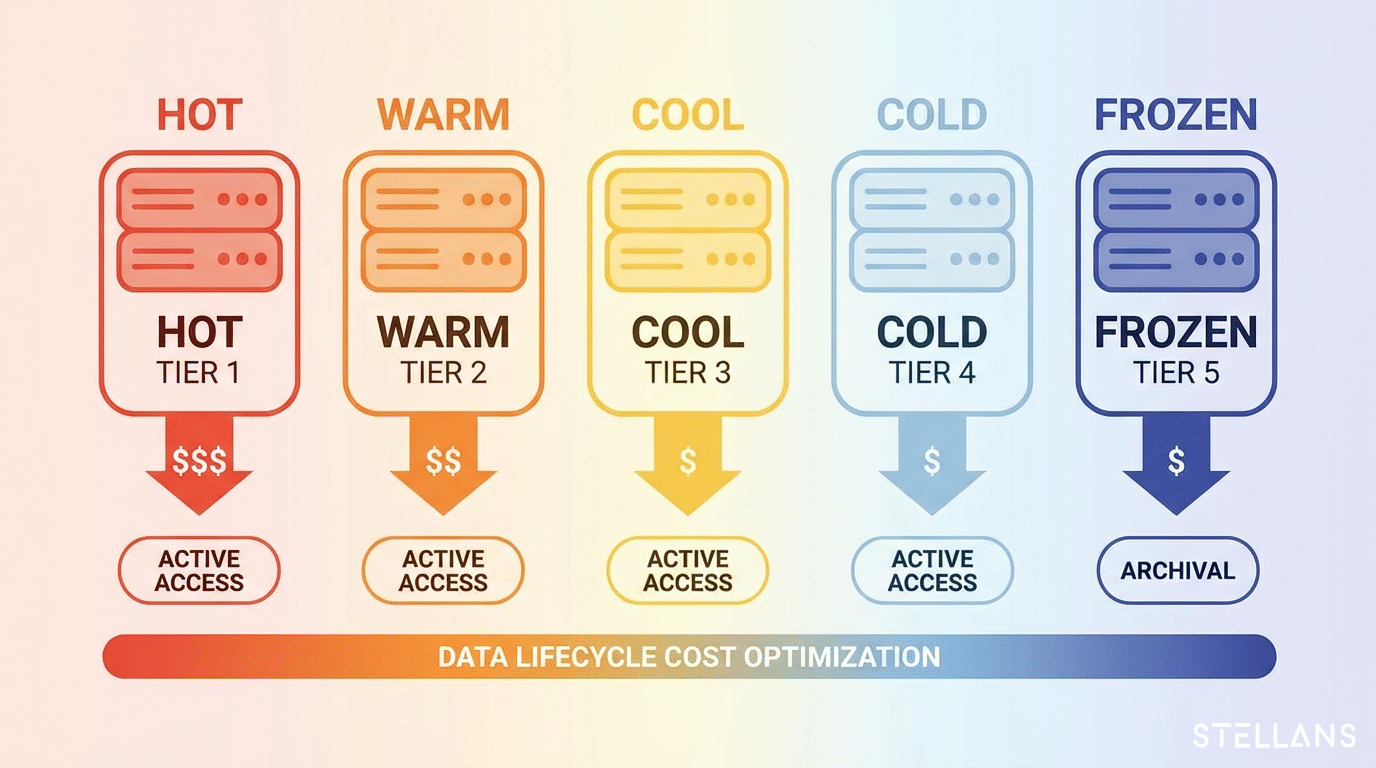
2. Enforce Data Lifecycle and Tiering Policies

With Snowflake Storage Lifecycle Policies becoming generally available in 2026, the Data Steward will be responsible for tagging data and ensuring it moves to COOL (67% savings) or COLD (90% savings) tiers. This is a massive opportunity for cost savings, but it requires careful planning and management.

3. Eliminate Zombie Assets: Prune Staged Files and Transient Tables

Temporary data that is no longer needed can quickly accumulate and drive up your storage costs. A Data Steward is responsible for creating and enforcing policies to clean up these “zombie assets,” such as staged files and transient tables.

4. Drive Storage Efficiency with Quality Checks

Poorly structured data can lead to bloated tables and inefficient storage. A Data Steward ensures that data is properly compressed and partitioned, which can lead to a 3-5x reduction in storage consumption. This not only saves money but also improves query performance.

5. Manage Metadata for Archiving and Offloading

Not all data needs to be stored in Snowflake. A Data Steward uses metadata to identify “cold” data that can be offloaded to cheaper storage like Amazon S3 or Glacier. This can be managed using a platinum/gold/bronze playbook, where data is tiered based on its value and access frequency.

6. Monitor Storage Usage Against Budgets

A Data Steward is responsible for actively monitoring storage dashboards and alerting Data Owners when costs approach budget limits. This proactive approach helps to prevent bill shock and ensures that you’re staying within your budget.

7. Govern Access to Prevent Unnecessary Data Proliferation

When users have broad access to data, they often create unnecessary copies of large datasets. A Data Steward helps to define and review access controls, preventing data proliferation and its associated storage costs. This also improves data security and compliance with regulations like GDPR/CCPA.
The Secret Weapon: Applying a Data Stewardship RACI Matrix

To bring order to these seven wins, you need a RACI matrix.

What is a RACI Matrix? (Responsible, Accountable, Consulted, Informed)

A RACI matrix is a simple yet powerful tool for clarifying roles and responsibilities. It ensures that everyone knows who is Responsible for doing the work, who is Accountable for the outcome, who needs to be consulted, and who should be informed.

Bringing It All Together: A RACI Matrix for Snowflake Cost Optimization

Here is an example RACI matrix for some of the tasks we’ve discussed:

Process Responsible Accountable Consulted Informed
Time Travel Pruning Data Steward Data Owner Business Analyst Compliance Team
Lifecycle Tiering Data Steward Data Owner Data Architect Finance Department
Quality Checks Data Steward Data Owner Data Analyst IT Operations

Ready to Build Your Governance Dream Team?

At Stellans, we specialize in helping organizations like yours define these roles, build effective RACI matrices, and turn data governance into a powerhouse for financial efficiency. We can help you implement a sustainable solution to your Snowflake cost optimization challenges.

Ready to assign clear ownership and cut your Snowflake storage costs by up to 40%Schedule a free consultation with our governance experts today.

Conclusion

Snowflake cost control is not just a technical issue; it’s a governance issue. By empowering Data Stewards and implementing a clear RACI matrix, you can move from temporary fixes to a sustainable governance structure. This will not only save you money but also improve data quality, security, and compliance.

Frequently Asked Questions


References:

  1. Snowflake Storage Lifecycle Policies
  2. Data Governance – OECD
  3. General Data Protection Regulation (GDPR)

Article By:

https://stellans.io/wp-content/uploads/2026/01/leadership-1-1.png
David Ashirov

Co-founder and CTO

Related Posts

    Get a Free Data Audit

    * You can attach up to 3 files, each up to 3MB, in doc, docx, pdf, ppt, or pptx format.