Predictive Analytics for Business: From Concept to Production Deployment

16 minutes to read
Get free consultation


In today’s competitive landscape, looking at historical data to see what happened is no longer enough. The real advantage lies in knowing what will happen next. What if you could anticipate which customers are likely to leave and proactively retain them? What if you could forecast product demand with enough accuracy to eliminate costly overstocking? This isn’t about a crystal ball; it’s about predictive analytics.

For many business executives, analytics managers, and strategy directors, the journey into predictive analytics can feel daunting. It often seems like a complex, technical domain reserved for data scientists. But the truth is, its value is rooted in business outcomes. Predictive analytics is the bridge between the data you have and the decisions you need to make, turning your information from a rear-view mirror into a forward-looking GPS.

The goal is to answer your most pressing business questions. Our focus is on transforming this powerful technology from a high-level concept into a working, value-generating solution integrated into your daily operations. This guide provides a clear roadmap for that journey, from identifying the right starting point to deploying a model that empowers your team and drives measurable growth.


The Power of Looking Forward: Predictive vs. Traditional Analytics

For years, businesses have relied on Business Intelligence (BI) to understand performance. Dashboards and reports tell you what happened: sales numbers last quarter, website traffic yesterday, customer demographics. This is descriptive analytics, and it’s incredibly valuable for understanding past performance.

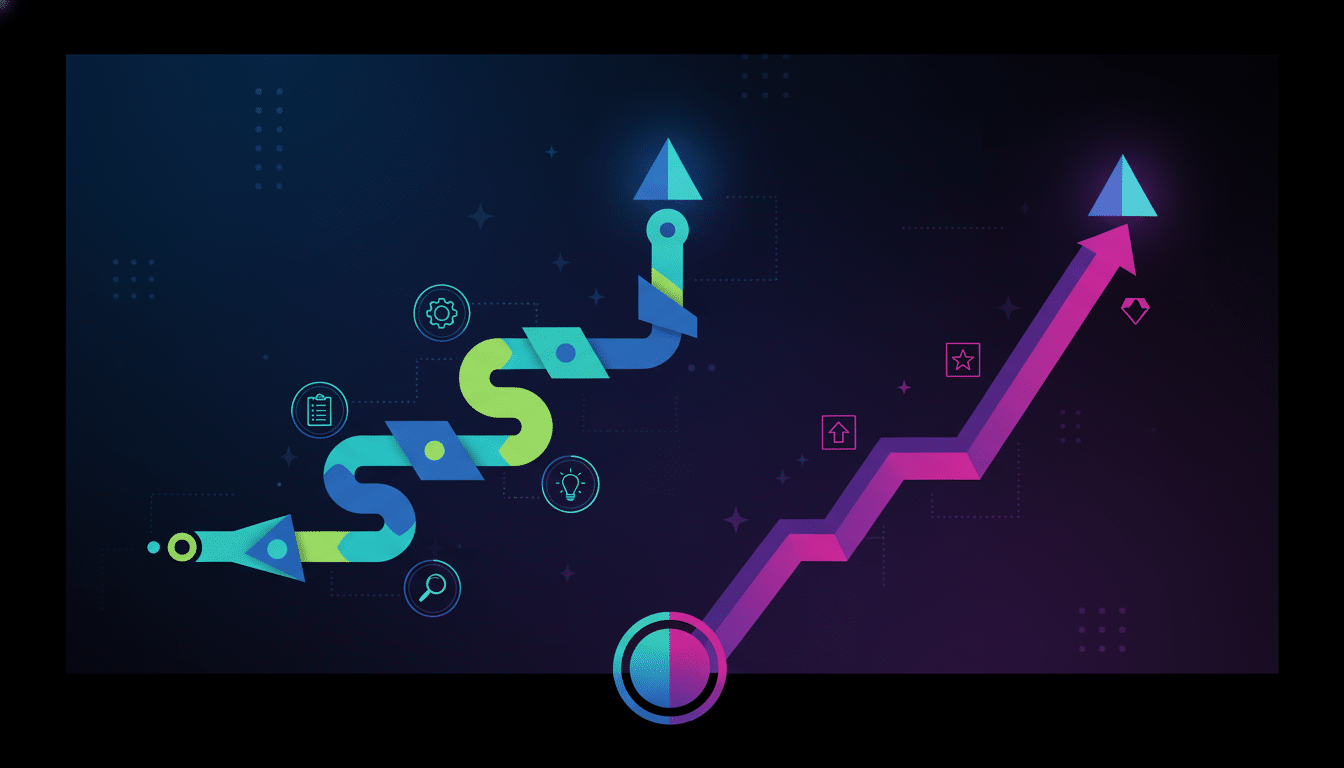
Predictive analytics takes the next logical step. It uses historical data, statistical algorithms, and machine learning techniques to identify the likelihood of future outcomes.

Think of your data as a highway. Traditional BI is like looking in the rear-view mirror to see the road you’ve already traveled. Predictive analytics is the live-traffic GPS on your dashboard, analyzing current conditions to predict congestion and suggest a faster route. It empowers you to move from a reactive to a proactive stance, addressing opportunities and challenges before they fully materialize. This shift is why the global predictive analytics market is projected to grow from around $10.5 billion in 2021 to over $28 billion by 2028, as businesses increasingly seek to build a competitive edge on data-driven foresight.

Start with the "Why": 5 High-Impact Predictive Analytics Use Cases

The most successful predictive analytics projects don’t start with a technology; they start with a critical business problem. Before any data is touched, the first question should always be: “What challenge are we trying to solve, and what would a successful outcome look like?”

At Stellans, we partner with you to identify these opportunities, ensuring every analytics initiative is tied to a clear, measurable business goal. Here are five high-impact use cases where predictive analytics consistently delivers significant value.

1. Customer Churn Prediction

2. Demand Forecasting

3. Predictive Maintenance

4. Lead Scoring and Sales Prioritization

5. Financial Fraud Detection

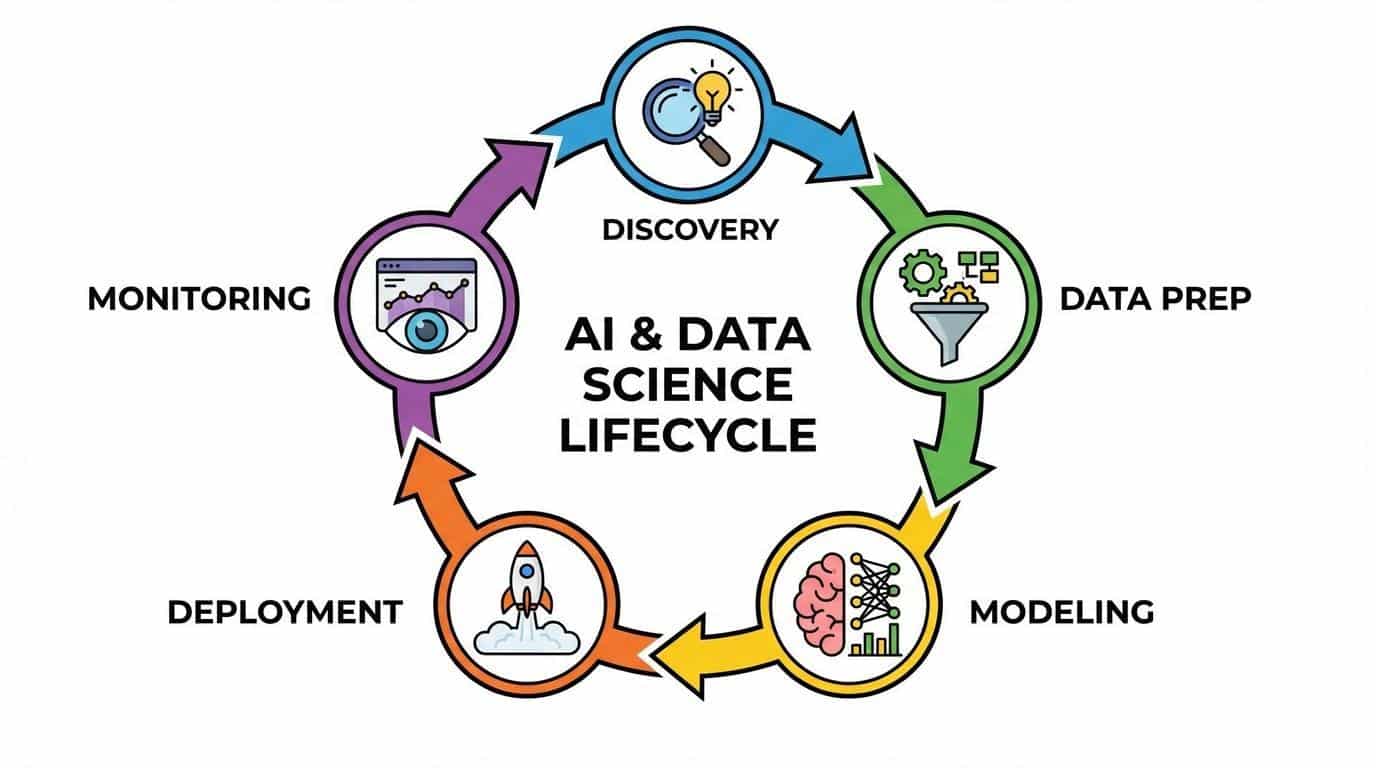
Your Implementation Roadmap: A 5-Phase Journey to Production

A predictive model sitting on a data scientist’s laptop provides zero business value. The magic happens when its insights are integrated into the business processes that drive decisions. Our implementation roadmap is designed to ensure that the transition is smooth, strategic, and value-focused.

We see this as a collaborative journey. Our goal is to build a solution that not only works but is also adopted and trusted by your team. Here are the five phases we navigate with you.

Phase 1: Discovery & Strategy (The Blueprint)

Phase 2: Data Preparation & Exploration (Building the Foundation)

Phase 3: Model Development & Validation (The Test Kitchen)

Phase 4: Production Deployment & Integration (Serving the Meal)

Phase 5: Monitoring & Iteration (Refining the Recipe)

Assembling Your Team and Timeline

A common misconception is that you need a large, in-house team of data scientists to get started. While certain roles are essential, they can often be filled by an expert partner, allowing you to prove the value of predictive analytics without a massive upfront investment in hiring.

Resource Requirements (The Team)

A successful project typically requires a blend of business and technical expertise:

Role Responsibility Why They’re Crucial
Business Sponsor The visionary who defines the business problem and champions the project. Provides executive buy-in and ensures the project stays aligned with company goals.
Subject Matter Expert A domain expert who understands the business process and the data’s nuances. Provides essential context that data alone cannot offer.
Data Engineer The architect who builds the data pipelines and ensures data is clean and accessible. Creates the robust “data highway” needed for the entire process.
Data Scientist The strategist who designs, builds, and validates the predictive model. Turns data into accurate predictions by selecting the right algorithms and features.
ML Engineer / DevOps The specialist who deploys the model into production and automates the workflow. Bridges the gap between development and operations, ensuring the model is scalable and reliable.

You don’t need to hire for all these roles. We act as your empowering partner, bringing the required technical expertise to complement your existing team. We fill the gaps in data engineering, data science, and ML engineering, working alongside your subject matter experts to deliver a solution while enabling your team for the future.

Timeline Requirements (The Schedule)

The timeline depends on the complexity of the problem and the state of your data, but a phased approach is almost always best.

Conclusion: Your First Step Towards a Predictive Future

Embarking on a predictive analytics journey is one of the most powerful strategic decisions a business can make today. It’s about shifting your organization’s posture from being reactive to proactive, from making decisions based on gut feelings to making them with data-driven confidence.

The path from concept to a deployed model may seem complex, but it can be navigated successfully with a structured, business-focused approach.

Key Takeaways:

Your data holds the answers to your most challenging questions. The first step is to start asking them. Begin with a single, high-impact use case. A well-executed pilot project can deliver tangible results in a matter of months, building the momentum needed to foster a truly data-driven culture across your organization.

Ready to unlock the predictive power hiding in your data? Let’s explore how predictive analytics can address your most pressing business challenges. We specialize in turning complex data into clear, actionable insights and have a portfolio of successful projects to prove it.

Contact us to schedule a free discovery session, and let’s build your roadmap from concept to production.

Frequently Asked Questions

1. How much data do I need to get started with predictive analytics? This is a common question, and the answer is: it depends. The volume of data is less important than its quality and relevance. For some problems, a few thousand historical records with clear outcomes (e.g., customer churned: yes/no) can be enough for a strong pilot project. The key is having clean, structured data that contains the signals related to the outcome you want to predict. A data readiness assessment in Phase 1 is the best way to get a definitive answer.

2. What is the difference between AI, Machine Learning, and Predictive Analytics? Think of them as nested concepts.

3. How do we ensure the model is ethical and unbiased? This is a critical consideration. Bias in a model often originates from bias in the historical data used to train it. Our process includes specific steps to mitigate this risk:

4. What is the typical ROI I can expect from a predictive analytics project? The ROI varies by use case but is often significant and measurable. For a customer churn project, the ROI can be calculated by comparing the cost of the project to the value of the customers retained. For a demand forecasting project, it’s the sum of reduced inventory costs and revenue captured from preventing stockouts. We define these ROI metrics with you during the Discovery phase to ensure the project’s financial impact is clear from the start.

Reference Links

Article By:

https://stellans.io/wp-content/uploads/2026/01/leadership-1-1.png
David Ashirov

Co-founder, CTO

Related Posts

    Get a Free Data Audit

    * You can attach up to 3 files, each up to 3MB, in doc, docx, pdf, ppt, or pptx format.