Scaling LTV Engines On Cloud Databases

10 minutes to read
Get free consultation

Scaling Customer Lifetime Value (LTV) Engines On Cloud Databases

Modern businesses generate massive transaction volumes every minute. Marketing teams demand instant insights to justify ad spend. Sales desks require accurate behavioral forecasts to prioritize leads. Your data infrastructure must bridge the gap between raw transactions and operational revenue generation. Scalability is a mandatory requirement for operational success.

To solve this challenge, organizations must modernize their tech stacks. We help enterprise teams architect resilient data pipelines. Moving analytics out of legacy environments unlocks unprecedented agility. We achieve this by scaling Customer Lifetime Value (LTV) engines natively on cloud platforms.

Cloud environments offer elastic compute power to handle complex machine learning tasks. In our experience consulting and building these pipelines, clients routinely report delivering 40% faster insights post-implementation. This acceleration happens when shifting legacy reporting pipelines fully on cloud.

Introduction to Scaling LTV Engines On Cloud Databases

Predicting customer value requires robust data platforms. Cloud platforms process dynamic consumer variables accurately and remove structural limitations entirely.

Reimagining Customer Lifetime Value (LTV) for the Cloud Era

Businesses often calculate LTV by reviewing past purchases to establish historical context. Modern competitive markets reward proactive approaches that forecast future potential instead of just reviewing retrospective outcomes. Proactive models successfully predict future customer actions rather than simply reporting past behaviors.

We work with you to unlock data potential. Our engineers transition LTV from a static dashboard figure into a dynamic operational metric. Modern LTV models consider changing transaction cadences. They factor in external economic shifts and shifting customer sentiments. Predictive modeling engines process these massive data sets directly on cloud infrastructure. This processing shift transforms basic historical tracking into proactive revenue forecasting.

Why Transitioning “On Cloud” is Essential for Modern Analytics

Optimized systems handle complex analytics efficiently. Flexible cloud servers scale compute and storage independently to maximize performance. Modern data science requires vast computational elasticity to run deep learning algorithms. Building these infrastructures “on cloud” provides this necessary flexibility.

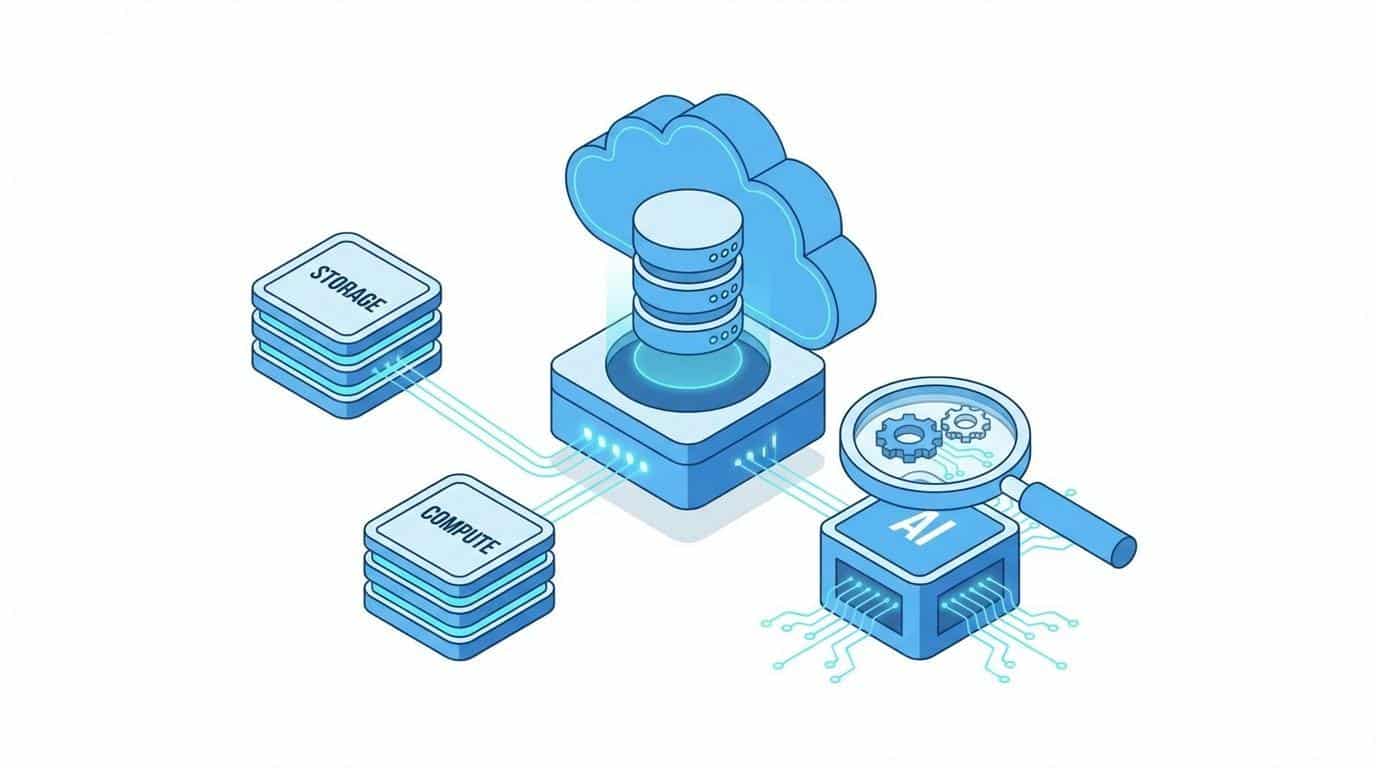
Cloud data warehouses separate compute workloads from data storage. This separation allows analytics teams to run massive queries without impacting operational databases. You can scale resources up during heavy calculation periods. You scale them down during quiet windows to save costs. If you want to explore how these transitions directly increase revenue, we recommend exploring our LTV Analysis services. We build systems designed specifically for scalability and precision.

Data Mapping Workflows for Cloud Integration

A predictive model requires immaculate data feeds. Flawless records ensure your LTV calculations always succeed. We engineer resilient ingestion frameworks that standardize messy customer data.

Ingesting Transactions from Diverse Sources Safely

Customer data spans across multiple convenient applications. Marketing engagement metrics live in advertising platforms. Purchase histories exist in payment gateways. Support tickets reside in customer service portals. Your data pipeline acts as a highway. It transports disparate data points into a centralized analytical hub securely.

Engineering teams must handle these ingestion tasks with extreme care. We utilize specialized ELT techniques to load raw data natively. Extracting and loading raw data preserves historical context perfectly. It prevents accidental data loss during initial transfers. We standardize these raw ingestion pipelines across all enterprise applications.

Designing Data Mapping Workflows on Cloud Database Formats

Raw data requires careful structuring before any algorithm can read it. Cloud formats allow us to apply declarative transformations securely. We explicitly define a data mapping workflow detailing transaction integrations on cloud database formats. This methodology ensures complete transparency across your engineering team.

Below is a visual representation of this architectural flow.

This structured workflow eliminates ambiguous data relationships. Every single transaction maps accurately to the corresponding customer entity. We design these schemas to manage complex nested data objects effortlessly.

Identity Resolution: Securing the Customer 360 View

Customers frequently interact across multiple unnamed sessions before making a purchase. A user might browse products on a mobile phone today. They might complete the purchase on a desktop computer tomorrow. Your database must recognize these distinct interactions as a single customer journey.

Identity resolution merges these fragmented touchpoints efficiently. We deploy sophisticated matching algorithms within the cloud environment. These algorithms connect anonymous session IDs with authenticated user emails seamlessly. An accurate Customer 360 view provides the foundational bedrock for LTV modeling. Identity resolution ensures calculating models count individual customers accurately to maintain peak predictive precision.

Advanced LTV Modeling Techniques on Cloud Platforms

Scaling predictive calculations requires moving beyond rudimentary spreadsheets. True revenue intelligence demands statistical rigor. We structure algorithms to learn from evolving customer behaviors continuously.

Moving Beyond Basics: Specific Models Tracing Risk Profiles

Specific models tracing risk profiles accurately capture and represent customer segments. We engineer specific models tracing risk profiles, repeat transaction likelihood, and overall LTV formulas. A risk profile identifies users showing early signs of churn. By mapping these profiles directly on cloud databases, we detect behavioral anomalies instantly.

A high-risk profile might exhibit decreasing login frequencies. It might show an increased volume of support tickets. Our models flag these subtle changes programmatically. We categorize customers dynamically based on their evolving risk scores. This categorization enables customer success teams to intervene before a cancellation occurs.

Calculating Repeat Transaction Likelihood

Customers purchase across a diverse range of unique frequencies. Some industries operate on predictable monthly subscription cadences. Other retail businesses experience highly irregular seasonal purchasing spikes. Predicting the exact timing of the next transaction is a critical capability.

We build probabilistic models to forecast these distinct cadences accurately. These models evaluate historical gaps between individual purchases. We leverage cloud database calculations to update these probabilities immediately after new transactions occur.

Below is a conceptual SQL integration snippet demonstrating how these logic tiers operate on cloud data warehouses:

-- Calculating Days Since Last Purchase for Repeat Likelihood
WITH customer_purchases AS (
    SELECT 
        customer_id,
        purchase_date,
        LAG(purchase_date) OVER (PARTITION BY customer_id ORDER BY purchase_date) as previous_purchase_date
    FROM raw_transactions_cloud
),
purchase_gaps AS (
    SELECT 
        customer_id,
        DATEDIFF(day, previous_purchase_date, purchase_date) AS days_between_purchases
    FROM customer_purchases
    WHERE previous_purchase_date IS NOT NULL
)
SELECT 
    customer_id,
    AVG(days_between_purchases) as avg_purchase_cadence_days,
    COUNT(*) as total_repeat_transactions
FROM purchase_gaps
GROUP BY customer_id;

This snippet highlights the efficiency of foundational cloud database calculations. It processes millions of rows in mere seconds.

Leveraging Overall LTV Formulas (Historical vs. Predictive)

Historical LTV provides undeniable factual revenue numbers. Predictive LTV offers a probabilistic glimpse into future cash flows. Elite analytics teams require both metrics to navigate business strategies effectively.

We combine historical baseline data with predictive machine learning outputs. Historical datasets anchor the algorithm with factual constraints. The predictive layer calculates potential future margins based on engagement vectors. This hybrid approach ensures your financial forecasts remain highly realistic.

Deploying Predictive Modeling Engines at Scale

Centralized database endpoints ensure highly coordinated data modeling. Engineering teams must operationalize algorithms directly within the central database. Predictive modeling engines process massive datasets right where the data lives natively.

This process eliminates the need to move large datasets across networks. In-database machine learning ensures stringent data security. It accelerates iteration cycles for your data science teams organically. We configure these engines to operate highly efficiently: they consume compute resources only during active training runs. Our goal: your growth. We build well-oiled data machines that drive scalable business action.

Architecting Real-Time Lifetime Analytics

Real-time processing provides the instant agility modern businesses depend upon continuously. Consumer sentiment shifts rapidly. Your data architecture must process incoming signals instantly to remain competitive.

Eliminating Slow Reporting Dashboards with Event Streaming

Modern agility relies entirely on instant dashboard reporting frameworks. Immediate insights enable rapid, highly effective marketing responses.

We transition architectures to continuous event-streaming frameworks. Streaming platforms capture user actions the moment they happen. These platforms transmit behavioral signals directly into the cloud data warehouse. This shift powers real-time lifetime analytics effortlessly. Analysts query fresh datasets instantly instead of waiting for scheduled nightly refreshes.

Utilizing Cloud Database Calculations for Incremental Updates

Incremental modeling techniques conserve valuable compute resources flawlessly. Advanced data teams utilize incremental modeling techniques instead. Incremental updates only process the newest data records arriving since the last run.

Cloud database calculations facilitate these micro-batch updates efficiently. We design tables to append new transactions seamlessly. This process keeps aggregate LTV scores continually accurate. Incremental processing reduces compute costs by over 70% in most enterprise environments. These savings allow teams to invest more budget into advanced data science initiatives.

Enabling Marketing to Reallocate Budgets Instantly

Dynamic tools drive remarkable and highly profitable business actions. When LTV calculations update in real time, marketing teams unlock distinct competitive advantages. They evaluate advertising campaign performance based on projected lifetime value accurately.

If a specific ad campaign attracts low-LTV customers, the system flags it. Marketing managers can pause that bleeding campaign instantly. Conversely, they identify segments attracting high-value recurring buyers. This visibility allows them to aggressively scale successful budgets mid-day. We ensure that technology empowers your operational workflows directly.

Exporting LTV Data for Dynamic Sales and Marketing Desks

Predictive insights unlock maximum business value when exported directly to active frontline teams. Your frontline teams rely on CRM interfaces and sales applications daily. We push complex data science outputs directly into these operational systems.

Steps for Exporting Calculating Data Streams Smoothly

Highly automated data syncing maintains exceptional operational trust. Robust automation successfully prevents all data transfer errors. We meticulously define steps for exporting calculating data streams smoothly to active dynamic sales desks.

First, we design aggregated output tables within the cloud warehouse. These tables contain flattened, precalculated LTV scores alongside updated risk metadata. Second, we establish secure API connections using modern reverse ETL tools. Third, we map the warehouse columns to the corresponding CRM fields precisely. This structured process guarantees error-free data alignment across enterprise platforms.

Integrating with Active Dynamic Sales Desks via Reverse ETL

Reverse ETL transforms your cloud data warehouse into the central source of truth. It extracts processed LTV data out of the warehouse. It then loads that intelligence directly into business applications natively.

When sales representatives open their dynamic sales desks, they see enriched profiles immediately. They view a customer’s churn risk score alongside their predictive lifetime trajectory. Reps handle high-value accounts with specialized retention strategies. This operational sync ensures frontline workers have the tools required to maximize revenue.

(Textual Graph Description: A line chart displaying an inverse relationship over a 12-month customer tenure. The X-axis represents months actively engaged. The Y-axis tracks both predicted LTV in dollars and assigned churn risk. As predicted LTV steadily climbs over time, the plotted risk profile line cleanly drops toward zero, illustrating how tenure solidifies predicted value.)

Solving Uncoordinated User Campaigns with Shared Data Sets

Highly coordinated departments provide customers with cohesive and compelling messaging. Centralizing LTV metrics on cloud databases guarantees aligned communication efforts. All departments pull operational metrics from identical shared datasets automatically. Reverse ETL feeds the exact same predictive models to the email marketing tool and the sales CRM. This unified alignment ensures a cohesive, professional customer experience at every touchpoint.

Monitoring, Observability, and Model Management

Algorithms require ongoing maintenance to remain effective. Consumer behavior shifts during economic changes. Data pipelines must monitor these shifts systematically.

Eradicating Inaccurate Metric Models through Constant Validation

Automated data validation preserves deep executive trust continuously. Implementing automated observation prevents inaccurate metric models from skewing your financial forecasts.

We implement comprehensive data observability layers across your cloud infrastructure. Automated tests validate data freshness and column integrity constantly. If a data loading anomaly occurs, the system pauses downstream LTV calculations immediately. Our engineers receive instant alerts to investigate the failure. This proactive validation prevents corrupted metrics from reaching your sales team.

Model Drift Detection and Retraining Protocols

Machine learning algorithms require automated retraining to maintain maximum accuracy. Predictive models perform best when they consistently adapt to new seasonal behaviors.

We configure automated drift detection protocols within your cloud databases. The system compares real-world revenue outcomes against its own historical predictions. If the accuracy threshold drops below 90%, automated retraining pipelines activate. The model recalibrates itself safely using the newest, most relevant datasets. This self-healing architecture ensures your LTV capabilities remain sharp and highly accurate indefinitely.

Why Choose Stellans for Scaling LTV Engines

Building scalable analytics infrastructures requires specialized experience. Robust engineering partnerships provide the computational depth required for complex enterprise needs. You need a dedicated engineering partner.

A Custom, Cloud-Agnostic Engineering Approach

Our engineering strategies empower businesses fully by adapting to unique operational software. We operate as an empowering partner for your data journey. Our firm provides unbiased, cloud-agnostic recommendations based on your precise structural requirements. We design solutions seamlessly across AWS, Snowflake, and BigQuery platforms. Before investing internal resources into fragile workarounds, discover our professional Analytics and Engineering services to build it correctly the first time. We simplify the complex mechanics of cloud integration.

Partnering for Real-Time LTV Activation

Transitioning to the cloud modernizes your approach to customer value entirely. We replace outdated historical reporting with proactive, predictive workflows natively. Our implementations ensure your sales and marketing teams act on highly accurate Intelligence. Enable your teams to scale revenue pipelines intelligently. Reach out to our consulting team to initiate your architectural transformation today.

Frequently Asked Questions

How do predictive modeling engines improve LTV calculation? Predictive modeling engines allow teams to process massive data sets directly on cloud, allowing them to shift from historical revenue tracking to forecasting risk profiles and repeat transaction likelihood in real time.

How is LTV data exported to active sales desks? By utilizing reverse ETL frameworks and direct API integrations on cloud data structures, calculated data streams are smoothly synced to CRMs and dynamic sales desks for instantaneous budget allocations.

Why are cloud databases necessary for dynamic LTV calculations? Cloud environments provide independently scalable compute resources. This elasticity lets teams run complex, heavy machine learning algorithms on massive datasets without crashing operational systems.

References

Article By:

https://stellans.io/wp-content/uploads/2026/01/1565080602204.jpeg
Zhenya Matus

Fractional CDO

Related Posts

    Get a Free Data Audit

    * You can attach up to 3 files, each up to 3MB, in doc, docx, pdf, ppt, or pptx format.