Architecture defines operational limits. The structural differences between Snowflake and Redshift dictate how easily you can scale your resources and how much time your team spends managing backend infrastructure.
Snowflake Architecture Overview
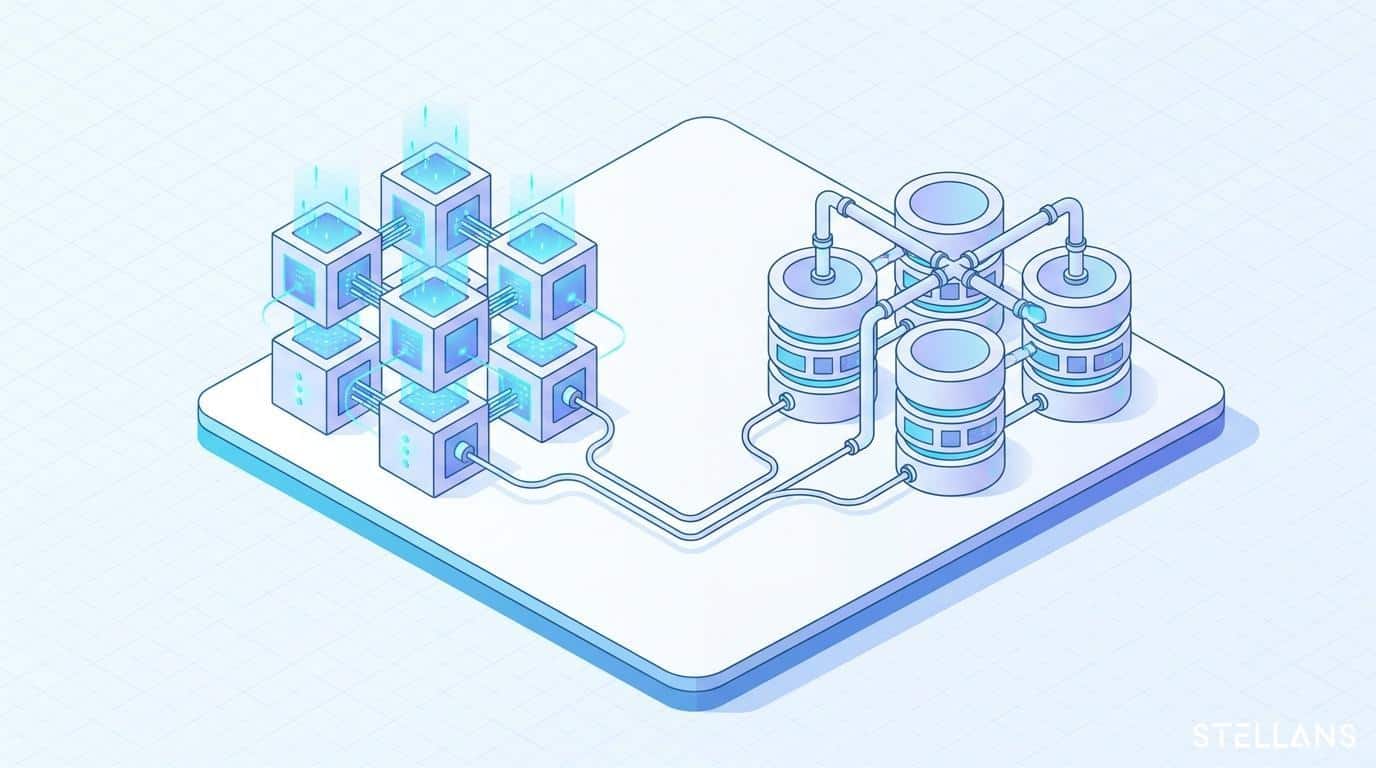
Snowflake utilizes a unique three-layer layout built specifically for the cloud. This architecture inherently separates compute operations from physical storage. The lowest layer manages raw data storage, organizing it into optimized, compressed micro-partitions. The middle layer consists of virtual warehouses that process query tasks. Finally, the cloud services layer sits on top, managing metadata, authentication, and infrastructure security.
Because Snowflake’s separation of compute and storage is absolute, multiple distinct virtual warehouses can query the exact same underlying data simultaneously without structural interference. This multi-cluster shared-data design functions like a flexible utility grid. You spin up compute power exactly when and where it is needed, preventing resource bottlenecks during complex operations.
Amazon Redshift Architecture Overview
Amazon Redshift originated from a traditional, tightly coupled database design tailored for Amazon Web Services (AWS) environments. The typical Redshift high-level system architecture revolves around a central cluster. A leader node coordinates incoming queries, parses them, and distributes the heavy lifting across multiple compute nodes.
Recently, AWS introduced RA3 instances to bridge the architectural gap. These instances introduce managed storage, allowing users to separate compute costs from storage limits to a certain degree. The system fundamentally remains a cluster-based architecture. To execute queries, data must still move from the managed storage layer onto the compute nodes via a fast network cache. Standardizing on this model means you are managing a cluster of nodes that must be consistently tuned to handle your peak requirements.
Implications on Maintenance
The way a platform is built directly influences how much time your team spends maintaining it. Architecture dictates admin overhead. Snowflake abstracts almost all physical tuning. Your team can bypass managing indexes, partitions, or vacuuming tasks. The cloud services layer handles metadata optimization automatically.
Redshift demands a more hands-on approach. Even with auto-tuning features integrated into RA3 instances, a database administrator must still monitor sort keys, distribution styles, and vacuum processes to maintain optimal query speeds. Streamlining infrastructure stability gives your engineers more hours to build new reporting features and optimize incoming AI models.