Data Analytics Best Practices: Scaling Your Infrastructure Without Chaos

12 minutes to read
Get free consultation

Early-stage startups grow at an incredible pace. Teams often build “accidental databases” to keep up. Your user base expands rapidly over time. Your daily operational data volume explodes alongside it. Engineers might connect reporting tools directly to production databases. This approach often introduces instability into the environment as you scale.

We understand this foundational challenge completely. We work with you to unlock data potential. Our goal is your long-term growth. We partner with technical founders and data leaders. We help you build a well-oiled data machine.

Effective data analytics requires structured early planning. You must implement strong data analytics best practices from day one. Early planning helps you avoid costly platform migrations later. We will help you navigate this complex technical journey. We streamline your infrastructure to empower your decision-makers.

The Core Rule: Isolate Business Reporting From Your Application Database

Technical debt often starts with a single well-intentioned query. A founder wants a daily revenue dashboard. An engineer points a BI tool at the transactional database. This shortcut works perfectly for the first few months.

However, establishing proper architecture becomes crucial as you scale. Your analytics queries grow more complex. They scan millions of historical rows. These massive operations compete directly with your live application traffic.

OLTP vs. OLAP: Why Workload Isolation Matters

You must isolate your operational workloads from your analytical workloads. Online Transaction Processing (OLTP) systems power your live applications. These application databases are optimized for fast writes. They handle thousands of tiny updates every second.

Online Analytical Processing (OLAP) systems serve a completely different purpose. These data warehouses are optimized for massive reads. They aggregate historical data to identify long-term business trends.

Separating these two workloads prevents severe performance contention. Dedicated infrastructure stops heavy analytics queries from locking your application tables. Your customers will continue enjoying fast application load times. The application remains highly stable during peak usage hours.

Many teams try to solve this with a red replica. A red replica provides a helpful temporary step. True scalable analytics requires a more permanent solution. Dedicated warehouses handle column-oriented analytical queries much better than read replicas. They also protect raw application schemas from direct exposure to business users.

You need true database isolation. We build robust systems that separate these concerns completely. We engineer data pipelines as highways. These highways move data safely away from production.

Building Your Minimal Viable Modern Data Stack

A streamlined approach benefits startups more than twenty different software tools. You need a minimal viable modern data stack. This stack should focus on essential capabilities. You must evaluate components by their core function.

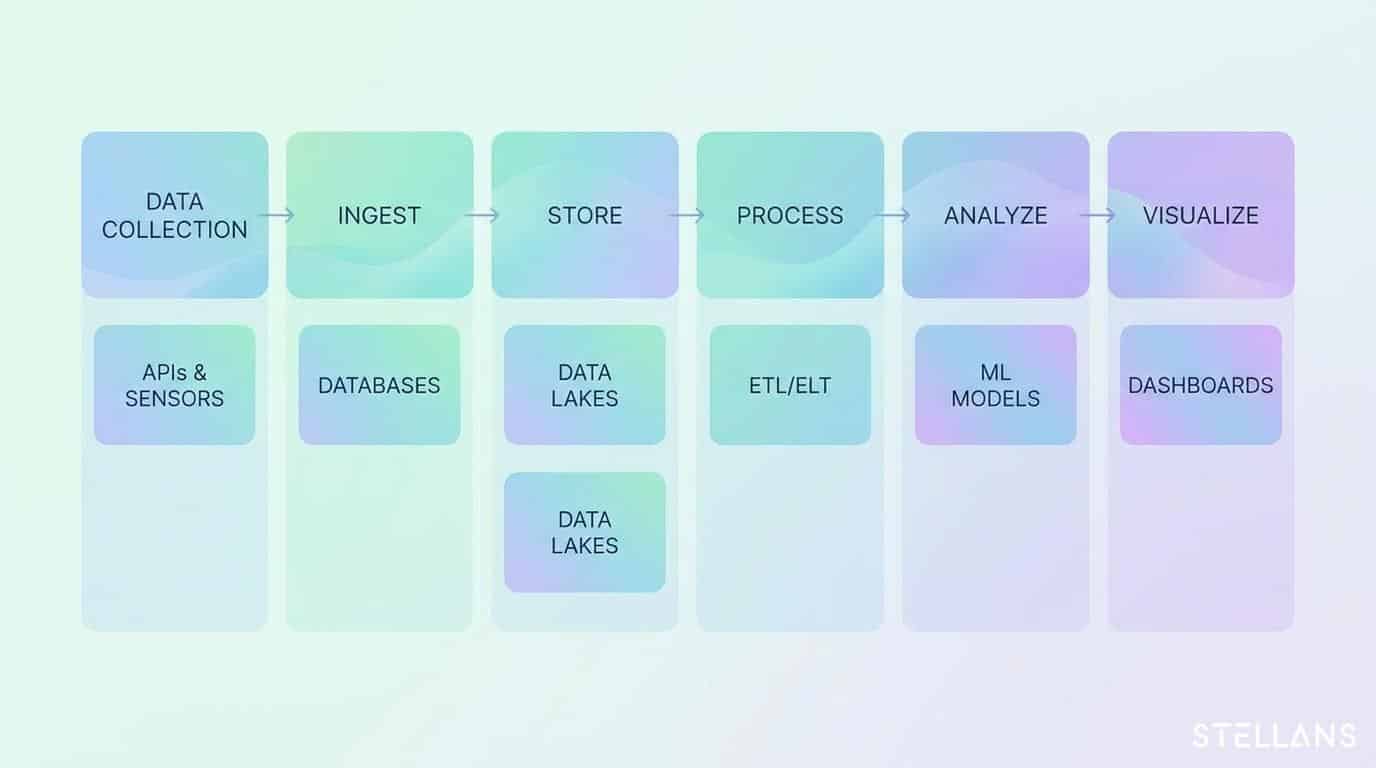
Your platform requires automated transactional storage extraction. It requires an analytical data warehouse. It needs a transformation layer. Finally, it requires a secure business intelligence interface. You should prioritize tools that require minimal maintenance. Early stage business intelligence thrives on simplicity.

The Synergy of Fivetran, Snowflake, and dbt

We recommend a proven triad for modern analytics. This triad consists of Fivetran, Snowflake, and dbt. Their synergy creates a highly resilient data foundation.

Fivetran provides fully managed data ingestion connectors. It automates the extraction process entirely. You gain reliable automated pipelines instead of fragile custom Python scripts. This automation frees your engineers to focus on product features. For detailed examples, review our approach to data integration with Fivetran and Snowflake.

Snowflake serves as your centralized cloud data warehouse. It stores your raw data securely. It separates computing power from storage capacity. You can scale your processing resources instantly. Snowflake easily handles complex analytical queries while maintaining perfect uptime.

dbt handles your downstream transformation layer. It centralizes your core business logic effectively. Analysts can write modular SQL models. dbt tests your data for accuracy before it reaches dashboards. This ensures pristine reporting across your organization.

Timeline Checklist: Data Hires and Infrastructure Milestones

Scaling your startup data infrastructure requires precise timing. You must match your technology investments to your company stage. Strategic hiring preserves valuable capital early on. Proactive infrastructure upgrades prevent massive technical debt.

We developed a proven operating blueprint for startups. This checklist guides you from Pre-Seed through Series B.

Pre-Seed: Establish Separation and Basic Ownership

Your primary goal is rapid product iteration. You must maintain complete independence from the first production database.

Seed: Make Analytics Repeatable

Your product gains market traction at this stage. Investors expect regular operational reporting. You need repeatable and reliable metrics.

Series A: Formalize Reliability and Governance

Your company is scaling its customer base rapidly. Department heads demand localized dashboards. You must formalize reliability and data governance.

Series B: Scale Controls, Not Just Capacity

Your organization has multiple distinct product teams. The volume of data grows exponentially. You must scale your operational controls.

Managing Analytics Technical Debt and Maintaining Reliable Dashboards

Analytics technical debt requires proactive management in growing companies. It manifests as undocumented joins. It appears as direct queries to raw application tables. Addressing these shortcuts early keeps your systems manageable. Dashboards require resilient designs to handle schema drift smoothly.

Reliable architecture ensures business users trust the data completely. This trust keeps them relying on modern BI tools rather than localized spreadsheets. Analytics tech debt mitigation is crucial for organizational alignment.

8 Steps to Streamline Your Architecture

We help our clients optimize their analytical environments. Clients report 40% faster insights post-implementation. You can gain total clarity by following these eight practical steps.

  1. Inventory Your Assets: Catalog every existing dashboard and data source. Identify which reports are actually used by business leaders.
  2. Classify Data Criticality: Rank your data models by business importance. Prioritize financial and operational metrics first.
  3. Centralize Core Logic: Move scattered SQL queries out of your BI tool. Rebuild this logic inside dbt.
  4. Test Your Assumptions: Add automated tests to your transformation layer. Check for accurate values and unique records daily.
  5. Establish Data Contracts: Require software engineers to notify data teams before altering production schemas.
  6. Assign Clear Ownership: Every data model must have a technical owner. This person resolves pipeline updates proactively.
  7. Retire Assets Aggressively: Delete unused dashboards and obsolete tables. A clean environment builds confidence and optimizes your storage costs.
  8. Monitor Pipeline Health: Implement proactive monitoring alerts. You ensure complete pipeline success long before your CEO reviews a dashboard.

Cost Control Strategies for Warehouse and SaaS Spend

Strategic planning keeps data infrastructure costs firmly under control. Streamlined SaaS tools protect your engineering budget. Efficient warehouse queries conserve massive compute credits. Optimized ingestion frequencies significantly reduce your monthly vendor bills.

You must differentiate between cheap technology and a low total cost of ownership. A managed service reduces your operational overhead significantly compared to highly manual open-source tools.

We recommend several highly effective cost control strategies.

Incorporating Security, Privacy, and AI Governance

Modern startups must treat data security as a foundational priority. Enterprise clients require strict compliance before signing contracts. You must frame security around tangible business impact. Strong security protocols accelerate your sales pipeline.

You need SOC 2 readiness from the very beginning. We implement secure data architectures for growing organizations. We mask sensitive customer data dynamically. Tools like Satori Cyber manage access controls seamlessly. They secure personally identifiable information from unauthorized business analysts.

Furthermore, you must establish strong AI governance foundations. Your data must be clean and well-documented. Machine learning models require pristine historical datasets. Strong data governance ensures highly accurate and unbiased AI outputs.

Real-World Implementation with Stellans

Implementing these data analytics best practices requires deep technical expertise. You need a partner who understands both software engineering and business strategy. We provide comprehensive data platform modernization services.

We design and implement solutions tailored to real business needs. Our Consulting practice ensures technology choices align with your long-term strategy. Our Engineering team builds scalable systems that fuel innovation. Our Analytics experts turn raw data into actionable insights. Finally, our Governance services manage compliance securely and effectively.

We empower your organization to make smarter, faster decisions. Are you ready to scale your infrastructure smoothly and successfully? Partner with us to build your ultimate data advantage. Contact Stellans today to explore our services.

Frequently Asked Questions

What is analytics technical debt? Analytics technical debt is the future cost created by taking shortcuts in data ingestion, modeling, ownership, and documentation. Addressing it early ensures reliable dashboards and consistent metrics as a company scales.

When should a startup hire its first data engineer? Startups should typically hire their first dedicated data engineer or analytics engineer at the Seed or Series A stage. You need this hire once business reporting demand becomes a recurring priority that requires repeatable, tested datasets.

Why should I keep my BI tool separate from my production database? Analytical queries require scanning massive amounts of historical data. Dedicated infrastructure handles this perfectly, while separating the process ensures your live application traffic stays fast and responsive for users.

What is the benefit of a modern data stack over custom pipelines? A modern data stack relies on fully managed services like Fivetran and Snowflake. These tools automate data extraction and scale compute instantly. This approach significantly lowers your total cost of ownership by reducing engineering maintenance time.

How does dbt help with data quality? dbt allows analytics teams to write modular data transformations. It integrates automated testing directly into the data pipeline. This verifies data accuracy and uniqueness before the information ever reaches your business dashboards.


References

Common Challenges in Data Analytics and How to Overcome Them


https://tdwi.org/articles/2020/09/18/adv-all-how-to-strengthen-the-pillars-of-data-analytics.aspx

Article By:

https://stellans.io/wp-content/uploads/2026/01/leadership-2.jpg
Anton Malyshev

Co-founder

Related Posts

    Get a Free Data Audit

    * You can attach up to 3 files, each up to 3MB, in doc, docx, pdf, ppt, or pptx format.
    This site is protected by reCAPTCHA and the Google Privacy Policy and Terms of Service apply.