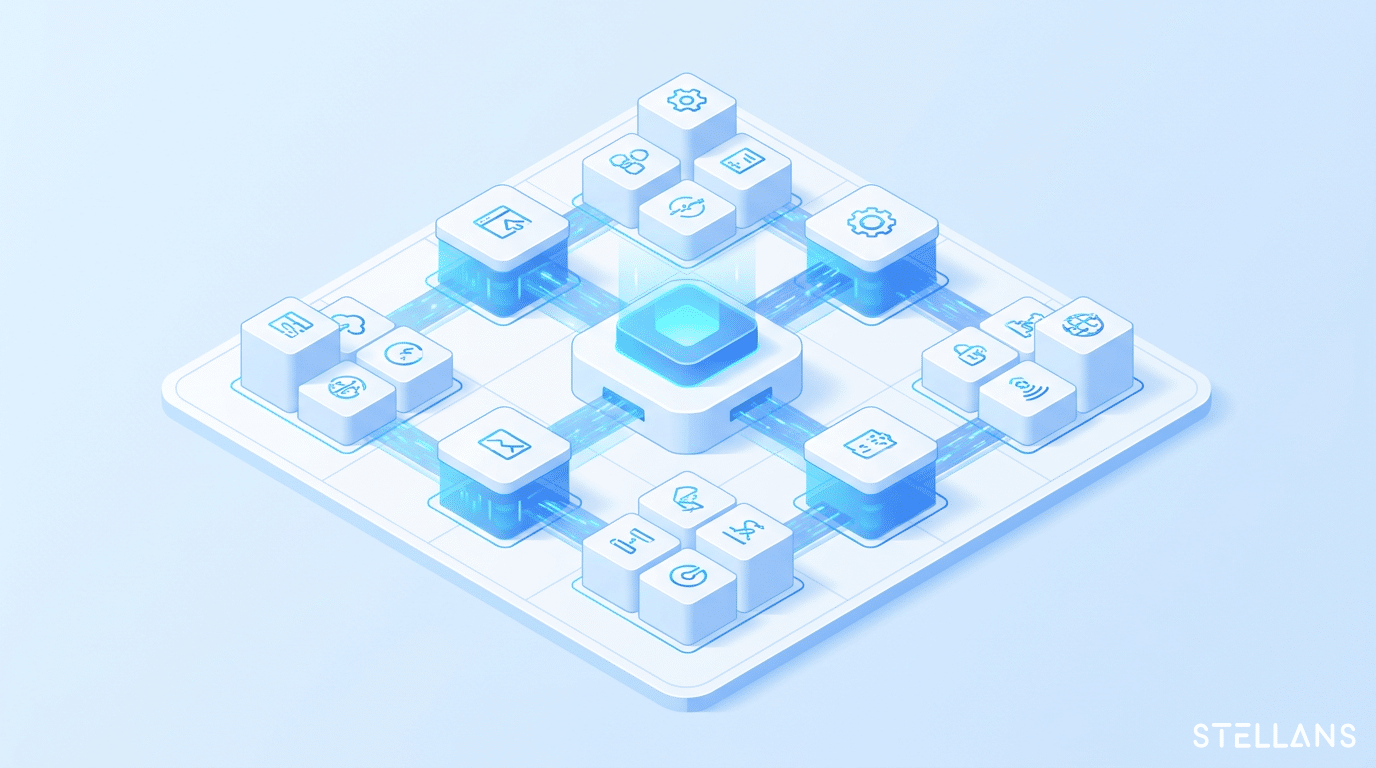
A planned decomposition successfully navigates the natural scaling limits of a single repository. We can efficiently identify these milestones and upgrade the architecture.
Symptoms and Pain Points of Monolithic Projects
Recognizing specific symptoms reveals the exact time to split a monolith. Crossing the 1,000+ model threshold offers a great opportunity to improve execution speed. At this volume, optimizing the dbt compile command execution restores performance significantly.
Enhancing searchability prevents code duplication. When teams easily search a well-organized repository, they share the best solutions. A finance analyst can easily leverage a core customer dimension because they can find the existing marketing version. This harmony eliminates metric drift. The business maintains absolute trust when all dashboards show perfectly aligned revenue numbers.
Stepwise Refactoring Approach
You can orchestrate a massive repository split through a structured phased pipeline. A carefully executed split maintains downstream dashboards and keeps business operations completely stable.
First, you conduct a comprehensive audit of all cross-domain references. We map every query relying on models outside its intended domain.
Next, you build stable anti-corruption layers. An anti-corruption layer acts as a permanent, reliable view. You duplicate the critical public models and establish a clear API interface. Downstream consumers point to this anti-corruption layer instead of the raw legacy models. This decoupled approach protects downstream consumers while you cleanly organize the underlying codebase.
Multi-project and Domain-driven Architecture
Once decoupled, we physically split the codebase. We migrate from one centralized repository into multiple focused projects.
By replacing an aggregated dbt_warehouse repository, we gracefully deploy finance_dbt, marketing_dbt, and product_dbt. Each department fully owns its specific repository. This structure beautifully adopts the Data Mesh principles of domain-oriented ownership.
Domain experts govern their localized repositories entirely. They merge code independently. They configure continuous integration pipelines specific to their unique operational needs.
Leveraging dbt Mesh and Data Contracts
Managing multiple distinct projects flourishes with a proper connective tissue. Employing an underlying integration framework ensures domain separation succeeds brilliantly. We utilize dbt Mesh to weave these projects together seamlessly.
dbt Mesh allows one project to reference models built in another project. A marketing project can safely reference a core customer dimension built by the core engineering project. We use robust data contracts to maintain guaranteed safety across these multi-project boundaries.
A data contract acts as a steadfast agreement between the model producer and the consumer. The producing team guarantees the model schema, the data types, and the column names remain perfectly stable. When protected by a data contract, the CI pipeline gracefully pauses the build to ensure compliance before any structural column adjustments take place.
We view the data pipeline as an express highway. Data contracts act as the perfect safety guardrails. They ensure secure, extremely fast navigation for everyone involved.