BI vs. Business Analytics: What's the Difference and Which Do You Need?

6 minutes to read
Get free consultation


We hear it constantly from business leaders. You are sitting in a strategy meeting. Terms like “predictive modeling,” “data mining,” and “descriptive analytics” are thrown around. You just want to know why last month’s sales dipped.

The confusion between Business Intelligence (BI) and Business Analytics (BA) is real. This distinction is more than semantics; it dictates who you hire. It dictates the tools you buy. It determines whether you look in the rear-view mirror or the crystal ball.

Here is our thesis. BI looks at the past to optimize today. BA looks at the future to predict tomorrow. While most businesses think they want the crystal ball, in reality, they often benefit from cleaning the mirror first.

This guide acts as your technical translator. We will demystify the jargon. We will compare goals and methods. Most importantly, we will help you decide which approach drives your growth right now.


Defining the Core Concepts

To build a data-driven company, you must clarify your vocabulary. Understanding the nuance between “what happened” and “why it happened” is critical.

What is Business Intelligence (BI)?

Business Intelligence is the specialized use of historical data. It answers two specific questions: “What happened?” and “What is happening now?” Think of BI as your car’s dashboard. It tells you your current speed. It shows your fuel level. It tracks the distance you have traveled.

BI focuses on descriptive analytics. It organizes raw data into readable reports and dashboards. It gives decision-makers an accurate picture of the present. With BI, you drive with full visibility.

What is Business Analytics (BA)?

Business Analytics takes that data a step further. It uses statistical methods to answer “why did it happen?” and “what will happen next?” If BI is the dashboard, BA is the GPS navigation system. It predicts traffic jams. It suggests faster routes. It alerts you to collision risks.

BA focuses on predictive analytics. It uses data mining, statistical analysis, and machine learning. It forecasts trends and models future outcomes. It turns data into a roadmap for what lies ahead.

Key Differences: A Side-by-Side Comparison

At Stellans, we see companies confuse these two stages of data maturity daily. Let’s break down the mechanics.

Focus: Past vs. Future

The primary difference lies in the timeline. Business intelligence is retrospective. It looks at historical data to measure operational efficiency. It tells you if you met your quota last week.

Business analytics is prospective. It uses that same data to generate future insights. It tells you if you will meet your quota next quarter based on current trends.

Methods and Complexity

The tooling differs significantly. BI relies on data visualization and reporting. It uses tools like Power BI or Tableau to present metrics and KPIs. The goal is clarity.

BA requires heavier computation. It employs regression analysis and machine learning algorithms. The goal is probability. You are not just reporting a number. You are calculating the likelihood of a future event.

The User

Who sits in the driver’s seat? BI is built for managers and executives. It empowers decision-makers to spot operational issues immediately.

BA is often the domain of data scientists and technical analysts. These navigators interpret complex models. They translate statistical probabilities into business strategy.

Real-World Example: A Retail Scenario

Let’s look at a practical scenario. Imagine a retail chain experiences a sudden drop in sales.

The BI Approach: Your operations manager opens the dashboard. The report highlights where sales dropped. It pinpoints when the decline started. It identifies which specific products are underperforming. The BI stops at the facts. It gives you the “what.”

The BA Approach: Your data analyst takes over. They run a regression model. They determine if the drop correlates with a competitor’s discount or recent weather patterns. They predict sales volume for the next quarter if you lower prices. The BA gives you the “why” and the “what if.”

Which Approach is Right for Your Business?

You have the flexibility to choose the right one for today rather than choosing one forever.

When to Prioritize Business Intelligence

Start with BI to gain full visibility. If you have data but no meaningful reports, you need BI. Data-backed operations offer greater precision than “gut feeling” for daily operations.

Measurement allows you to optimize. Having a reliable Weekly Business Review (WBR) Implementation prepares you for advanced analytics. You need a single source of truth first.

When to Move to Business Analytics

Shift to BA when your foundation is solid. You have stable reporting. You trust your numbers. Now you want to optimize margins or forecast demand.

This step often requires investment in data science talent. It requires clean, governable data. Clean historical data ensures your predictions will be accurate.

The Maturity Model

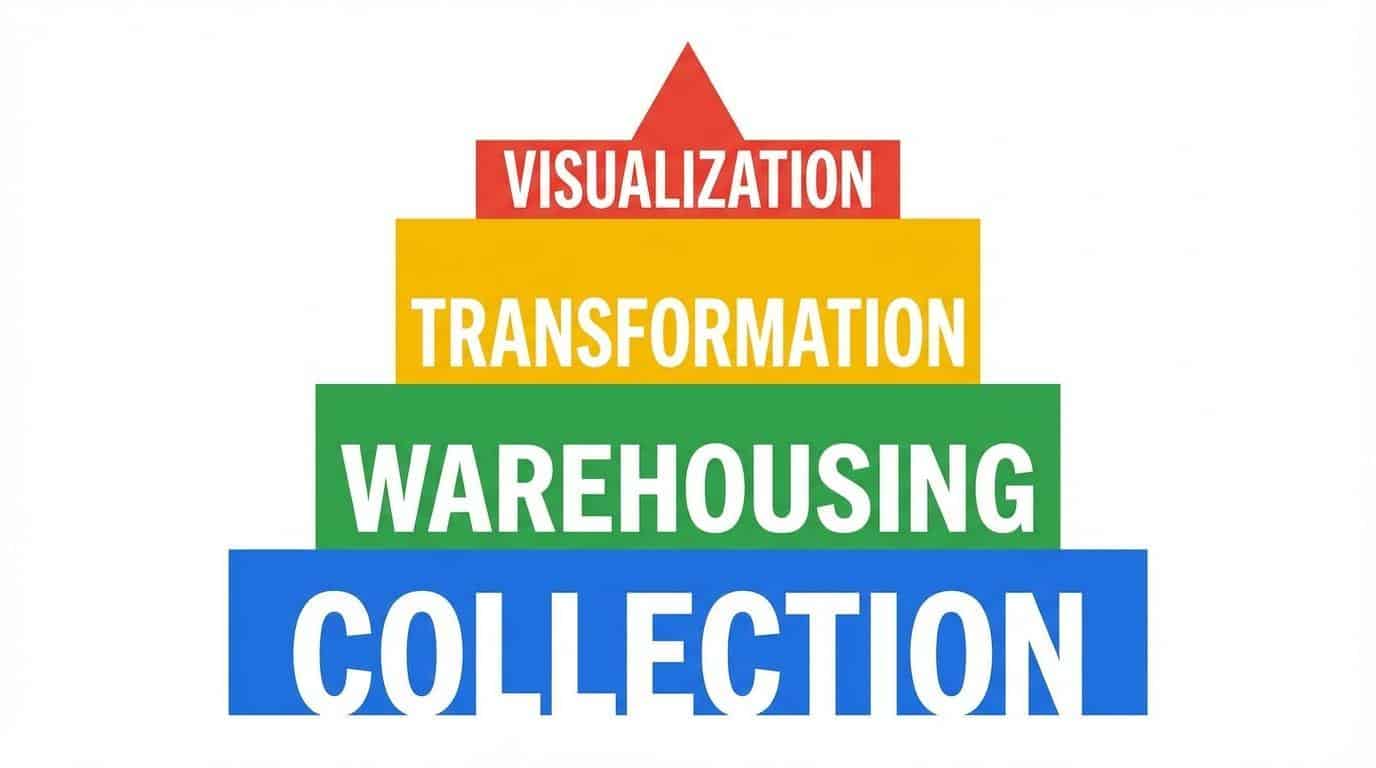
Think of this as a maturity staircase. BI is the foundation. Effectively reading the present (BI) allows you to predict the future (BA). We advise clients to master the descriptive stage before chasing the predictive one.

Why WBR is Your First Step in BI

We see a common mistake. Companies buy a Ferrari engine (complex BA) but put it in a go-kart (weak infrastructure).

At Stellans, we preach an implementation-first approach. The most tangible product of good Business Intelligence is the Weekly Business Review (WBR).

A WBR is not just a meeting. It is an instrument panel. It creates a rhythm of accountability. It forces you to define your metrics. It ensures your data pipelines are working weekly.

Our WBR Implementation service builds this foundation. We clean your data. We define your KPIs. We automate the reporting. This solves the “Data Strategy” pain point. It transforms raw data into weekly decision-making power. Once your WBR is humming, then you are ready for the predictive power of Business Analytics.

Trends for 2026 and Beyond

The lines are blurring. Artificial Intelligence is merging BI and BA. Tools like Microsoft’s Copilot are bringing predictive features into standard dashboards.

Regulation is also catching up. The EU AI Act sets strict standards for transparency. “Clean” BI reporting is often safer and easier to govern than “black box” AI predictions. Compliance will drive a renewed focus on data governance. You must know where your data comes from before you let an algorithm predict where it is going.

Conclusion & Next Steps

Business Intelligence optimizes the now. Business Analytics predicts the next. They are not opponents. They are partners on your data journey.

Building a strong foundation ensures success. Reading the thermometer is the first step to forecasting the weather. Build your foundation with BI. Master your operations. Then expand into Analytics.

Confused about where to start? We recommend building your foundation first. Learn how our WBR Implementation can turn your raw data into a clear instrument panel for your business.

Frequently Asked Questions

1. Is business intelligence descriptive analytics? Yes. Business Intelligence deals primarily with descriptive analytics. It analyzes historical data to describe what has already happened or what is currently happening in the business.

2. What are the tools used in business analytics? Business Analytics often uses advanced statistical tools. Common examples include Python, R, SAS, and specialized features within platforms like Tableau or Power BI that support predictive modeling.

3. Do I need a data scientist for business intelligence? Not necessarily. BI is designed for business users. Modern tools allow managers to view and filter dashboards without great technical skills. However, setting up the data infrastructure often requires data engineers.

4. Can I do business analytics without business intelligence? It is risky. Without the clean historical data and reporting structure provided by BI, your analytics models may be based on inaccurate inputs (garbage in, garbage out).

5. How does the Weekly Business Review support BI? The WBR is the operational rhythm of BI. It ensures that the reports generated are actually reviewed and acted upon every week. It turns static charts into active decision-making.

Article By:

https://stellans.io/wp-content/uploads/2026/01/leadership-2.jpg
Anton Malyshev

Co-founder, COO

Related Posts

    Get a Free Data Audit

    * You can attach up to 3 files, each up to 3MB, in doc, docx, pdf, ppt, or pptx format.