Predictive Customer Lifetime Value (CLV) Modeling

11 minutes to read
Get free consultation

Beyond the Basics: Predictive Customer Lifetime Value (CLV) Modeling

Leveraging advanced forecasting to understand your customers brings you ahead of rising acquisition costs. Today, market dynamics shift rapidly. Securing customer loyalty becomes achievable with proper forecasting. Transitioning from simple spreadsheets to robust forecasting protects your budget. Tracking the long-term economics of acquired users allows you to spend aggressively and confidently. Every advertising dollar works effectively when guided by long-term analytics.

This is where the transition from historical math to predictive marketing analytics becomes critical. Historical reporting simply tells you what happened. Predictive modeling tells you where to spend your next dollar. By shifting to dynamic ML-driven forecasts, businesses can accurately project future revenue. They can allocate marketing budgets efficiently. They can fully operationalise data.

Our goal is your growth. When you partner with us, we help you build a well-oiled data machine. We transition your teams from looking backward to looking forward. We transform standard metrics into automated revenue drivers. In our implementations, we consistently see clients achieve 85%+ accuracy in behavioral predictions. We stand ready to show you how predictive customer lifetime value changes the way you do business.


What is Customer Lifetime Value? (And Why the Basics Are Failing You)

Customer lifetime value is the total predicted revenue a business expects to generate from a single customer over the duration of their relationship. At its core, the metric helps businesses answer a fundamental question. It tells you how much you can afford to spend on marketing to acquire a new user without losing money.

Upgrading traditional calculation methods brings significant advantages. The basics rely on simple averages. They take total revenue, divide it by the number of customers, and assume that every new user will mimic this average behavior. Advanced models offer precision targeting and ensure a healthy long-term focus. Focusing on long-term customer economics yields much better outcomes than optimizing for the initial transaction. Deploying value-based segments enables you to acquire high-retention customers efficiently.

Historical vs Predictive CLV

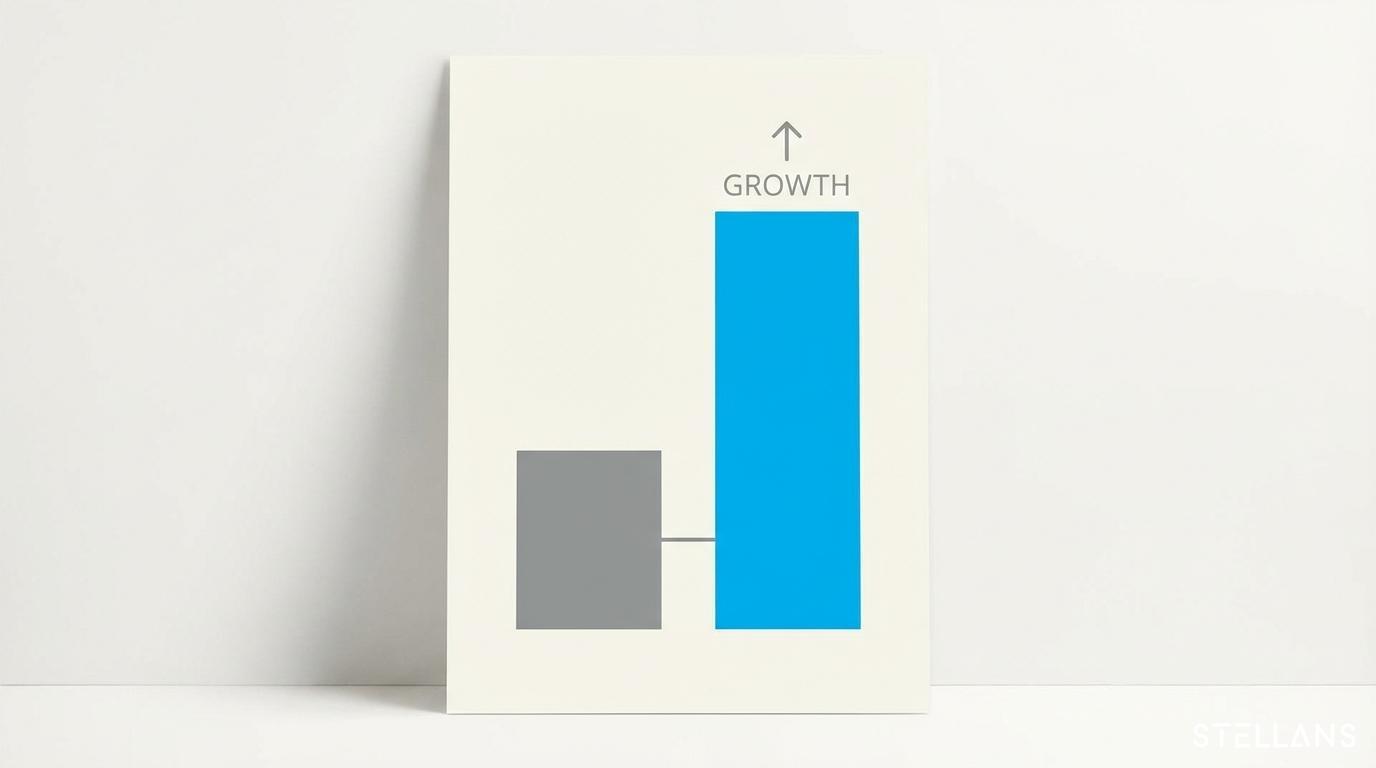
The difference between basic math and advanced forecasting is vast. Historical CLV tells you what happened; Predictive CLV tells you where to spend next.

Historical models are backward-looking revenue summaries. They compile past purchase data to assign a static value to a user segment. Dynamic machine learning approaches excel at accounting for changing customer behaviors. Proper tracking detects when a high-spending customer changes behavior, allowing you to react accordingly. Preserving your budget means focusing on genuinely engaged users instead of those who have silently churned.

Predictive models flip this paradigm. They leverage machine learning algorithms to forecast future value based on current and evolving micro-behaviors. They calculate retention probability. They factor in the Discounted Cash Flow of future purchases. A predicted LTV approach alerts you perfectly to churn signals before they happen. This allows you to deploy retention campaigns proactively.

Data Inputs Required for Predictive CLV Modeling

Predictive models are incredibly powerful. Ensuring high-quality data gives these predictive models maximum effectiveness. The quality of your predictions heavily relies on raw data engineering. A clean, structured, and continuous flow of data is strictly required. Creating this well-oiled data machine requires meticulous preparation.

Transactional and Behavioral Data Requirements

The foundational dataset for these models begins with RFM analysis. RFM stands for Recency, Frequency, and Monetary value.

While RFM acts as the baseline, predicting true customer lifetime value requires deeper behavioral layers. You must feed the model product usage statistics. You need CRM events like support tickets, email open rates, and website interactions. Every touchpoint acts as a crucial retention signal. A customer who opens zero emails but buys frequently exhibits a very different future trajectory than someone heavily engaged with support but rarely purchasing. Capturing these nuancesnuance allows the model to spot non-linear purchasing trends.

Quality, Integration, and Privacy Constraints

Accurate forecasts demand top-tier data hygiene. Navigating identity stitching across multiple channels is a crucial step to master. You must be able to recognize that a mobile app user, an email subscriber, and an in-store shopper fall under an identical unified customer profile. Unifying your data establishes highly accurate predictions.

Integrating proper compliance at every step secures the entire process. Strictly adhering to GDPR and CCPA ensures total confidence when feeding sensitive user data into CLV prediction models. Data minimisation principles must govern the pipeline. You only extract the exact behavioral indicators needed for modeling.

Building automated systems to handle this integration safely is exactly what we do. Our engineering teams help you build a clean data infrastructure that scales. We work with you to unlock data potential safely and securely while preserving total privacy compliance.

The Engine: Predictive Modeling Techniques

Transitioning from raw data to an accurate forecast requires technical translation. The algorithms act as the engine of your data pipeline. Choosing the right algorithm determines how well your business reacts to customer shifts. Let us break down the complex systems into actionable frameworks.

Probabilistic Models vs Machine Learning

Traditionally, businesses utilize probabilistic models to forecast customer behavior. The Beta-Geometric/Negative Binomial Distribution (BG/NBD) model is the industry standard for probabilistics. It operates under two specific assumptions. First, it assumes that active customers will purchase at a steady, random rate. Second, it assumes that every customer carries a hidden probability of churning after any given transaction. These models work exceptionally well for straightforward retail environments.

Modern commerce involves complex, multi-touch paths that reward sophisticated analysis. Customer paths are complex, multi-touch, and highly irregular. This is where we pivot to Machine Learning methods. Advanced predictive analytics frameworks utilize machine learning techniques to map vast arrays of non-linear behavioral data. Algorithms like Random Forest and Extreme Gradient Boosting (XGBoost) excel in complex environments.

Machine learning can process thousands of competing variables. It can be understoodunderstand that a customer opening an email on a Tuesday, while ignoring a discount code on a Friday, strongly indicates a specific retention probability. ML structures handle these multidimensional relationships perfectly. They consistently output higher accuracy for predicted LTV than standard probabilistic math.

For data analysts looking to initialize a project, the approach often begins with robust data science libraries. Here is a brief look at initializing a BG/NBD model using Python libraries to establish a predictive baseline.

# customer lifetime value prediction python
import pandas as pd
from lifetimes import BetaGeoFitter

# Initialize the probabilistic model
bgf = BetaGeoFitter(penalizer_coef=0.0)

# Fit the model to our RFM data securely
bgf.fit(rfm_data['frequency'], rfm_data['recency'], rfm_data['T'])

# Predict the number of purchases for the next 90 days
predicted_purchases = bgf.conditional_expected_number_of_purchases_up_to_time(
    90,
    rfm_data['frequency'],
    rfm_data['recency'],
    rfm_data['T']
)

Segmenting Customers by Predicted Value

Generating a predicted value for each user is only the halfway mark. Translating that predicted data into marketing action is where the revenue is captured. Treating customers exactly according to their future worth completely resolves imprecise targeting. Segmenting customers by predicted value creates an operational playbook for your entire business.

High, Mid, and Low Value Tiers

Once your models output the predictions, you must bucket users into distinct behavioral cohorts. The most effective approach separates your database into high, mid, and low value tiers.

Segmenting by future value ensures that marketing resources match revenue potential. Predictive behavioral segmentations empower your teams to execute highly profitable micro-campaigns with full confidence.

Eradicating Wasted Ad Spend & Operationalising CLV

Feeding model outputs into operational systems ensures they deliver maximum value. Feeding predictive CLV back into your broader ecosystems directly impacts the business. This means operationalising the data straight into your BI dashboards, your CRM tools, and your marketing platforms.

When you synchronize a predicted CLV metric with your ad platforms, a profound shift occurs. Refining your bidding for the best conversions optimizes your spend. You instruct Google Ads or Meta to optimize specifically for users who match your high-LTV profile. Starving campaigns that bring in low-value prospects ensureensures your ad spend is fully profitable. You begin acquiring quality at scale.

Improving Customer Retention Metrics

Operationalising this data drastically improves your underlying customer retention metrics. Your internal focus shifts permanently from short-term conversions to cultivating Long-Term Value. You begin to measure your success in months and years rather than daily return on ad spend.

By mapping out expected lifetime returns, you gain total clarity on your Customer Acquisition Cost (CAC) ratios. If the model proves a user segment will yield a massive lifetime return, you immediately gain the confidence to increase your acquisition investment for that specific cohort. Focusing on profitable activities allows you to instantly pause strategies that attract unprofitable segments.

Our analytics offerings directly support these exact implementations. We help you predict customer behaviour securely, ensuring that predictions flow seamlessly into decision-making dashboards. You gain the power to measure incremental ROI with total absolute clarity. Clients consistently report 40% faster insight deployment post-implementation.

Conclusion & Next Steps

Customer Lifetime Value prediction models transform your raw data into a reliable forecasting engine. Advancing past basic formulas into the realm of dynamic machine learning provides a critical competitive advantage. Predictive modeling leverages your transactional history and complex behavioral signals to output highly precise revenue estimates. It ensures your marketing budget is strictly allocated to the exact users guaranteed to boost your long-term growth.

Historical CLV tells you what happened. Predictive CLV dictates where you win globally next.

Command your acquisition strategy by moving beyond static math. It is time to align your customer data with an actionable business strategy. We invite you to invest in Customer Analytics managed by Stellans. Let us work with you to orchestrate ML workflows that drive an unparalleled 85%+ accuracy for your business.

Frequently Asked Questions

What is the difference between historic and predictive CLV? Historic CLV calculates a static value based solely on a customer’s past purchases and averages. It looks backward. Predictive CLV applies machine learning and statistical models to past purchasing patterns and behavioral signals to accurately forecast a customer’s total future spending. It looks forward.

What data inputs are required for predictive CLV modeling? The core foundational inputs are Recency, Frequency, and Monetary (RFM) transaction data. To achieve high accuracy, models also require demographic details, product usage metrics, CRM engagement events, and broader multi-channel behavioral signals.

How can predictive CLV improve marketing spend efficiency? Predictive CLV identifies which specific customers will generate the highest future returns and which ones will churn quickly. Marketers utilize these insights to exclude low-value prospects from paid campaigns. Marketing spend is then aggressively reallocated toward acquiring and retaining high-value audiences safely, completely eradicating wasted ad budget.

References

Article By:

https://stellans.io/wp-content/uploads/2026/01/1565080602204-1.jpeg
Zhenya Matus

Fractional CDO

Related Posts

    Get a Free Data Audit

    * You can attach up to 3 files, each up to 3MB, in doc, docx, pdf, ppt, or pptx format.